
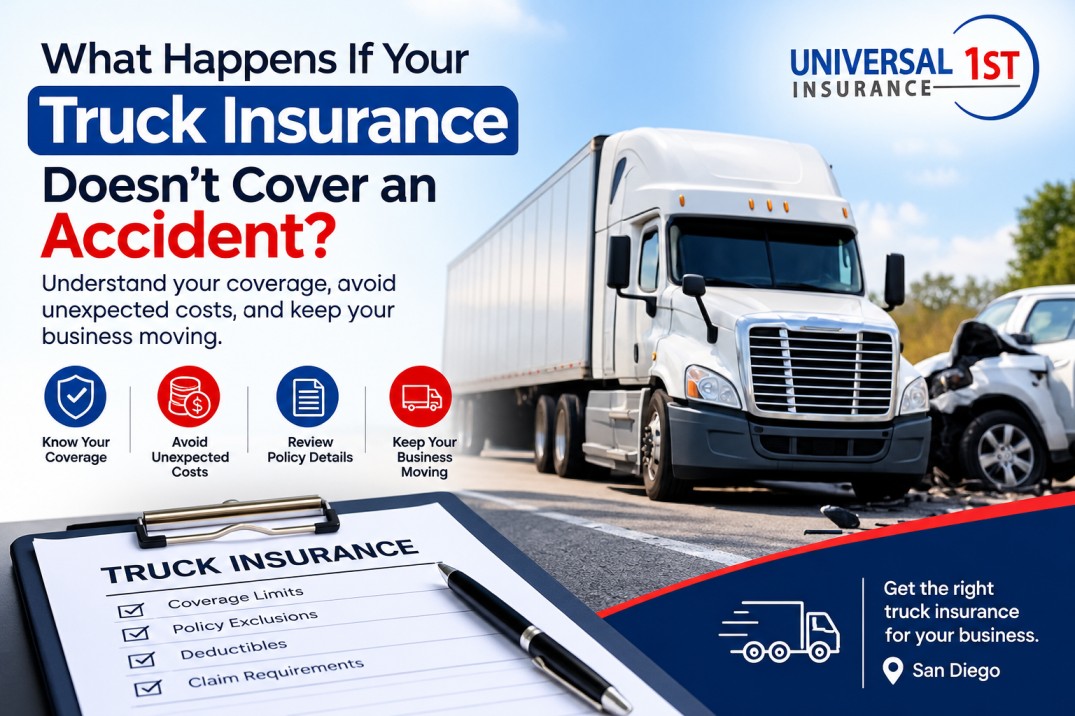
If your truck insurance doesn't cover an accident, you may have to pay for repairs, property damage, or other expenses out of pocket. Understanding your policy exclusions, coverage limits, and claim requirements can help you prepare for unexpected costs. Businesses looking for commercial truck insurance in San Diego should understand how their coverage applies to their vehicles and daily operations. This article explains why truck insurance claims may be denied, what to do when coverage falls short, and how to reduce the risk of unexpected financial losses.
Why Might Truck Insurance Not Cover an Accident?
Truck insurance policies do not cover every possible situation. A claim may be denied or only partially covered when the accident or loss falls outside the policy's terms.
Here are some common reasons a truck insurance claim may not be covered.
1. The Accident Falls Under a Policy Exclusion
Every insurance policy has exclusions that explain what it does not cover. For example, a policy may exclude certain activities, uses, or types of losses.
A trucking business should review its policy carefully to understand these restrictions. If a truck is being used for a purpose that is not covered by the policy, an accident during that activity could lead to a coverage dispute.
2. Your Coverage Limits Are Too Low
Even when an accident is covered, your policy may not pay every expense. Insurance generally pays covered losses according to the policy's limits, deductibles, and conditions.
For example, if a covered liability claim exceeds your policy limit, your business may be responsible for the amount above that limit, subject to applicable law and the circumstances of the claim.
Reviewing your limits regularly can help you understand whether they remain appropriate for your business operations.
3. Your Policy Information Is Outdated
Changes in your trucking business can affect your insurance needs. Adding vehicles, changing how trucks are used, expanding into new operating areas, or changing driver arrangements may require an update or review.
If your policy information does not accurately reflect your current operations, the insurer may need to investigate whether the loss is covered.
Keep your vehicle details and business information current, and discuss significant changes with your insurance professional.
4. The Driver or Vehicle Does Not Meet Policy Requirements
Some policies contain specific requirements involving authorized drivers, vehicle use, or other conditions. If an accident involves a situation that does not meet those requirements, coverage may be affected.
The result depends on the exact policy wording and applicable law. Do not assume that a claim is automatically denied because of a driver or vehicle issue. Ask the insurer to explain the relevant policy provision.
5. Your Policy Was Cancelled or Had Lapsed
A missed payment or cancellation can create a serious coverage problem. If an accident occurs when the policy is no longer in force, the loss may not be covered by that policy.
Check your policy status, payment records, renewal dates, and any notices from your insurer. If you receive a cancellation notice, contact the insurer or your insurance professional promptly to understand your options.
What Costs Could You Face If Your Truck Insurance Doesn't Cover an Accident?
When insurance does not cover a loss, the financial consequences can be significant for a trucking business.
Depending on the accident and the coverage involved, possible expenses include:
- Truck repairs or replacement. You may have to pay to repair or replace your own vehicle if the loss is not covered by the applicable physical damage coverage.
- Damage to other property. If you are legally responsible for damaging another vehicle, building, or other property, you could face expenses that are not covered by your policy.
- Injuries and legal claims. An accident involving injuries may lead to medical-related claims, legal costs, or liability expenses, depending on the circumstances and applicable law.
- Business interruption. A damaged truck may be unavailable for work, potentially affecting deliveries, schedules, and revenue.
- Deductibles and uncovered amounts. Even when a claim is accepted, you may need to pay the deductible and any covered loss amount that exceeds the applicable policy limit.
These expenses are not automatic in every accident. Your legal responsibility, available insurance coverage, and the facts of the incident all matter.
What Should You Do If Your Truck Insurance Doesn't Cover an Accident?
If your insurer says that your accident is not covered, take the following steps before assuming you must pay every expense yourself.
1. Request a Clear Explanation
Ask the insurance company for the reason the claim was denied or limited. Request the relevant policy wording and a written explanation of the decision.
Check whether the issue involves an exclusion, a coverage limit, missing information, a policy condition, or another reason.
2. Review Your Policy Documents
Read the sections covering the type of loss, applicable exclusions, limits, deductibles, and claim requirements. Compare the insurer's explanation with the actual policy language.
If anything is unclear, ask your insurance professional or a qualified attorney for guidance.
3. Gather Supporting Evidence
Keep copies of the accident report, photographs, repair estimates, invoices, correspondence, and other relevant records.
Provide accurate information to the insurer and respond to reasonable requests for documentation. Avoid admitting legal fault or agreeing to a settlement before you understand the situation and, where appropriate, obtain professional advice.
4. Ask About a Claim Review or Appeal
If you believe the insurer has misunderstood the facts or applied the policy incorrectly, ask about its review or appeal process.
You can also contact your state's insurance regulator for information about complaint procedures. For California policyholders, the California Department of Insurance provides consumer assistance and information about insurance complaints.
5. Review Other Potential Sources of Recovery
Depending on the circumstances, another party may be responsible for some of the loss, or another applicable policy may provide coverage. Do not assume another policy applies without checking its terms.
Consider getting legal advice when the accident involves significant financial losses, injuries, disputed liability, or a complicated coverage decision.
How Can Trucking Businesses Reduce the Risk of Coverage Gaps?
No policy can cover every possible loss, but regular reviews can help businesses identify problems before an accident occurs.
Review Coverage When Your Business Changes
Contact your insurance professional when you add trucks, hire drivers, change the type of work you perform, or expand your operating territory.
Businesses seeking commercial truck insurance in San Diego should make sure the policy accurately reflects their actual operations and discuss whether their current limits and coverage options remain suitable.
Understand What Your Policy Includes
Do not focus only on the premium. Ask questions about covered losses, exclusions, deductibles, liability limits, physical damage coverage, and any conditions that apply to your operations.
Make sure you understand the difference between coverage for damage to your truck and coverage for your legal liability to other people.
Keep Insurance and Vehicle Records Organized
Maintain current vehicle schedules, driver information, policy documents, payment records, and renewal dates. Good recordkeeping can make it easier to identify outdated information and respond to claim requests.
Schedule Regular Insurance Reviews
Your insurance needs can change as your business grows. Review your coverage at renewal and whenever you make a major operational change.
For additional guidance, consider recognizing gaps in business insurance protection so you can identify potential weaknesses before they become costly problems.
What Should San Diego Businesses Know About Truck Insurance?
Businesses operating trucks in San Diego should consider how their vehicles are used, who drives them, where they operate, and what financial risks their operations create.
A business that makes local deliveries may have different insurance needs from a company that transports goods over longer distances. The type of cargo, vehicle use, operating territory, and contractual requirements may also affect the coverage a business should discuss with its insurance professional.
Business owners should not assume that a standard policy automatically covers every vehicle, driver, or type of operation. Reviewing these details can help them make better-informed coverage decisions.
If you are comparing options, truck insurance solutions for businesses in Los Angeles provides another relevant starting point for learning about truck insurance. Confirm that any policy you consider is suitable for your actual operations and locations.
How Universal 1st Insurance Can Help
Universal 1st Insurance serves businesses nationwide, with a focus on commercial insurance, commercial auto insurance, truck insurance, fleet insurance, and transportation-related insurance needs.
The agency helps businesses consider coverage in relation to their vehicles and operations. Reviewing your current insurance, explaining your business activities, and asking questions about policy limits and exclusions are useful steps when evaluating whether your coverage remains appropriate.
Businesses seeking truck insurance in San Diego can review the agency's commercial insurance options for San Diego businesses and contact Universal 1st Insurance to discuss their needs.
The right coverage depends on the individual business, the policy terms, and the risks involved. An insurance professional can help you understand the available options, but coverage is determined by the applicable policy and its conditions.
Frequently Asked Questions
What happens if my truck insurance claim is denied?
Ask the insurer for a written explanation and the relevant policy provisions. Review the decision, provide any missing evidence, and ask about the claim review or appeal process if you disagree.
Can I be responsible for accident costs if my truck is insured?
Yes. You may still be responsible for deductibles, losses above policy limits, or expenses that fall outside your coverage. Your legal responsibility and the terms of your policy determine what you may owe.
Does commercial truck insurance cover damage to my own truck?
It depends on the policy. Liability coverage generally addresses covered legal responsibility to others, while physical damage coverage may help pay for covered damage to your own truck. Check your policy for applicable coverage, exclusions, and deductibles.
Can a truck insurance company deny a claim because of an excluded activity?
An exclusion may limit or prevent coverage for a particular loss. Whether it applies depends on the wording of the policy, the facts of the accident, and applicable law. Request an explanation before assuming the decision is final.
How often should a trucking business review its insurance?
Review your insurance at renewal and whenever you make significant changes, such as adding vehicles, changing drivers, expanding operations, or taking on different types of work.
Where can I find truck insurance in San Diego?
You can contact an insurance agency that serves businesses in the area and discuss your vehicles, operations, and coverage needs. Universal 1st Insurance serves businesses nationwide and provides information about its commercial insurance services on its website.
Summary
If your truck insurance doesn't cover an accident, you may face repair bills, liability expenses, legal costs, or other losses that your policy does not pay. Common issues include exclusions, insufficient limits, outdated information, policy conditions, and a lapse in coverage.
The best way to respond is to understand the insurer's decision, review your policy, gather supporting documents, and seek professional guidance when necessary. Regular insurance reviews can also help trucking businesses identify possible coverage gaps before their operations change.
If you want to review your business's insurance needs, contact Universal 1st Insurance commercial insurance services.