
💤 1. Sleep Quality
Clinical data focuses on regulating neurotransmitters and sleep-wake cycles rather than sedation. [1]
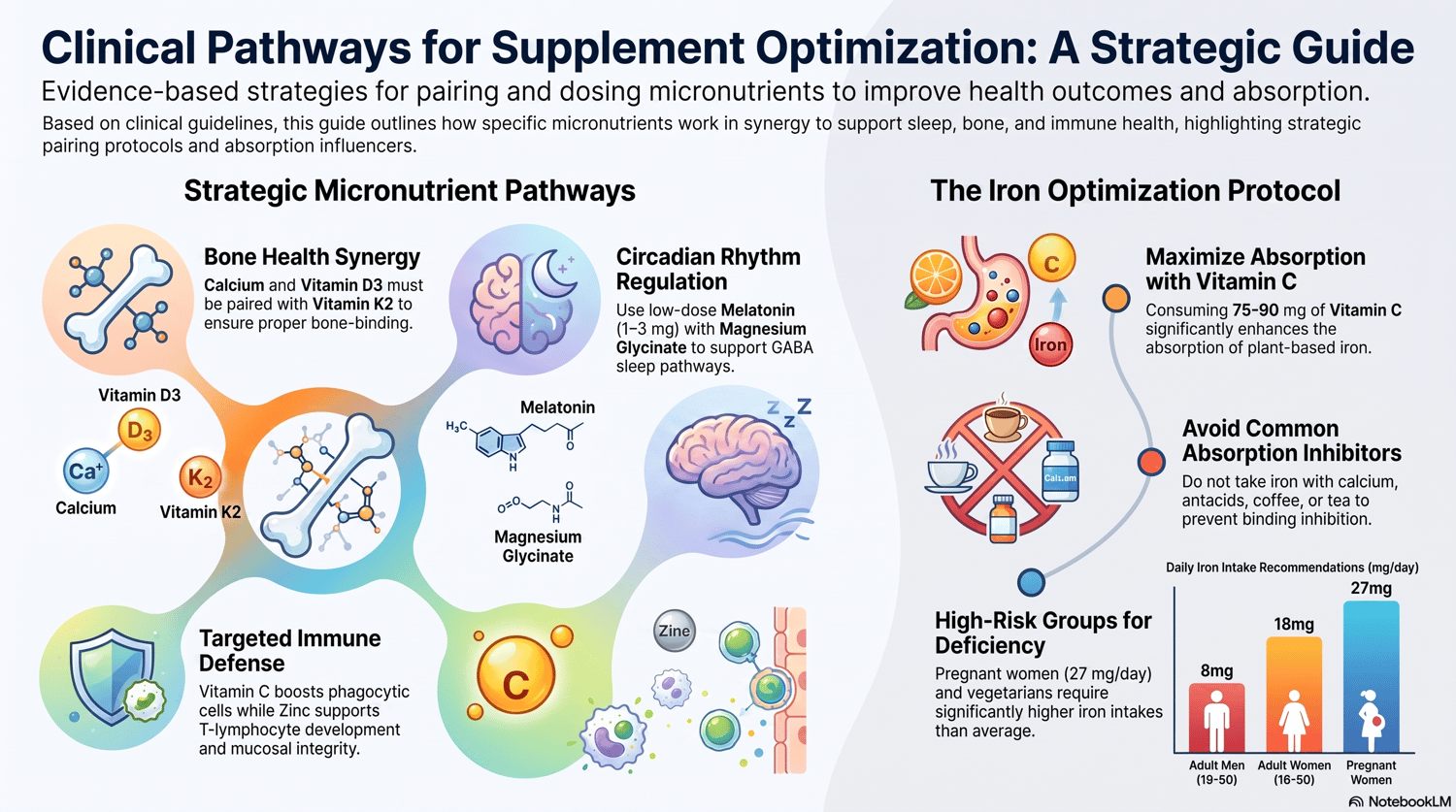
Melatonin: Recommended by organizations like the American Academy of Sleep Medicine for circadian rhythm disorders (e.g., jet lag). Medical consensus advises starting with low doses of 1–3 mg to preserve safety. [1]
Magnesium (Glycinate or Citrate): Acts as a muscle relaxant and regulates gamma-aminobutyric acid (GABA) pathways. It is frequently highlighted by Harvard Health Publishing as an essential mineral for proper muscle and nerve function. [1, 3, 4]
Vitamin D: Emerging clinical trials link severe Vitamin D deficiency directly to shortened sleep duration and poor sleep quality due to its role in modulating serotonin synthesis. [1]
Authority Resource: Look up the National Center for Complementary and Integrative Health (NCCIH) Sleep Guide for comprehensive reviews of natural sleep aids.
🩸 2. Iron Deficiency Anemia (IDA)
Correcting low iron stores requires strategic pairing to maximize bioavailability while minimizing gastrointestinal side effects. [1, 2, 3]
Elemental Iron: The NIH Office of Dietary Supplements (ODS) outlines standard protocols for iron-deficiency anemia, often starting with ferrous sulfate, ferrous gluconate, or ferric citrate. Clinical guidelines note therapeutic dosing may range up to 150–200 mg of elemental iron daily, split into multiple doses. [1, 2, 4]
Vitamin C (Ascorbic Acid): Consuming 75–90 mg of Vitamin C alongside non-heme (plant-based) iron significantly enhances iron absorption in the gut.
Co-Factors: Chronic deficiencies in Vitamin A and Riboflavin (B2) can impair iron mobilization; optimizing these vitamins enhances the hematological response to iron therapy. [1, 2, 3, 4]
Absorption Warnings: Avoid taking iron concurrently with calcium supplements, antacids, coffee, or tea, as these compounds heavily inhibit iron binding in the gut. [2, 3]
Authority Resource: Refer to the NIH ODS Iron Fact Sheet for Health Professionals to cross-reference specific elemental weights. [1]
🧫 3. Gut Health & Microbiome Support
Clinical interventions focus heavily on maintaining the gut mucosal barrier and supporting bacterial diversity.
Targeted Probiotics: Modern medical guidelines move away from generic "one-size-fits-all" probiotics, which can inadvertently reduce baseline microbiome diversity. The World Gastroenterology Organisation (WGO) recommends specific, thoroughly researched strains (like Lactobacillus rhamnosus GG or Bifidobacterium infantis) tailored to target symptoms like Irritable Bowel Syndrome (IBS).
Prebiotic Fiber: Consuming soluble and insoluble fiber (aiming for 25g daily for women and 38g daily for men) acts as the primary fuel source for beneficial microbes, promoting digestion and blood sugar management.
Authority Resource: Utilize the World Gastroenterology Organisation Global Guidelines on Probiotics and Prebiotics to identify evidence-based strain selections. [1, 3]
🦴 4. Bone and Musculoskeletal Health
Skeletal maintenance depends on a tightly regulated mineral balancing act to ensure structural integrity.
Vitamin D3: Essential for facilitating proper calcium absorption within the gastrointestinal tract. Levels are typically maintained via standard daily targets or targeted therapeutic protocols if a clinical baseline deficiency is identified.
Calcium: Works in tandem with Vitamin D to construct and preserve bone mineral density. Public health guidelines warn against excessive unmonitored calcium loading, as unabsorbed calcium can deposit in vascular tissues.
Magnesium & Vitamin K2: Magnesium plays a structural role in bone matrix synthesis, while Vitamin K2 activates osteocalcin, a protein that binds calcium directly to the bone matrix rather than letting it accumulate in the bloodstream.
Authority Resource: Explore the National Osteoporosis Foundation / Bone Health & Osteoporosis Foundation (BHOF) Clinical Guidelines for age-specific mineral intake values. [1, 3, 4]
🛡️ 5. Immune System Health
The immune system requires a wide array of micronutrients to successfully produce, deploy, and regulate defense cells. [1]
Vitamin C: Acts as a highly potent antioxidant that accumulates inside phagocytic cells, boosting microbial killing capabilities and supporting cellular healing.
Zinc: A critical mineral required for T-lymphocyte development and the architectural integrity of mucosal linings.
Vitamin D: Functions as a key immunomodulator; immune cells possess specific Vitamin D receptors that help prevent hyper-inflammatory overreactions while maximizing innate pathogen clearance.
Authority Resource: Review the NIH ODS Dietary Supplements for Immune Function Guide to evaluate the clinical efficacy data of various vitamins and botanicals. [1, 2, 3, 4]