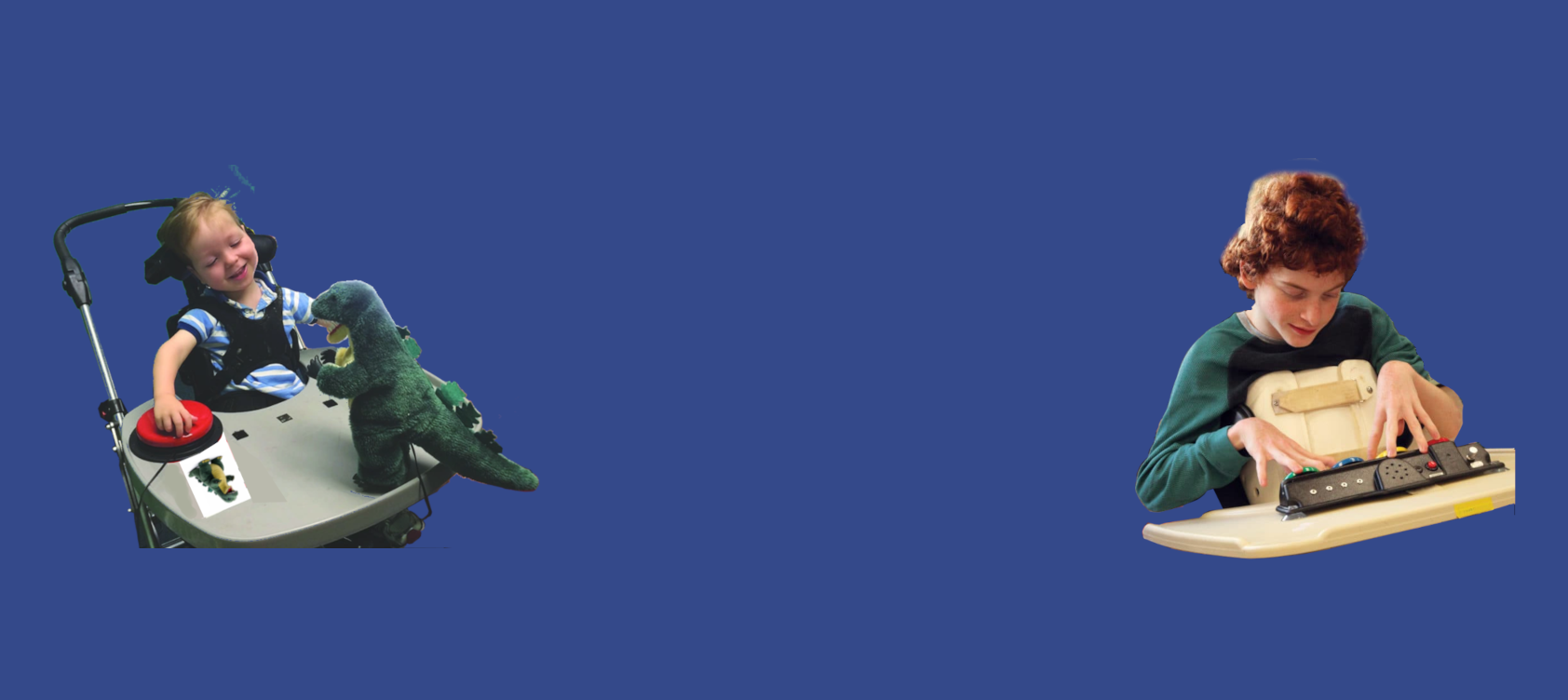
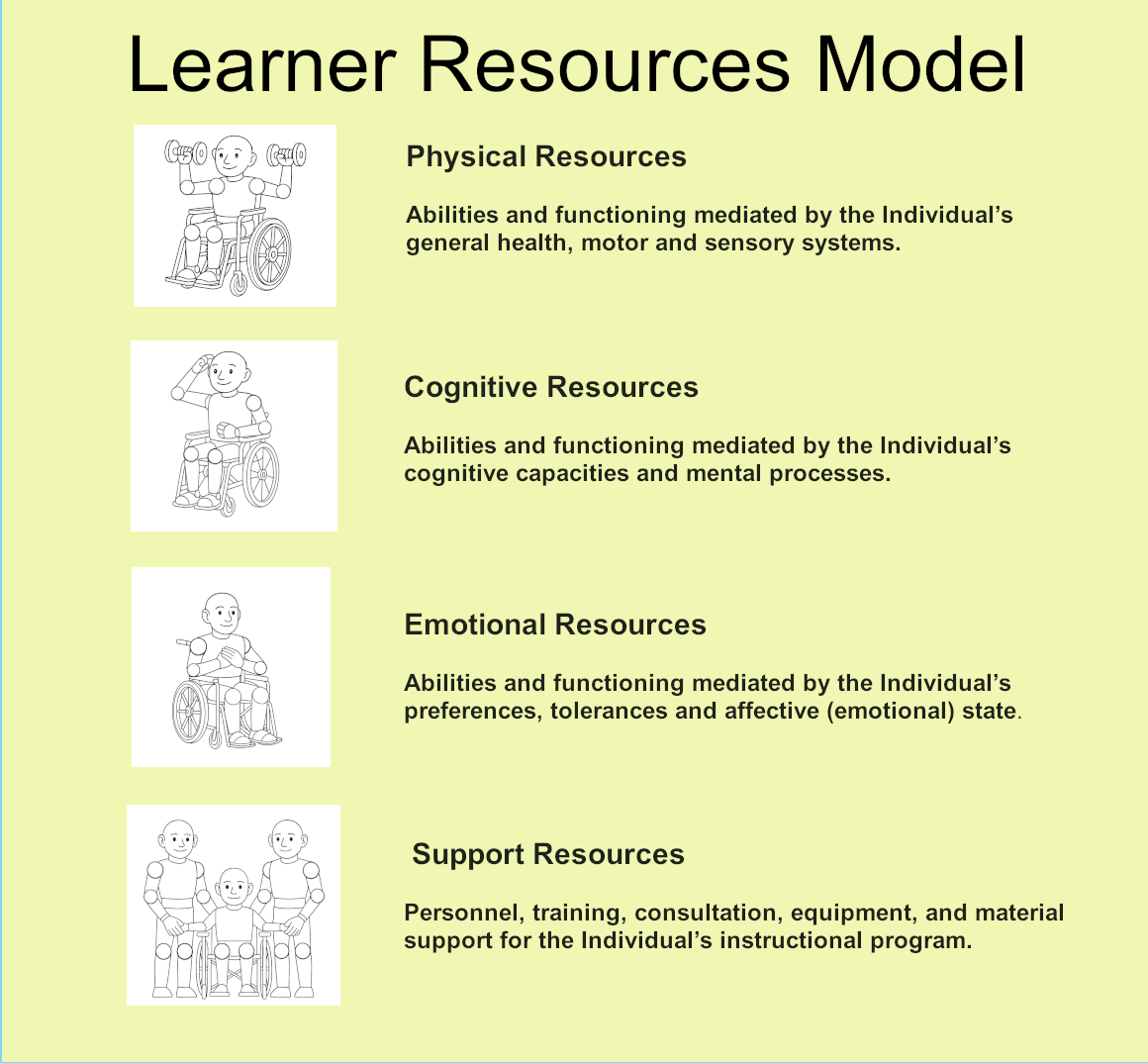
The Learner Resources Model (LRM) provides the conceptual foundation for Lifespace Access Assessment and Planning Instruments
Scope & Compliance
The LRM reflects the belief that assessment and individualized instructional programs must be based upon a comprehensive view of the Individual’s strengths and weaknesses. The scope/breadth and the depth of the Lifespace Access assessment and planning processes built upon this foundation meet and exceed the requirements in Part C Early Intervention and Special Education California and Federal regulations. (California Ed Code § 56320 and IDEA § 300.304.)
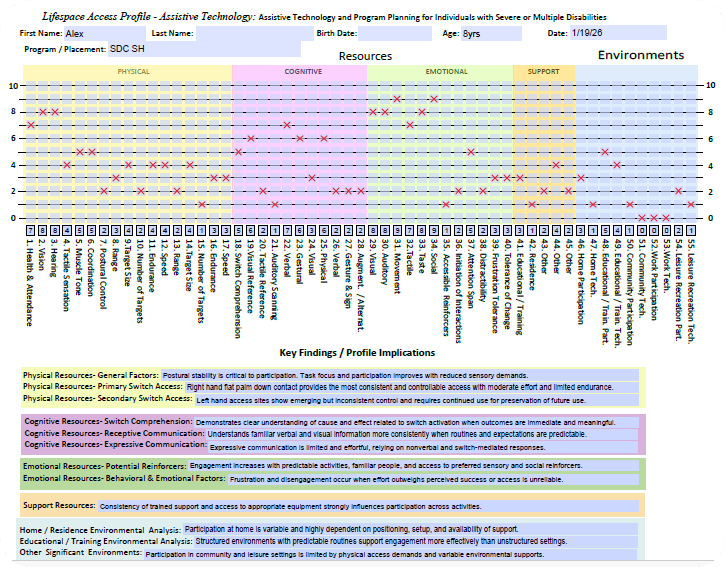
The LAP-AT process leads to a comprehensive shared perspective
Ratings and other information gathered across 55 Scales produces a view that shows strengths and weaknesses across the four LRM resource categories.
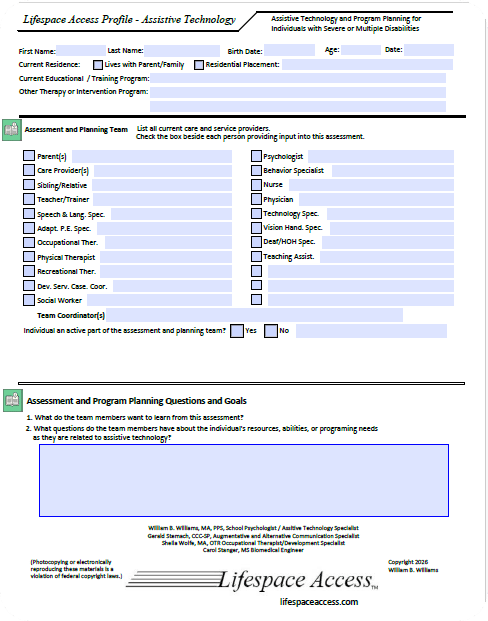
The LAP-AT process start with assembling a Multidisciplinary the Team
Research shows that program planning is most effective when conducted by a multidisciplinary team that includes parents, family members, care providers, instructional and support personnel.
Having all the stakeholders involved in the process is essential.
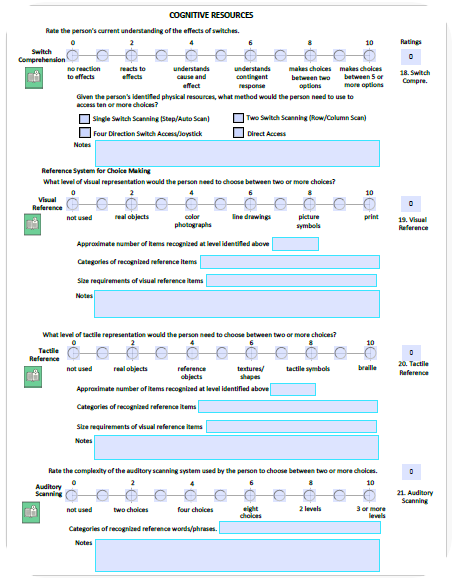
The Application
The LAP-AT application is constructed as an interactive Adobe Acrobat pdf.
User Manual, Scoring, Note Taking, Graphing, and Report Form completion are all incorporated into a single pdf.
Desktop, laptop, and tablet formats are supported.
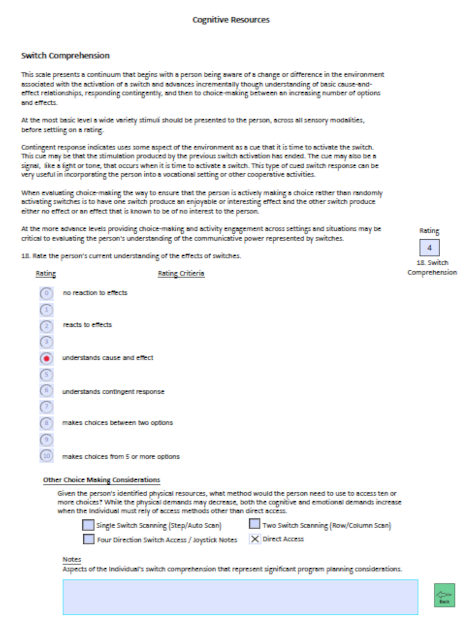
Integrated interactive Manual
A click on the Manual button for any rating scale or form field brings up an interactive manual page that provides explanation for the scale or field and directions for its completion.
The interactive nature of the Manual, Protocol, Graphing, and Reports means ratings, notes, or other information entered on Manual pages automatically populates corresponding fields at other places in the instrument and reports
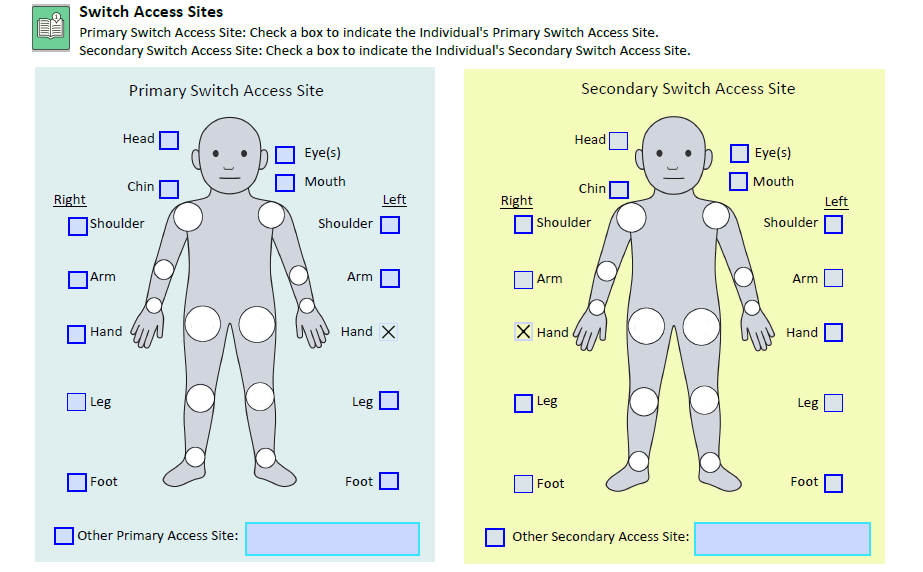
Switch Site Identification
The LAP-AT process includes identification of a Primary and a Secondary Switch Access Site.
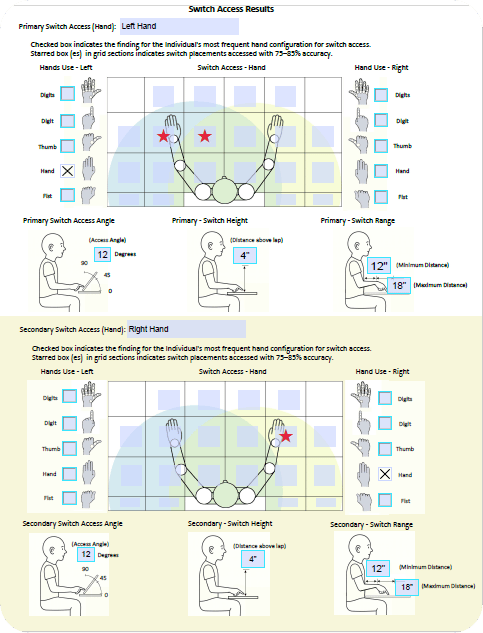
Information gathered for Individuals whose switch access is their hand(s)
Hand & arm range for switch access
Hand shape for switch access
Switch access angle, height, and distance.
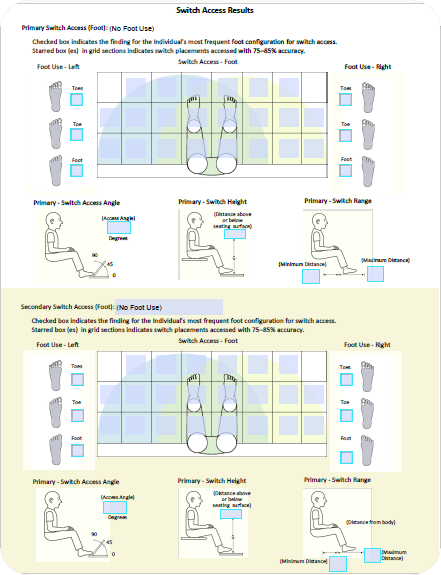
Foot Access
A similar set of information is gathered if the Individual's switch access involves a foot or feet.
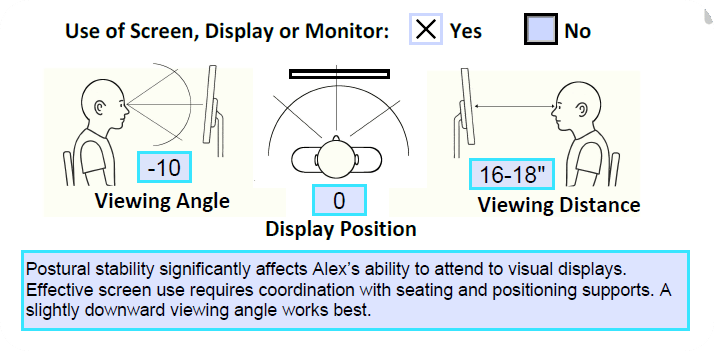
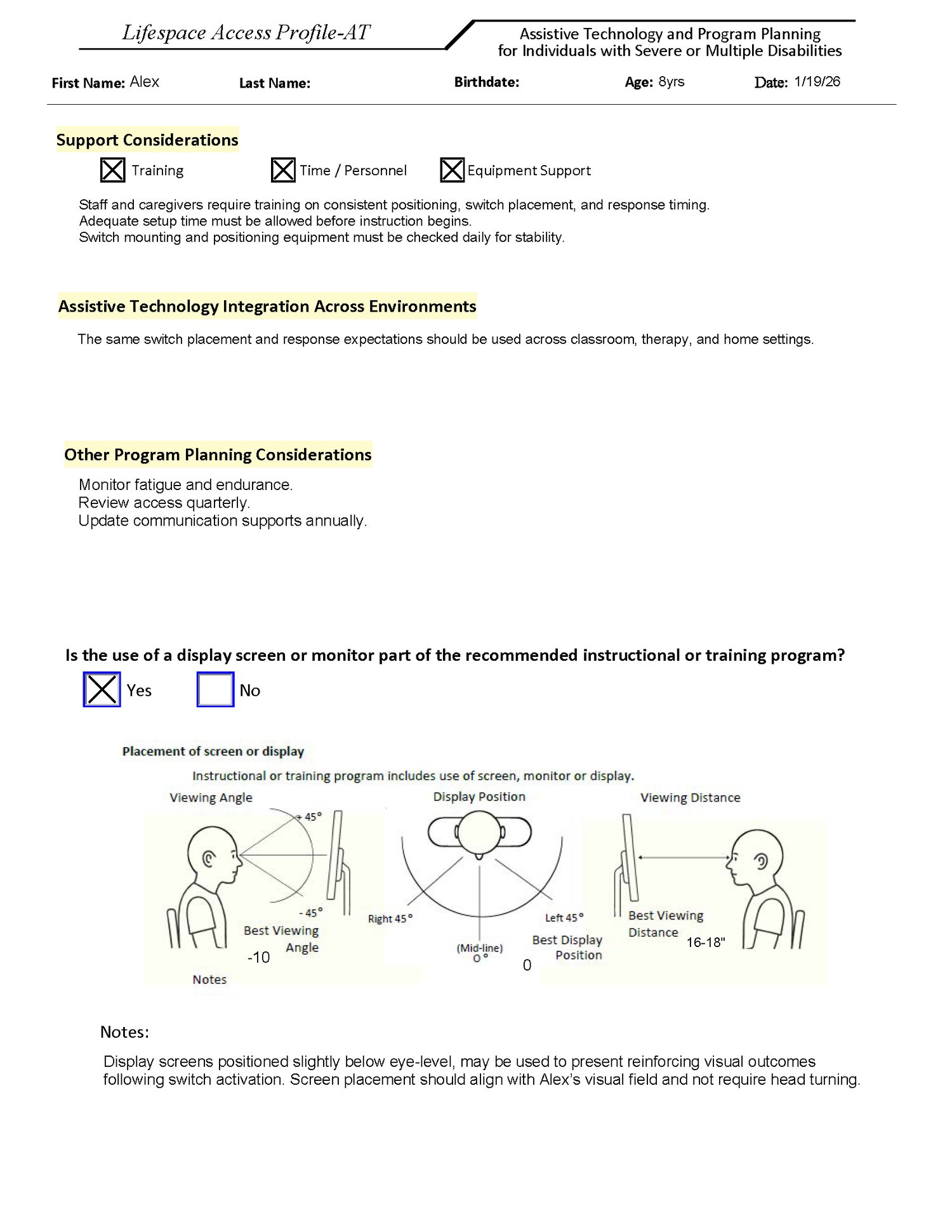
For display screen or monitor use
Viewing Angle
Display Positioning
View Distance are considered.
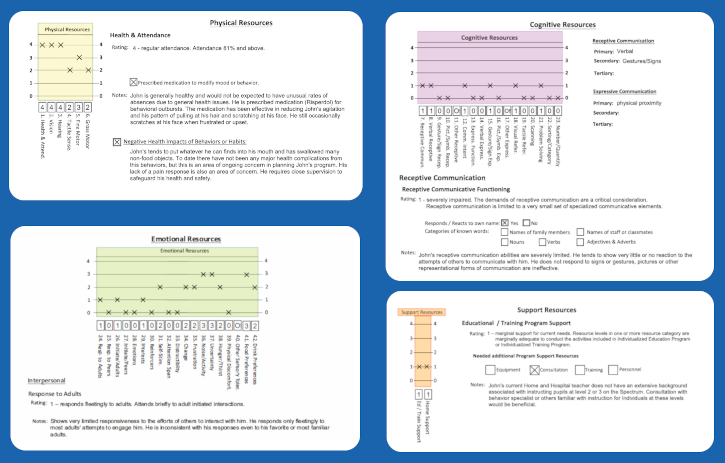
Guided Steps for Analysis, Interpretation and Priority Setting
The Findings and Program Planning Implications pages in each Resource category present a graph of ratings, the rating descriptions, and the scale notes for the Team to consider.
Based upon that consideration, in each Resource category the Team identifies Key Findings and Planning Implications are identified.
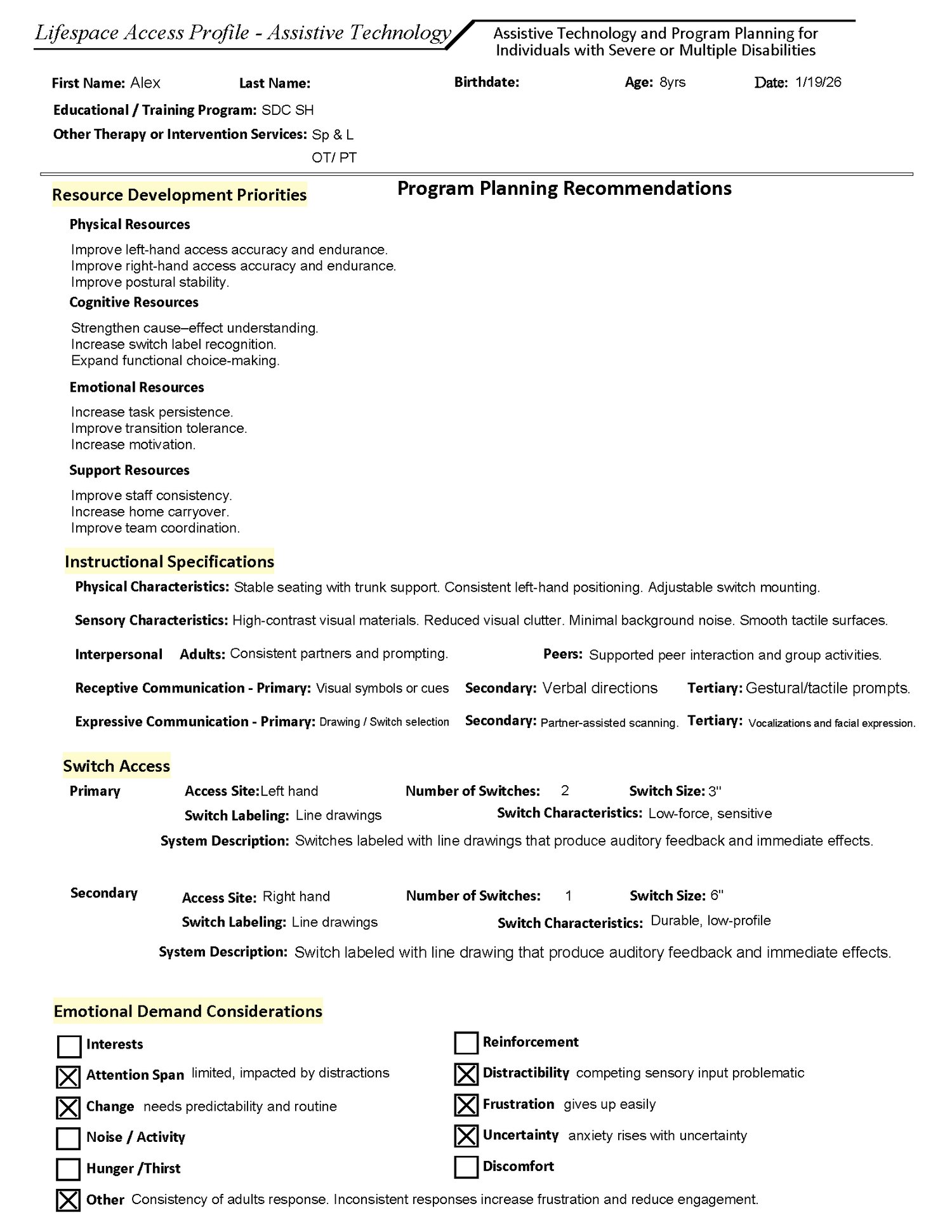
The LAP-AT process leads to a set of Individualized program planning recommendations
Resource Development Priorities
Instructional Specifications
Primary & Secondary Switch Access
Emotional Demand & Motivations
Program Recommendations
Support Considerations
AT Integration across settings
Other Program Planning Considerations
Display Use specifications

The LAP-AT is an assessment and program planning instrument for Individuals with physical and developmental disabilities. It uses the LRM and Team approach that has been guiding program planning for severely and multi-handicapped populations since 1993.
The LAP-AT is not a standardized or statistically referenced test. It does not diagnose or identify any disability or handicapping condition.