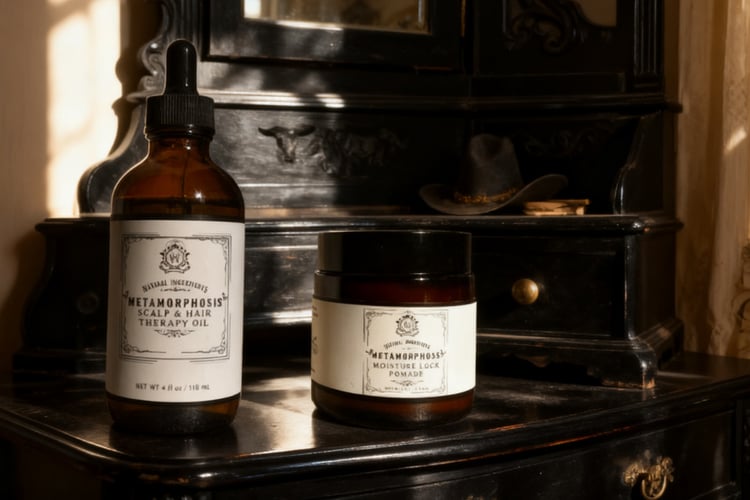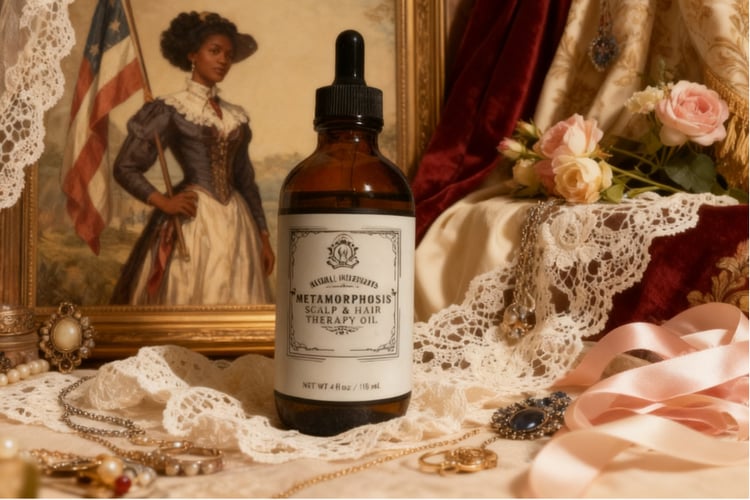

The Metamorphosis Scalp & Hair Therapy Oil was formulated with lightweight, nutrient-rich oils selected to support scalp nourishment, softness, elasticity, moisture balance, and manageability across textured hair types.
The formula focuses on lightweight nourishment that layers well into textured hair routines without overwhelming the strand.
Grapeseed oil is valued for its lightweight feel and ability to support softness without excessive heaviness.
For textured hair, grapeseed oil helps:
Because it absorbs relatively easily, it works well for many different porosity levels.
Safflower oil is rich in fatty acids that help support moisture retention and softness.
It is commonly used in textured hair care to help:
Its lighter consistency makes it useful for textured hair routines that want nourishment without thick buildup.
Abyssinian oil is known for its lightweight texture, smooth finish, and ability to support softness without weighing hair down.
It is especially valued because:
Many people appreciate Abyssinian oil as a sustainable alternative to argan-style oils while still providing excellent slip and softness support.
Fractionated coconut oil is a lighter version of traditional coconut oil that absorbs more easily and feels less heavy on the hair.
For textured hair, it helps:
Its lightweight nature makes it especially helpful for people who find traditional coconut oil too heavy.
Watermelon seed oil helps provide lightweight nourishment while supporting softness and manageability.
For textured hair, it is appreciated because it:
This makes it especially useful in routines focused on softer, more touchable moisture retention.
Bhringraj oil has long been associated with scalp-focused hair care traditions.
In textured hair routines, it is often used to help:
Its inclusion supports WeUnik World’s focus on combining scalp care with moisture support.
Hempseed oil is rich in fatty acids that help support softness, flexibility, and moisture balance.
For textured hair, hempseed oil helps:
It is especially valued in moisture-focused textured hair routines because it feels lightweight while still deeply nourishing.
Peppermint oil helps create a refreshing scalp experience and supports overall scalp comfort.
In textured hair care, it is commonly used to:
Scalp comfort is an important part of maintaining healthier textured hair over time.
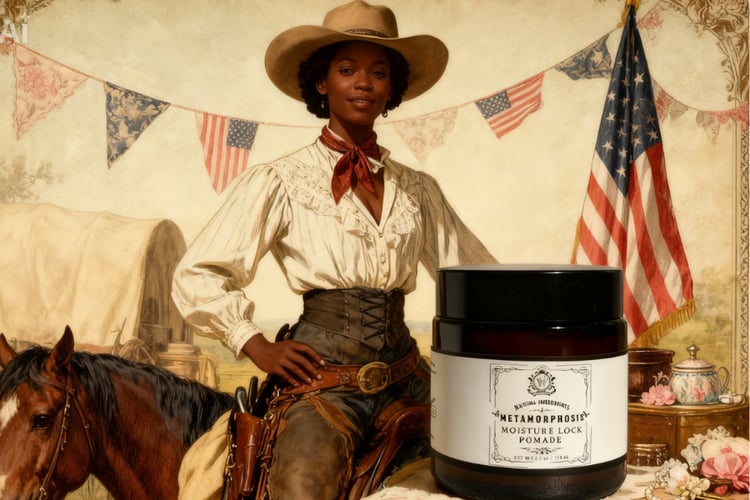
The Metamorphosis Moisture Lock Pomade combines rich butters, lightweight oils, and botanical ingredients chosen to help textured hair retain moisture, improve softness, support manageability, and reduce dryness-related breakage.
Each ingredient was selected to support healthier textured hair routines across curls, coils, braids, twists, blowouts, and protective styles.
Mango butter is known for its rich moisturizing properties while still feeling softer and lighter than some heavier traditional butters.
For textured hair, mango butter helps:
It is especially appreciated by many textured hair users because it helps provide moisture retention without leaving the hair feeling excessively stiff.
Cocoa butter is a deeply nourishing butter traditionally used to help reduce moisture loss and protect dry hair from environmental stress.
For textured hair, cocoa butter helps:
Because textured hair naturally loses moisture faster, ingredients like cocoa butter help support longer-lasting softness between wash days.
Castor oil is widely known in textured hair care for its rich consistency and scalp-supportive properties.
Many people use castor oil to help:
Its thicker texture makes it especially helpful in sealing routines, particularly for hair types that struggle to hold moisture.
Bhringraj oil has a long history in traditional hair care practices and is often associated with scalp nourishment and healthier-feeling hair.
In textured hair routines, bhringraj oil is valued for helping:
It works especially well in routines focused on long-term scalp and strand support rather than temporary cosmetic shine alone.
Watermelon seed oil is lightweight and fast-absorbing, making it especially useful for textured hair types that become weighed down easily.
It helps:
Many people with lower porosity textured hair appreciate oils like watermelon seed oil because they tend to absorb more comfortably into the strand.
Grapeseed oil is lightweight and rich in fatty acids that help support softness and flexibility.
For textured hair, grapeseed oil helps:
Because it feels lighter than many heavier oils, it works well across multiple texture and density types.
Abyssinian oil is often compared to argan oil because of its lightweight feel and shine-enhancing properties, but many people appreciate it as a more sustainable alternative.
One reason it works so well in textured hair care is its lightweight molecular structure, which allows it to sit comfortably on the strand without creating excessive heaviness.
For textured hair, Abyssinian oil helps:
It is especially beneficial for lower porosity textures that often struggle with heavier oils sitting on top of the hair.
Peppermint oil is commonly used in scalp-focused hair care because of its refreshing sensation and stimulating feel.
In textured hair routines, peppermint oil may help:
A healthy scalp environment plays an important role in overall hair maintenance and long-term hair health.
Textured hair may look different from person to person, but healthy textured hair shares many of the same core needs:
The Metamorphosis Moistute System was designed around those foundational needs rather than around a single curl pattern.
That means the application process stays consistent across textured hair types:
What changes from person to person is usually:
For example:
The goal is not forcing every texture into the same appearance. It is supporting healthier moisture balance across textured hair types.
Yes. Many people with low porosity textured hair use the Metamorphosis Moisture System successfully.
Low porosity hair has a tighter cuticle layer, which means moisture can sometimes sit on the hair instead of absorbing easily. This is why application technique matters just as much as product choice.
For lower porosity hair, we often recommend:
The lightweight nature of the Metamorphosis Scalp & Hair Therapy Oil helps support absorption without creating heavy buildup, while the Moisture Lock Pomade helps seal hydration into the strand afterward.
For maximum moisture support, we recommend starting on clean, conditioned hair.
Our recommended application method is:
This overall process remains the same across textured hair types.
What typically changes is:
The focus is always moisture balance, not overloading the hair with product.
We always recommend starting with a small amount and adding more only if needed.
The Metamorphosis products are concentrated, so a little often goes a long way.
It is much easier to add additional product than it is to remove excess product once too much has been applied.
Using too much at once can sometimes leave the hair feeling heavy, especially on finer or lower density textures.
A good approach is:
Over time, most people learn exactly how much their specific texture and density prefer.
Many people notice a difference the very first time they use the Metamorphosis Moisture System.
Common immediate results include:
More noticeable long-term improvements, such as reduced breakage; better moisture retention; healthier-feeling ends; and improved consistency, typically develop over 2 to 4 weeks of regular use.
Hair health is cumulative. Consistent moisture support and gentle handling usually produce the best long-term results.
No. Both the Metamorphosis Scalp & Hair Therapy Oil and Moisture Lock Pomade can also be used between wash days.
Many people use them to:
However, for maximum moisture retention or a full “hair reset,” we recommend the full wet-hair application process outlined in the usage instructions.
Water remains one of the most important foundations of moisture for textured hair, which is why damp or saturated application often produces the strongest moisture results.