
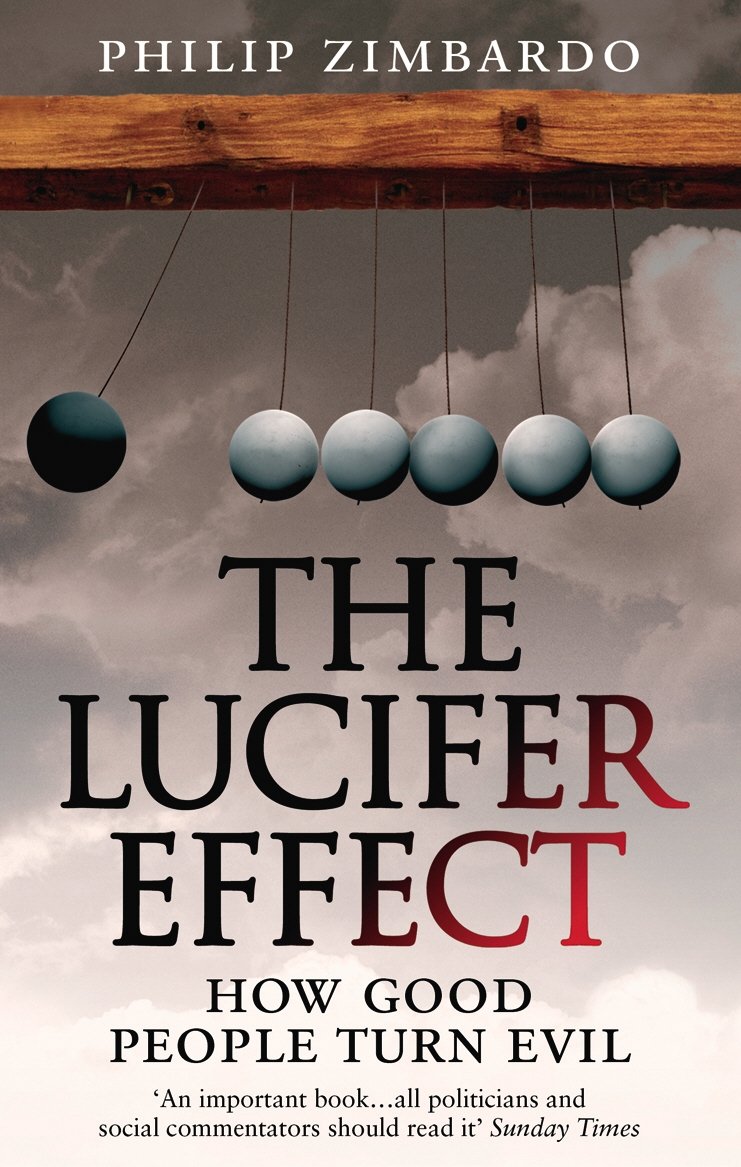
What makes an ordinary person capable of doing terrible things?
In The Lucifer Effect, renowned psychologist Philip Zimbardo explores one of the darkest questions in human psychology: how can circumstances, authority, group pressure, and powerful social systems influence otherwise ordinary people to behave in ways they never imagined?
Drawing heavily on the famous—and highly controversial—Stanford Prison Experiment, as well as other examples of human behavior, Zimbardo examines the psychological mechanisms behind obedience, conformity, dehumanization, power, and moral disengagement.
Rather than simply dividing humanity into “good people” and “bad people,” the book asks a far more disturbing question: How much can the situation around us change who we become?
Perfect for readers interested in:
🧠 Psychology & Human Behavior
🌑 The Dark Side of Human Nature
👥 Group Psychology
⚖️ Morality & Ethics
🎭 Power & Authority
🔬 Social Psychology
⭐ Why We Recommend It
The Lucifer Effect challenges the comforting belief that cruelty belongs only to inherently evil individuals. Zimbardo examines how situations, institutions, authority and group dynamics can exert enormous influence over human behavior.
It is also a book worth reading critically: the Stanford Prison Experiment and some of the conclusions drawn from it have faced substantial methodological and ethical criticism. That controversy makes the book even more interesting for readers who enjoy questioning psychological research rather than simply accepting it.
A provocative exploration of power, morality and the uncomfortable limits of human behavior.
🧠 Enter the Human Mind
More to discover here!
→ Discover the systems behind the mind
Affiliate disclosure: This article may contain affiliate links. If you purchase through one of these links, Whisper Mysteries may receive a small commission at no additional cost to you.