

You've probably seen them—those chunky, woven bracelets that look cool and rugged. But a survival bracelet, often called a paracord bracelet, is much more than a fashion statement. It's a compact survival tool that literally wraps a life-saving resource around your wrist.
Many of you know they're made from military-grade paracord (specifically, Type III 550 Paracord), which means it has a breaking strength of 550 pounds. When you unravel that tightly woven piece of gear, you gain meters of incredibly strong, useful cord.
Here are some of the most essential ways you can put that cord to use when you're off the beaten path.

1. Essential Repairs and Fastening.
The most common use of the paracord is for simple, strong fastening.
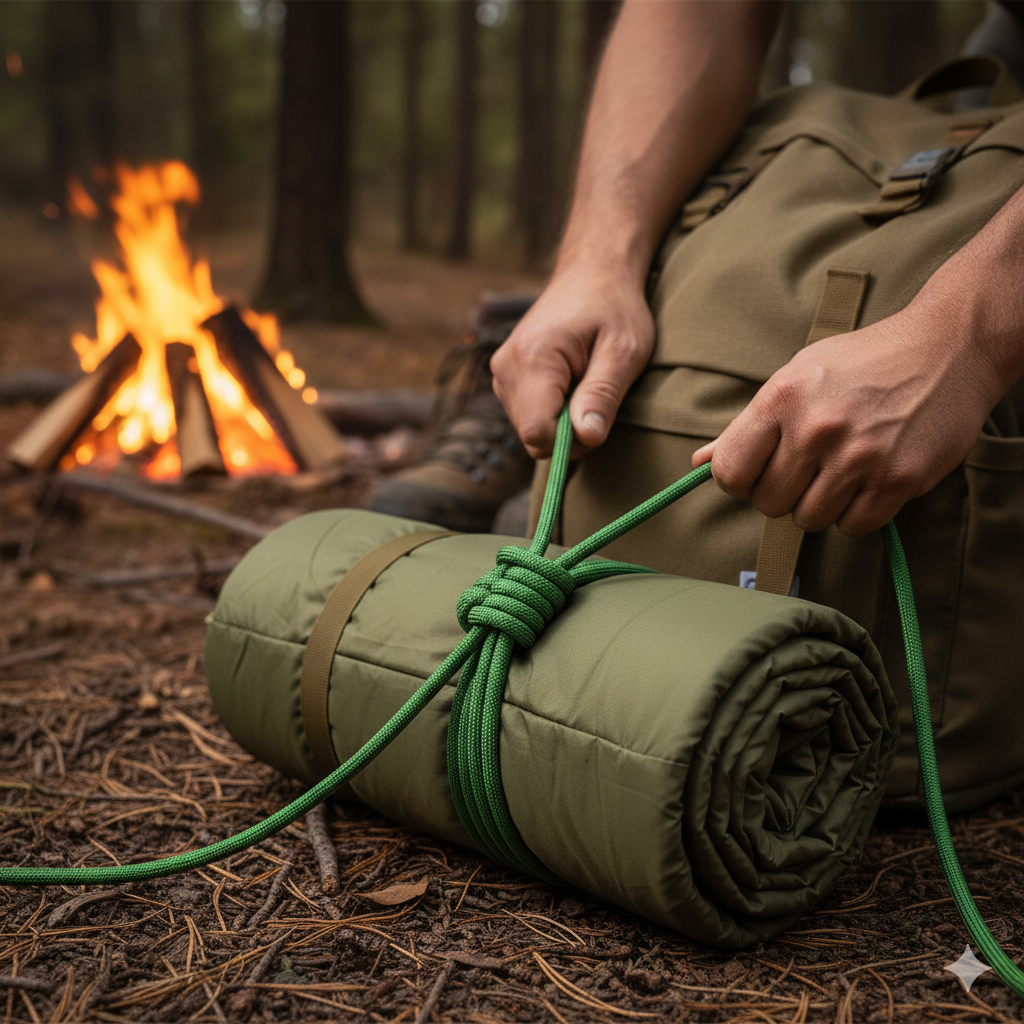
Secure Gear: Use it to tie a sleeping bag to your backpack, secure a tarp as a makeshift shelter, or lash together items you don't want to lose.
Fix a Break: If a backpack strap, shoelace, or piece of clothing tears, the cord can be used as a durable temporary repair.
Clothesline: String it between two trees to dry wet clothes, which is crucial for staying warm and avoiding hypothermia.
2. Survival and Shelter
In a true emergency, the paracord can be the difference between a comfortable night and a miserable, dangerous one.
Build a Shelter: The strength of the cord is ideal for creating the frame of a lean-to or securing a tarp over a branch. You need a strong anchor point, and 550 cord is perfect for the job.
Snare/Trap Line: The inner strands of the paracord (the "guts") are thin, almost invisible, and highly durable. These can be used to set up small snares for catching game if you need to forage for food.
First Aid Sling: In the event of an injury, the unraveled outer sheath of the cord can be used to fashion a strong, supportive arm sling or to tightly secure a splint.
3. Starting a Fire and Fishing
A survival bracelet isn't just cord—the best ones include additional essential components. If yours does, here's how to use them:
Fire Starter: Many bracelets incorporate a ferro rod or flint and steel component in the clasp. You can use the metal part of the buckle (or a knife blade) to scrape against the rod to create sparks, igniting dry tinder.
Fishing Line: Once again, those fine inner strands come in handy. They are excellent for creating a makeshift fishing line, especially when combined with a hook or a simple bone lure.
4. Navigation and Safety
Paracord's strength can be a literal lifesaver in certain situations.
Trail Marker: Cut small pieces of the outer sheath and tie them to branches to mark a trail or signal for help. The bright colours often used in paracord make them highly visible.
Emergency Rope: Need to retrieve an item from a short drop? Or perhaps pull a heavy log for a fire? The unraveled, full length of the cord provides a strong, reliable rope for short-distance hauling.
Tourniquet: While this should only be a last resort, the cord can be used as a makeshift tourniquet to stop severe bleeding.
Your Wrist is Your Toolbox
The true genius of the survival bracelet is its accessibility. Unlike a survival kit stored in your backpack, a paracord bracelet is always on your wrist, ready to be deployed at a moment's notice.
Whether you're an avid hiker, a dedicated camper, or someone who just likes to be prepared for the unexpected, a survival bracelet is a compact, multi-functional tool that you should never leave home without.
Ready to add this essential piece of gear to your kit?
Check out WornKnots Survival Bracelet collection.
Pro Tip: Remember that once you unravel your bracelet, you can't easily weave it back into its original form. Only unravel it when you genuinely need it!
