
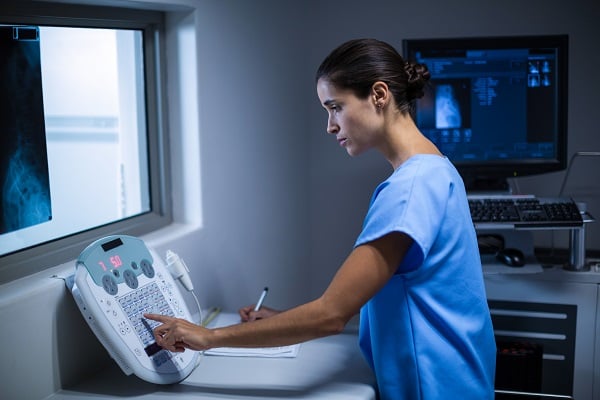
Medical technology keeps moving forward, and that's opening up many opportunities for people who want a hands-on role in patient care. Diagnostic medical sonographers play a vital role in this evolving healthcare landscape.
Their work, producing detailed images physicians rely on for diagnosis and monitoring, has become genuinely essential across healthcare.
For those considering a healthcare career, becoming a Diagnostic Medical Sonographer in Manhattan offers the opportunity to combine advanced technical expertise with meaningful patient interaction in one of the nation's busiest healthcare environments.
What Does a Diagnostic Medical Sonographer Do?
Sonographers, sometimes called ultrasound technologists, use specialized equipment that sends high-frequency sound waves through the body to create images of organs, tissue, blood vessels, and developing fetuses.
Physicians depend on these images for real diagnostic insight, and there's a great benefit here too. Unlike some other imaging methods, ultrasound skips ionizing radiation entirely.
Day to day, a sonographer's job usually covers:
- Getting patients ready for their exam
- Walking patients through the procedure and answering their questions
- Positioning patients so the imaging comes out right
- Running the ultrasound equipment
- Checking image quality as the exam goes on
- Spotting what's normal and what isn't
- Keeping accurate patient records
- Coordinating with physicians and the rest of the care team
Success in this profession requires a balanced combination of technical proficiency and strong interpersonal skills, as sonographers work closely with patients throughout every stage of the examination.
Why Manhattan Is an Excellent Place to Build This Career
Manhattan has some of the country's top hospitals, outpatient centers, specialty clinics, and diagnostic imaging facilities all packed into one place. These organizations depend heavily on imaging to support care across a huge range of specialties.
Working here as a sonographer means exposure to an unusually wide variety of clinical cases, all while building real experience in a healthcare environment that moves fast.
Diagnostic Medical Sonographers in Manhattan find work in places like:
- Hospitals
- Medical centers
- Outpatient imaging facilities
- OB/GYN practices
- Cardiology clinics
- Physician offices
- Emergency care facilities
That range of settings gives sonographers real flexibility to shape their career around whatever interests them most.
Skills Every Diagnostic Medical Sonographer Needs
Running the equipment is only part of the job. Success here comes down to a mix of technical know-how, clinical judgment, and genuine communication skills, all working together to produce accurate images and a decent patient experience.
Technical Proficiency: Operating ultrasound equipment well takes a solid grasp of the technology itself, plus anatomy and scanning technique.
Attention to Detail: Small variations in an image can change how it gets interpreted. Sonographers have to stay sharp on image quality throughout the entire exam, not just at the start.
Communication Skills: Patients often walk in nervous about what's coming. Explaining things clearly goes a long way toward making the whole experience less stressful for them.
Critical Thinking: Every patient's anatomy is a little different, and physicians sometimes request specific adjustments mid-exam. Diagnostic medical sonographers must be able to think critically and adapt quickly to changing clinical situations.
Compassion: Working this closely with patients calls for real empathy, professionalism, and sensitivity, exam after exam.
Areas of Specialization
Once sonographers build up some experience, a lot of them choose to specialize. Common paths include:
- Abdominal sonography
- Obstetric sonography
- Gynecologic sonography
- Vascular sonography
- Musculoskeletal sonography
- Breast sonography
Each specialty asks for extra training, but it also opens the door to more advancement down the line.
The Importance of Hands-On Training
Diagnostic medical sonography is a highly hands-on profession that combines practical clinical skills with advanced imaging technology.
Getting real clinical experience lets students:
- Operate ultrasound equipment for real
- Perform supervised exams
- Build patient communication skills
- Understand how a clinical setting actually runs
- Get comfortable capturing quality images
- Put classroom theory into practice
Clinical training is really what closes the gap between knowing the material and actually being ready to work.
Working as Part of the Healthcare Team
Sonographers rarely work solo. They're constantly coordinating with physicians, nurses, radiologists, and medical assistants to support diagnosis and treatment planning.
Good teamwork here means imaging studies get done accurately, and it gives providers the information they need to make solid clinical calls. Being able to communicate findings clearly and work well with a team isn't optional in this field; it's a core part of the job.
A Career That Offers Long-Term Growth
Medical imaging keeps playing a bigger role in healthcare overall. As providers expand their diagnostic services and imaging tech keeps advancing, skilled sonographers stay in demand.
Sonographers who keep building their skill set, through certifications, added clinical experience, or specialization, tend to find real room to grow and take on more responsibility over time.
How Medical Assistant Training in Manhattan Complements Healthcare Careers
Sonography focuses primarily on diagnostic imaging, but Medical Assistant Training in Manhattan opens the door to a different, equally important healthcare role.
Medical assistants juggle both administrative and clinical work, scheduling appointments, keeping records, assisting during exams, drawing blood, recording vitals, and generally supporting patient care in physician offices and outpatient clinics.
Most training programs build in real clinical experience too, so students walk out ready for an actual healthcare setting.
For anyone exploring healthcare as a career, medical assistant training offers a solid foundation in terminology, anatomy, patient interaction, and clinical procedure, along with access to a wide range of healthcare settings.
Choosing the Right Training Program
Picking the right program matters a lot if you're serious about sonography. Worth looking at:
- A solid, well-rounded curriculum
- Real hands-on lab instruction
- Actual clinical training opportunities
- Instructors with real experience
- Smaller class sizes
- Prep built around national certification
- Flexible scheduling, where it's offered
- Support services for students
Programs that pair classroom learning with supervised clinical work tend to leave graduates a lot more prepared for that first entry-level job.
Final Thoughts
Becoming a Diagnostic Medical Sonographer in Manhattan means working with real medical technology while making a genuine difference in patient care.
From running diagnostic exams to working closely with physicians and the rest of the care team, sonographers play an important part in helping patients get accurate answers, fast.
For anyone drawn to healthcare work that mixes technical skill, patient interaction, and constant learning, sonography offers a genuinely rewarding path forward.
And whether you go straight into sonography or look into something like Medical Assistant Training first, good education paired with real clinical experience is what actually sets you up for long-term success in this field.