

On the 28th February 28, 2026 friction between Israel and the USA on one side and Iran on the other escalated to military action, resulting in the closure of the Strait of Hormuz by Iran indefinitely. A choke point for about 30% of global crude oil production emanating from that region. Add to the mix the conflagration between Ukraine and Russia, a major oil producer, and reduced production capacity of Venezuela, with its world's largest known reserves, oil prices have leaped from around US$60 a barrel to currently approaching US$100, and still rising!
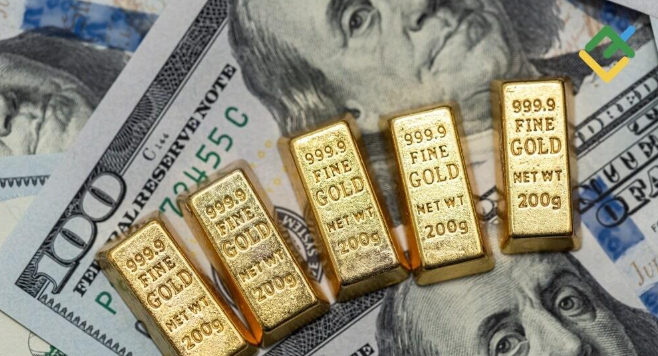
Economic players and analysts instantly expected gold prices, likewise, to surge, as the traditional safe-haven commodity during uncertain times. At best, gold prices have, since the first salvo that eliminated the "Supreme Leader" of the Iran, Ayatollah Ali Khamenei, been muted. The US$ on the other hand, has experienced a dominant initial phase of appreciation, driven by inflation-expectation repricing, rather than conventional safe-haven flows into gold. After all, gold and the US$ have an asymmetric relationship manifesting in their historically negative correlation - when one rises the other generally falls, and a lull in one keeps the other cool as well.
But just as this Iranian war is unusual in more ways than one, this asymmetric relationship between gold and the US$ is also exhibiting unusual attributes, as the later is firming while the former is just yoyoing in the same range. Current price action deviates from this traditional pattern amid this war-induced oil supply shock.
For an African country that produces gold in sizeable tonnages, and whose economy is US$-dependent, from an internal transactions perspective, this dynamic underscores a critical intertemporal arbitrage opportunity (hallo Zimbabwe, Democratic Republic of the Congo (DRC), Sudan, and to some extent Angola and Liberia).
This current gold undervaluation, relative to prospective monetary debasement risks, and despite gold prices more than doubling in the last twelve months, offers asymmetric upside for reserve diversification strategies, in the long term. Meanwhile, in the short run, this may offset immediate US$ strengthening challenges like exacerbating foreign exchange (FX) volatility, imported inflation, and debt-servicing burdens in local currency terms.
So for African economies this implies near-term pressure on import bills and reserve accumulation but positions gold holdings (physical and financial) as a superior hedge against prospective USD weakening and domestic inflation acceleration.
In the 1973 oil crisis, phase one US$ strength lasted approximately six months, before phase two (growth damage, recession pricing, monetary easing) sent gold wild with prices shooting +73%. In 2022 Russia-Ukraine, compression occurred due to contained geography and rapid Fed tightening. Current evidence, with only eight days of Hormuz disruption on the day of writing this piece, suggests no rapid de-escalation, with American authorities even avering that this may be a one-to-three month conflict. If so, this signals prolonged supply constraints.
From an African lens, US$ appreciation imposes asymmetric costs. Many African economies maintain managed floats or peg-like arrangements against USD, with reserves predominantly USD-denominated ( about 60–80% per International Monetary Fund [IMF] Currency Composition of Official Foreign Exchange Reserves [COFER] data).
Thus this US$ denominated position, with the advent of a that currency firming yet amid gold price stagnation will amplify:
- Higher import costs: Oil constitutes 20–40% of import bills in net oil importers on average for African countries. So +13% Brent translates to between 2% an 5% headline inflation impulse, assuming 30% energy weight.
- Exchange rate pressure: Capital outflows toward US$ assets will widen current account deficits, pressuring local currency depreciation (Δe > 0) and negatively impacting exchange rate, from the African country's perspective.
- Reserve management: Higher gold production then provides a natural hedge. Central banks will then face what we term "Sterilised Intervention Constraint," ie, selling gold for US$ bolsters reserves but forgoes future appreciation of that gold asset - if history plus the gold/US$ fundamentals are anything to go by.
Then there is the policy paralysis that comes with excessive reliance on any non-local currency for internal transactions. Case in point is that President Trump has stated that the United States national debt exceeds sustainable thresholds. Different macroeconomic assessment tools like using the government's intertemporal budget constraint, or primary balance, or interest rate-growth differential, or even the ubiquitously used debt-to-GDP ratio, all confirm this about the USA. The point here is President Trump's policy preference seems to be for policy rate, which facilitate more Treasury issuance absorption and mitigates interest expense (projected 2026 servicing costs ≈$1 trillion+).
But this Fed accommodation, potentially via forward guidance or balance sheet expansion, will likely compress term premia, weakening the US$ over medium term via portfolio balance channel. This will have an impact on the African countries so reliant on the US$ both for export receipts and for internal transactions. Yet they have no hand in determining the underlying architecture for the said currency, since its fate is being determined in the USA.
Thus, for the impacted African central banks, optimal reserve composition certainly shifts towards gold (under Modern Monetary Theory). Gold's zero default risk and negative correlation to USD in debasement regimes enhances portfolio efficiency. Technical support at $5,000 per ounce for gold remains pivotal.
Gold-producing countries are therefore currently presented with a compelling arbitrage opportunity as the stagnation of gold prices being witnessed amidst a strengthening USD, and skyrocketing oil prices (driven by the closure of the Straits of Hormuz) creates a divergence between nominal commodity valuations and real exchange rate dynamics, incentivising strategic fiscal adjustments to optimise export revenue streams.
In conclusion, the apparent gold underperformance masks a regime-specific sequencing: inflation-led USD strength precedes debasement-led gold outperformance. African economies, balancing gold export revenues against USD scarcity, should view current levels as strategic entry for reserve diversification, hedging imported inflation, and mitigating FX volatility amid prospective Fed accommodation pressures from elevated United States debt dynamics.