

Introduction
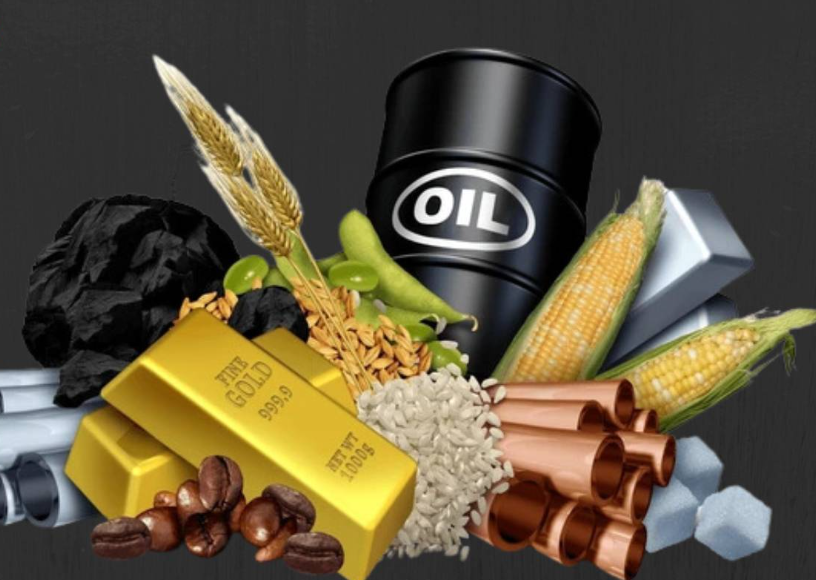
At the time of writing this, 9 days following the escalation of kinetic hostilities in the Persian Gulf, crude oil prices had almost doubled from just above $60 to touching $120 a barrel. Just one third of March gone and this price surge already marks the largest monthly oil gain in history. This became the biggest weekly jump on record in data going back to 1982!
The G7 countries, per Financial Times, then came out and announced that they are considering a “joint release of oil from reserves,” potentially as much as a third of their 1.2 billion barrels combined oil reserves, to tapper down price volatility. The planned release is equivalent to about two months’ worth of oil that passes through the Hormuz Straits. This, again at the time of writing, saw oil prices fall back to below $102/barrel on the news. Still a far cry from the initial prices of just one week earlier.
Remarkable as this may be, the ramifications will reverberate way beyond simply supply chain re-costing and the pass through inflation to other products and services via energy and transport repricing. Oil here is just but a vector for a myriad of Balance of Payments (BoP) challenges for nations and accompanying sovereign risk, as is expounded at length below.
Background
The contemporary closure of the Strait of Hormuz represents a quintessential black swan event with systemic implications far exceeding the immediate volatility in Brent crude futures. While global market participants remain fixated on the spot price of crude oil, this myopic focus obscures the deeper structural fragilities embedded within the global industrial value chain.
For African economies, heavily reliant on imported oil, but more so, on capital goods as well, this oil situation presents multi-layered predicaments which all converge on balance of payments (BoP) shocks. Thus, this dislocation necessitates an immediate recalibration of sovereign risk models, for developing nations particularly, as their economies are most sensitive and defences are thinnest to these global disruptions.
Here we will dis-aggregate the primary transmission mechanisms of this crisis and demonstrate that this is not just about energy costs, but rather the severance of critical inputs necessary for developing nations, who all the while have to fend off a stagflationary environment that threatens debt sustainability across the continent.
The Mispricing of Input-Output Linkages
Standard econometric models typically weight energy price shocks as the primary variable in inflation forecasting. However, this event in the Middle East highlights a critical failure in accounting for non-linear supply chain dependencies, specifically regarding the metallurgical and chemical sectors.
Approximately 92% of global elemental sulphur production is not mined, but is a by-product of natural gas processing, and crude oil refining. The closure of this 21 mile chokepoint does not merely restrict 20 million barrels of crude per day; it also creates a supply shock in the feedstock for sulfuric acid (H_2SO_4).
From an industrial economics perspective, sulfuric acid is the fundamental reagent in hydrometallurgy. It is the essential solvent for leaching copper and cobalt from ore. From Input-Output models, we can observe that the technical coefficient for sulfuric acid in battery-grade mineral processing is inelastic in the short term (meaning, the consumption volume per unit of output cannot be easily reduced or substituted even when prices increase significantly).
So, there are no viable substitutes at scale. Consequently, a disruption here creates a bottleneck for the production of transformers, electric vehicle (EV) battery cathodes, and the printed circuit board substrates, required for virtually every electric device and gadget.
The denouements of this fact alone are already apparent.
For African nations pursuing industrialisation, especially under the African Continental Free Trade Area (AfCFTA) framework, implies they will have to endure a sudden increase in the capital expenditure (CapEx) required for infrastructure and both capital and consumer assets. If the global supply of refined copper contracts due to acid shortages, the cost of grid expansion rises. We model this as a negative supply shock shifting the Long-Run Aggregate Supply (LRAS) curve to the left, resulting in higher price levels and lower output - a classic stagflationary signature.
The Semiconductor-Energy Nexus and Digital Sovereignty
The second-order effect concerns the energy-security nexus in East Asia, which directly impacts the cost of technology imports for African markets. Qatar liquefied natural gas (LNG) shipments, constituting 30% of Taiwan's energy intake, traverses the same Hormuz corridor. Taiwan maintains strategic reserves covering only 11 days of consumption. The correlation here is absolute: no gas implies no thermal power generation for them, which entails no power, implying the cessation of their fabrication plants.
For instance, Taiwan Semiconductor Manufacturing Company (TSMC) currently commands 90% of the global market share for advanced node logic computer chips. Their operations alone consume about 9% of Taiwan's total electricity grid. In financial terms, this represents a concentrated risk exposure. A disruption in TSMC output creates a scarcity rent on semiconductors. For African economies, which are net importers of high-tech hardware, this manifests as an adverse Terms of Trade (ToT) shock.
We must apply a Real Options Analysis to this scenario. The option to delay infrastructure projects becomes valuable, but the cost of waiting increases as technology obsolescence accelerates. If chip prices spike due to supply constraints, the depreciation rate of existing IT capital increases, forcing sovereign wealth reserves to allocate more foreign exchange (FX) reserves to maintain current technological needs in these developing countries. This diverts capital from much needed social services like healthcare, education and social safety nets, negatively altering the social return on investment (SROI) calculations for these countries.
Food Security and the Nitrogen Constraint
Perhaps the most socially destabilising vector for sub-Sahara Africa in this Middle East conflagration is the agricultural supply chain disruption!
Roughly 33% of the global feedstock for nitrogen-based fertilizers moves through the Strait of Hormuz. Synthetic nitrogen is the bedrock of modern agronomy; without it, global caloric output drops precipitously. In macroeconomic terms, food price inflation in emerging markets has a higher pass-through coefficient to core inflation than in developed economies due to the larger weighting given to food in the Consumer Price Index (CPI) basket.
A shock to fertilizer availability reduces agricultural yield, shifting the supply curve for food inward, which in turn will drive food costs higher in the long term, than crude oil prices is doing in the short term.
Given the inelastic demand for staple crops (like maize, wheat and rice), the quantity demanded does not decrease proportionally to the price increase, leading to a massive transfer of household wealth to importers, reducing aggregate demand in other sectors. This creates a recessionary drag concurrent with, and concurrently giving impetus to, inflation, validating the stagflation assessment made herein.
Gulf producers account for approximately 25-33% of global urea and ammonia trade, and 44-50% of traded sulphur, essential for phosphate fertilizers. Disruptions in these flows, directly imperil sub-Saharan yields, where fertilizer usage is already sub-optimal and heavily import-dependent.
Nations such as Nigeria, an importer of urea despite abundant domestic gas reserves, alongside Kenya, Ethiopia, South Africa, and Zimbabwe confront acute vulnerabilities and elevated input costs which could curtail maize and wheat outputs by 10-20% in protracted scenarios, according to fertilizer industry projections. This amplification of food's weight in African CPI baskets (often 30-50%) pushes the pass-through coefficient even higher in empirical applications, exacerbating malnutrition risks and social tensions in net-food-importing economies.
The urea market, where nearly 50% of global exports originate from Hormuz-transiting nations, experiences immediate price spikes that inflate African import bills. Similarly, sulphur constraints, impacting about 50% of globally traded volumes, bottleneck phosphate production, disproportionately burdening smallholder farmers.
All this underscores a systemic exposure where regional dependencies translate into heightened volatility in agricultural productivity and fiscal allocations for food security subsidies.
Broader Trade Disruptions and Shipping/Insurance Dynamics
A tertiary yet pervasive channel emerges in form of escalation in shipping and insurance premiums, extending the crisis beyond just energy, inputs and commodities, to encompass non-energy trade flows. Insurance rates for Gulf transits have surged to unprecedented levels, with certain lines suspending coverage for very large crude carriers (VLCCs) altogether, thereby amplifying the effective cost of rerouting.
This not only perturbs oil and LNG logistics but also disrupts dry bulk shipments of fertilizers and grains, alongside containerised goods, with estimates indicating approximately 2 million twenty-foot equivalent units (TEUs) currently trapped or delayed as a direct result of the closure of the Strait following recent military exchanges.
For African economies, these transport and logistics frictions manifest in elevated freight costs for imported goods and machinery, already strained by the aforementioned expenditure escalations, thereby widening current account deficits. East African ports, dependent on rerouted Asia-Europe trade legs, face acute congestion and delays, introducing additional lags in supply chains.
This dynamic is directly antagonistic to the AfCFTA imperative to foster regional integration, could delay or disrupt efforts to enhance intra-African flows, particularly of chemicals and fertilizers - such as leveraging Moroccan phosphates or Nigerian gas resources, to diminish the beta of trade balances to exogenous geopolitical chokepoints.
Macroeconomic Transmission and Debt Sustainability
The market is currently pricing in a conflict duration of four weeks.
So are we. However, our Value at Risk (VaR) models suggest that if the closure extends beyond this horizon, the probability of a 15-20% drawdown in global equity markets increases significantly. For African sovereigns, the transmission mechanism operates through the yield curve.
If crude oil sustains prices between $80 and $100+ per barrel, baseline inflation in net-importing African nations could climb 0.5-1% above projections. In response, the United States Federal Reserve would likely delay rate cuts, opting for 1-2 reductions instead of the anticipated 3. This maintains a high-interest-rate environment in the Global North and those in the Global South that use the USD as a direct medium of internal transactions, like Zimbabwe.
We must analyse this through the lens of the Debt Sustainability Framework (DSF). African sovereign debt, largely denominated in United States Dollars (USD), becomes more expensive to service as the dollar strengthens (via the DXY Index) and global yields remain elevated. The cost of rolling over Eurobonds increases. If we assume a GDP growth slowdown to 1.5-2% continent-wide due to reduced export demand and higher import costs, the debt-to-GDP ratio deteriorates mechanically.
If Export Earnings fall (due to global slowdown) and Interest rises (due to Fed policy), the debt servicing ratio spikes, which means the cost of principal and interest of sovereign debts becomes higher relative to the nation's total output. This elevates the sovereign credit spread, increasing the risk premium demanded by investors, thereby impacting future borrowing capacity.
We are observing a tightening of financial conditions that could trigger a liquidity crisis in frontier markets. The correlation between high-yield emerging market debt and the Global North capital markets tends to converge during risk-off events, accelerating capital flight from emerging markets to seek safe-haven assets elsewhere, draining local FX reserves.
This is evidently way beyond just direct pass through inflation from oil price hikes, because of "what" is causing this price surge. More like "where" it is being caused from.
Geopolitical Arbitrage and Strategic Realignment
For the People's Republic of China, the implications of this attrition in the Middle East are distinct. Iran previously supplied over 1 million barrels per day of discounted, sanctioned crude to Beijing. This volume provided a marginal cost advantage for Chinese refiners. With this flow severed, China is forced into costlier alternatives, while simultaneously facing United States economic pressure. This reduces China's capacity for outward investment, including Belt and Road Initiative (BRI) projects in Africa.
From a portfolio management perspective, this then creates a divergence in asset class performance. Energy and defensive sectors may appreciate, while technology and growth sectors face headwinds.
For African investment committees, this signals a need for sector rotation. Over-exposure to tech-heavy growth equities in international portfolios should be hedged. Conversely, exposure to commodity producers (specifically those with domestic refining capacity) may offer a hedge against the inflationary spike.
Risk Mitigation and Policy Recommendations
The conclusion that "oil is just the vector" is analytically sound. The true targets are the supply chains of sulphur, semiconductors, and nitrogen. For African policymakers, the risk assessment dictates the following strategic imperatives:
- FX Reserve Stress Testing: Central banks will need to run stress tests on foreign exchange reserves assuming a 20% depreciation in local currency and a 30% increase in import bills for fuel and fertilizer. Then liquidity buffers will have to be fortified.
- Strategic Stockpiling: Just as nations maintain strategic petroleum reserves, there is an urgent need to establish strategic reserves for critical agricultural inputs (fertilizer) and essential medical/tech supplies. This reduces the elasticity of demand during supply shocks.
- Debt Restructuring Pre-emption: Sovereigns with maturities in the next 12-18 months should engage in liability management exercises now, before spreads widen further. Locking in rates or extending durations is preferable to navigating a refinancing cliff during a stagflationary period.
- Regional Supply Chain Integration: AfCFTA for its part must accelerate the development of regional chemical and refining capacity. Just this morning on X a user was asking while Southern African Development Community (SADC) countries do not import petrolium products from Angola. The sad reality is refining capacity is so curtailed even Angola itself exports crude oil and imports up to 90% of its refined product needs. The same needs to be done in investing in regional gas-to-fertilizer plants reduces the beta of the agricultural sector to geopolitical shocks.
- Diversify Import Sources Urgently: Sovereigns will need also to expedite sourcing from non-Gulf suppliers, such as Canadian or Moroccan phosphates and Russian or Chinese urea where viable, while negotiating bilateral swaps under the AfCFTA framework to buffer against concentrated exposures.
- Scenario-Based FX Hedging: Perhaps additionally, central banks can explore options and futures contracts on fertilizer-linked commodities (like in Zimbabwe, empower the Zimbabwe Mercantile Exchange for such) or broader emerging market baskets, thereby mitigating the pass-through effects to balance of payments and enhancing resilience in volatile environments.
Conclusion
The closure of the Strait of Hormuz is not merely a commodity event but it is also a structural break in the global production function. The market's fixation on crude prices ignores the cascading failures in chemical processing, semiconductor fabrication, and food production. For African economies, the mathematical certainty is clear: higher inflation, constrained growth, and elevated debt servicing costs.
The strategic calculus of the great powers involves accepting short-term economic pain for long-term geopolitical positioning. However, emerging markets do not have the fiscal space to absorb this pain passively. The risk is not just a market correction. It is a solvency crisis for vulnerable sovereigns to almost existential proportions.
By recognising that the true battleground is the supply chain of critical inputs rather than the barrel of oil itself, African financial architects can better hedge their sovereign balance sheets against the volatility of a fragmenting global order. The window for defensive positioning is narrow; the cost of inaction is measured not just in basis points, but in social stability and development trajectories.
This is but just one more notable event in time reminding Africa to finally look inward, and strengthen its self sufficiency. Its not like it does not have all the requisite resources. But then again, this is Africa.