
Thinning hair can quietly affect how a person feels about their appearance, their confidence and even the way they dress or style themselves each day. For many men and women, the problem is not complete baldness but a gradual loss of fullness that makes the scalp more visible. Restoring that lost fullness requires a careful plan built around the patient's hair pattern, donor supply and long-term goals, and Hair Transplant in Islamabad has become an increasingly considered option for people who want a lasting approach. At Glamorous Aesthetic Clinic, hair density restoration is approached as a medical and aesthetic process rather than a quick fix, with attention to natural results and realistic expectations.
Understanding Hair Density and Why It Declines
Hair density refers to the number of hair follicles in a given area of the scalp. A person may have the same hairline they always had and still notice that their hair looks thinner, because fewer follicles are producing healthy, thick strands. This gradual decline is often described as diffuse thinning, and it can be easy to overlook until the change becomes visible in photographs or under bright light.
Several factors contribute to reduced density. Genetics is the most common cause, particularly in androgenetic alopecia, where follicles become progressively smaller under the influence of hormones until they produce only fine, short hairs. Hormonal shifts, nutritional deficiencies, thyroid conditions, chronic stress, certain medications, scalp conditions and past illnesses can also play a role. Because the causes vary, identifying the reason behind the thinning is a necessary first step before choosing any treatment.
Who Is a Suitable Candidate?
Not everyone with thinning hair is an ideal candidate for a transplant. A suitable candidate usually has a stable pattern of hair loss, enough healthy donor hair at the back and sides of the head, and realistic expectations about what the procedure can achieve. Good general health also supports healing and growth.Some conditions require special consideration. People with very limited donor hair, active scalp infections, certain autoimmune hair disorders or unstable, rapidly progressing hair loss may need medical management before surgery is considered. Younger patients with early hair loss are often advised to wait or to use medical therapy first, since their pattern may continue to change and the design of a hairline needs to account for the future.A thorough consultation allows the clinician to examine the scalp, assess donor strength, review your medical history and discuss your goals. An honest assessment matters more than a quick yes, because the right plan protects your long-term appearance.
Techniques Used to Restore Density
Two main surgical techniques are widely used in modern practice. Follicular unit extraction, often called FUE, involves removing individual follicular units directly from the donor area using a small instrument. This approach avoids a linear incision and is often preferred by patients who want to keep their hair short. Follicular unit transplantation, commonly known as FUT, involves removing a thin strip of scalp from the donor region, which is then divided into individual units under magnification for placement.
Each technique has its own advantages and limitations, and the better choice depends on your donor hair, the extent of loss, your hairstyle preferences and your surgeon's recommendation. Neither method is automatically superior for everyone, and a careful assessment helps determine which one fits your situation best.Adjunct therapies such as medical treatments and platelet-based approaches may also be recommended to support the health of existing hair and the healing of the transplanted area. These are generally used to complement surgery rather than replace it.
What Happens on the Day of Treatment?
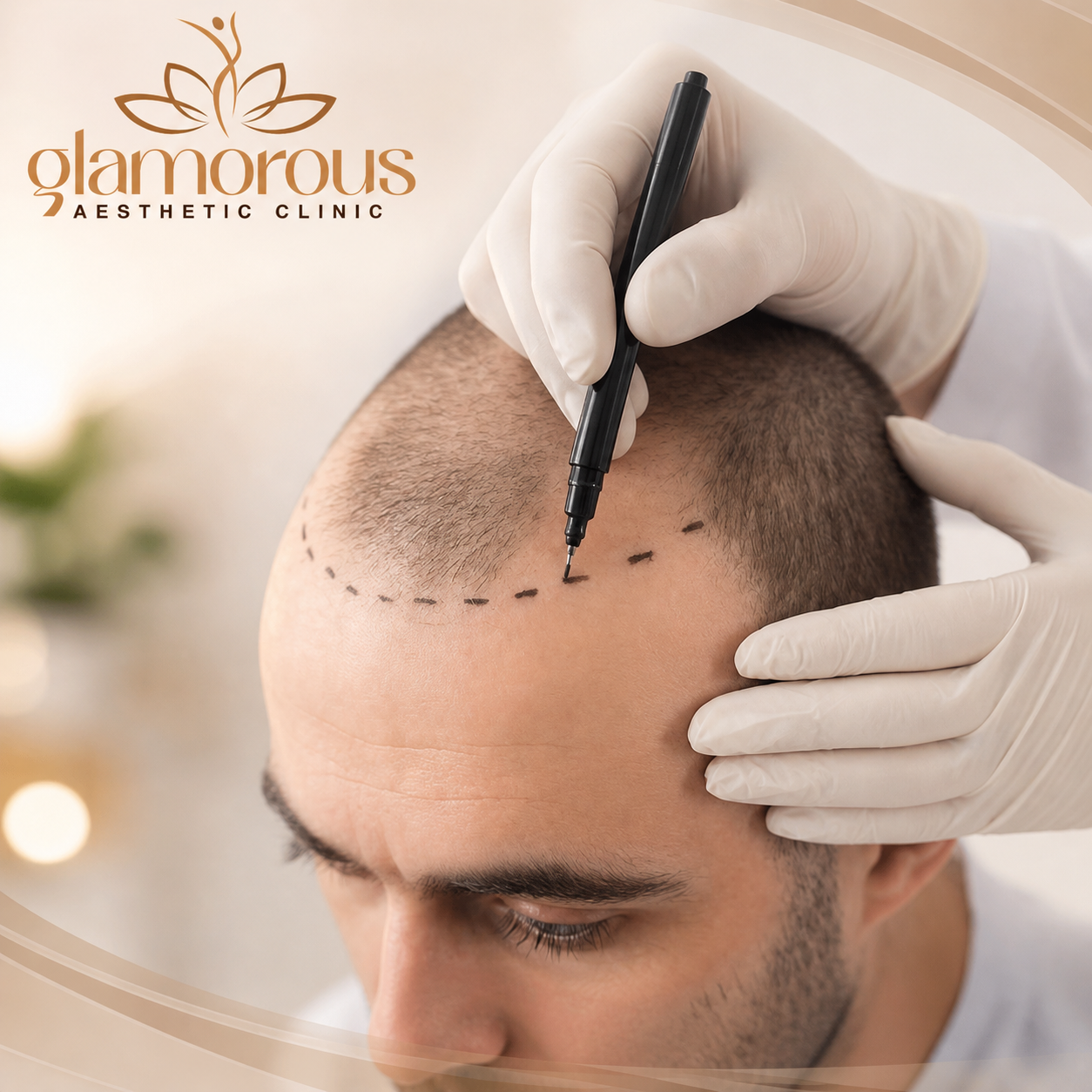
On the day of the procedure, the area is cleaned and numbed with local anesthesia, so most patients remain comfortable during the process. The surgeon marks the planned hairline and the areas to be treated, then harvests the follicles and prepares them for placement. Once the recipient sites are created, the grafts are placed carefully, with attention to angle, direction and spacing.
The length of the session depends on the number of grafts and the technique being used. Because the process requires patience and precision, it is usually carried out over several hours, with breaks to keep the patient comfortable. Most people go home the same day with detailed aftercare instructions.
Recovery and the Growth Timeline
Recovery is generally manageable, but it requires following instructions closely. In the first days, the treated area may appear red, and small scabs may form around the transplanted follicles. Mild swelling, tightness or tenderness can occur, and the donor area may feel sore for a short time. Patients are usually advised to avoid rubbing or scratching the scalp, to protect the area from sun exposure and to refrain from strenuous activity until their surgeon gives approval.
One of the most misunderstood parts of the process is the shedding phase. Within the first few weeks, many transplanted hairs fall out. This is a normal part of the cycle and does not mean the procedure has failed. The follicles remain in place beneath the skin and enter a resting phase before beginning to produce new hair.New growth typically begins to appear after a few months, starting out fine and gradually becoming thicker. Improvement continues over the following months, and the final result is usually judged much later than most people expect. Patience is essential, as hair growth cannot be rushed.
Possible Risks and Limitations
Every procedure carries some risk, and hair restoration is no exception. Possible issues include temporary swelling, infection, bleeding, folliculitis, numbness in the treated areas, unevenly distributed growth and scarring in the donor area. In some cases, patients may notice temporary shock loss, where existing hair thins briefly after surgery.It is also important to remember that a transplant redistributes hair rather than creating new donor supply. Because the supply of donor hair is limited, a surgeon must plan carefully so that the available follicles are used wisely and so that the result will still look appropriate as the person ages. No clinic can guarantee a specific outcome, and anyone who promises perfect results should be approached with caution.
Supporting Your Results Long Term
Surgery is only part of the picture. Maintaining healthy hair over time often involves a combination of good nutrition, scalp care, stress management and, where recommended, medical therapy to slow the loss of non-transplanted hair. Since native hair can continue to thin, follow-up visits help the clinician monitor your progress and adjust your plan if needed.Avoiding smoking, protecting the scalp from excessive sun exposure and following your surgeon's guidance on hair care products can also support healing and growth. A long-term mindset is the most reliable way to protect your investment in your appearance.
Conclusion
Hair density restoration is about rebuilding fullness in a way that looks natural and lasts. Understanding why your hair is thinning, choosing a technique that suits your donor supply and following a careful aftercare plan all contribute to a better experience. Realistic expectations and patience are just as important as the surgery itself, since results develop gradually over many months. If you are considering restoring the density of your hair, the best next step is to book a consultation at Glamorous Aesthetic Clinic, where your scalp can be assessed in person and a plan can be created around your needs and goals
Read More :
https://medium.com/@glamorousclinic8/hair-regrowth-solutions-at-glamorous-aesthetic-clinic-islamabad-cc31291ec7fa