
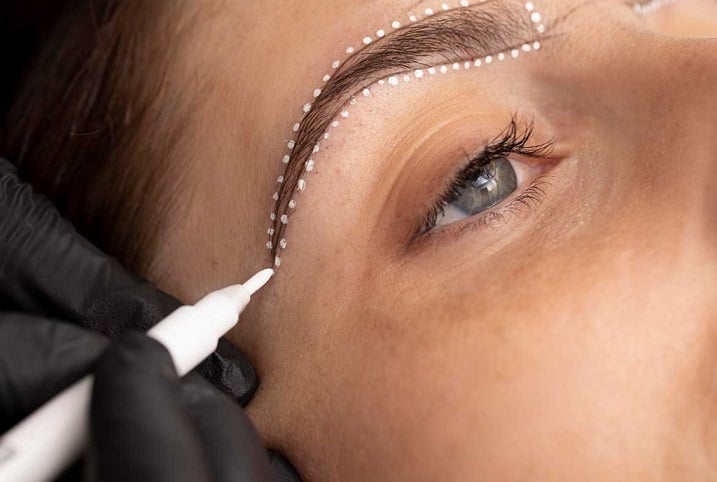
When asking Is an eyebrow transplant a surgical procedure?, it is useful to understand that eyebrow transplantation is generally considered a minimally invasive surgical hair-restoration procedure. It involves removing individual hair follicles from a suitable donor area and placing them into carefully planned areas of the eyebrows. For people researching زراعة الحواجب في دبي, understanding the procedure, anesthesia, recovery, potential risks, and expected results can help provide realistic expectations before treatment.
What Is An Eyebrow Transplant?
An eyebrow transplant is a hair-restoration procedure designed to improve the appearance of sparse, thin, uneven, or missing eyebrow hair.
Unlike temporary cosmetic methods, the procedure uses actual hair follicles. These follicles are harvested from a suitable donor area and transferred to the eyebrow region.
The practitioner carefully considers the desired eyebrow shape, density, direction, and facial proportions before placing the follicles.
Because individual follicles are handled and implanted, eyebrow transplantation requires careful surgical technique and detailed treatment planning.
Is Eyebrow Transplantation Considered Surgery?
Yes. Although it is generally less invasive than many major surgical procedures, an eyebrow transplant is considered a surgical hair-restoration procedure because it involves removing and implanting living tissue.
The procedure does not usually involve large surgical incisions. Instead, individual follicles are harvested and placed using specialized instruments and techniques.
The specific method may vary depending on the treatment plan, donor area, available follicles, and practitioner.
Understanding that the procedure is surgical does not necessarily mean that it requires a hospital stay or extensive recovery.
What Happens During The Procedure?
The process generally begins with an assessment and eyebrow design.
The practitioner evaluates the existing eyebrow hair, donor area, facial proportions, and desired appearance. A suitable eyebrow shape and treatment plan can then be developed.
The donor area is prepared before individual follicles are harvested.
These follicles are carefully handled before being placed into the recipient areas of the eyebrows. The practitioner pays particular attention to the angle and direction of each follicle because natural eyebrow hairs tend to grow in specific patterns.
The goal is to create a balanced appearance that integrates with existing eyebrow hair.
Is Local Anesthesia Used?
Eyebrow transplantation is commonly performed using local anesthesia to reduce discomfort during the procedure.
The treatment area and donor area can be numbed before follicle harvesting and implantation.
The exact anesthesia approach depends on the practitioner, technique, treatment area, and individual circumstances.
Patients may remain awake during the procedure while the treated areas are numbed.
A consultation can provide more specific information about anesthesia and comfort measures before treatment.
How Invasive Is An Eyebrow Transplant?
An eyebrow transplant is generally considered minimally invasive compared with major surgical procedures.
It involves small treatment sites rather than large incisions. However, the skin is still intentionally penetrated during follicle harvesting and implantation.
Temporary redness, swelling, tenderness, sensitivity, or small scabs can occur during the early recovery period.
The level of recovery depends on the number of follicles treated, technique, individual healing response, and other factors.
Does An Eyebrow Transplant Require Stitches?
The need for stitches depends on the harvesting technique.
Modern follicular extraction approaches generally involve removing individual follicles through small openings rather than creating a large linear incision.
Because techniques vary, patients should ask the practitioner which harvesting method will be used and whether stitches are expected.
Understanding the specific technique before treatment can help clarify the anticipated recovery process.
What Is Recovery Like?
Recovery from an eyebrow transplant is generally more limited than recovery from major surgery, but the treated areas still require care.
The eyebrows may appear temporarily red or swollen after treatment. Small crusts can form around the transplanted follicles.
Patients are usually given aftercare instructions covering cleansing, touching the area, sun exposure, and other activities.
The transplanted hairs may also shed during the early growth cycle. This can occur before new hair begins growing from the transplanted follicles.
Because hair growth is gradual, the final cosmetic result takes time to develop.
Are There Risks With Eyebrow Transplant Surgery?
Like other surgical procedures, eyebrow transplantation has potential risks.
Possible complications can include:
- Infection
- Bleeding
- Swelling
- Temporary discomfort
- Scarring
- Poor follicle growth
- Uneven density
- Unnatural hair direction
- Differences in hair texture
The likelihood of complications can vary according to the technique, practitioner experience, individual healing, skin condition, and aftercare.
A professional consultation should include discussion of potential risks and individual suitability.
Why Is Precise Placement Important?
Precise follicle placement is especially important because eyebrows have distinctive growth patterns.
Each follicle needs to be positioned at an appropriate angle and direction to help the transplanted hair blend naturally with existing eyebrow hair.
Poor positioning can make the hairs appear too upright, irregular, or different from natural eyebrow growth.
The practitioner may therefore place follicles individually according to the planned eyebrow design.
Does The Procedure Provide Permanent Results?
An eyebrow transplant is generally intended to provide long-term hair restoration.
Successfully transplanted follicles can continue producing hair after they establish themselves.
However, the overall appearance may change with age, changes in surrounding eyebrow hair, hormonal factors, and other individual circumstances.
Transplanted hairs may also continue growing longer than natural eyebrow hairs because they retain characteristics of the donor hair. Regular trimming may therefore be necessary.
Who May Be Suitable For An Eyebrow Transplant?
Potential candidates may include people with:
- Naturally sparse eyebrows
- Long-term thinning from over-plucking
- Localized eyebrow gaps
- Hair loss following injury
- Reduced eyebrow density
- Missing eyebrow sections
- Eyebrow hair that has not adequately regrown
Suitability should be determined through a professional assessment.
The practitioner may evaluate the cause of eyebrow hair loss, donor hair availability, skin condition, expectations, and overall treatment goals.
Frequently Asked Questions:
Is an eyebrow transplant a surgical procedure?
Yes. It is generally considered a minimally invasive surgical hair-restoration procedure because individual hair follicles are harvested and implanted.
Is an eyebrow transplant performed under anesthesia?
Local anesthesia is commonly used to reduce discomfort during follicle harvesting and implantation.
Does eyebrow transplant surgery require a hospital stay?
It is generally performed as an outpatient procedure, although the exact treatment setting depends on the provider and individual circumstances.
Is eyebrow transplant recovery difficult?
Recovery is generally limited compared with major surgery, but temporary redness, swelling, sensitivity, and small scabs can occur.
Can an eyebrow transplant leave scars?
Scarring is possible, although the visibility depends on the harvesting technique, individual healing, and other factors.
Conclusion:
So, Is an eyebrow transplant a surgical procedure? Yes, eyebrow transplantation is generally considered a minimally invasive surgical hair-restoration procedure because it involves harvesting and implanting individual hair follicles. It typically does not require large incisions or an extensive recovery period, but temporary redness, swelling, sensitivity, and other effects can occur. Local anesthesia is commonly used, while the exact technique depends on the individual's treatment plan. Careful eyebrow design and precise follicle placement are important for a natural-looking outcome. A professional consultation can help determine suitability, explain the procedure and recovery process, and establish realistic expectations about results.