
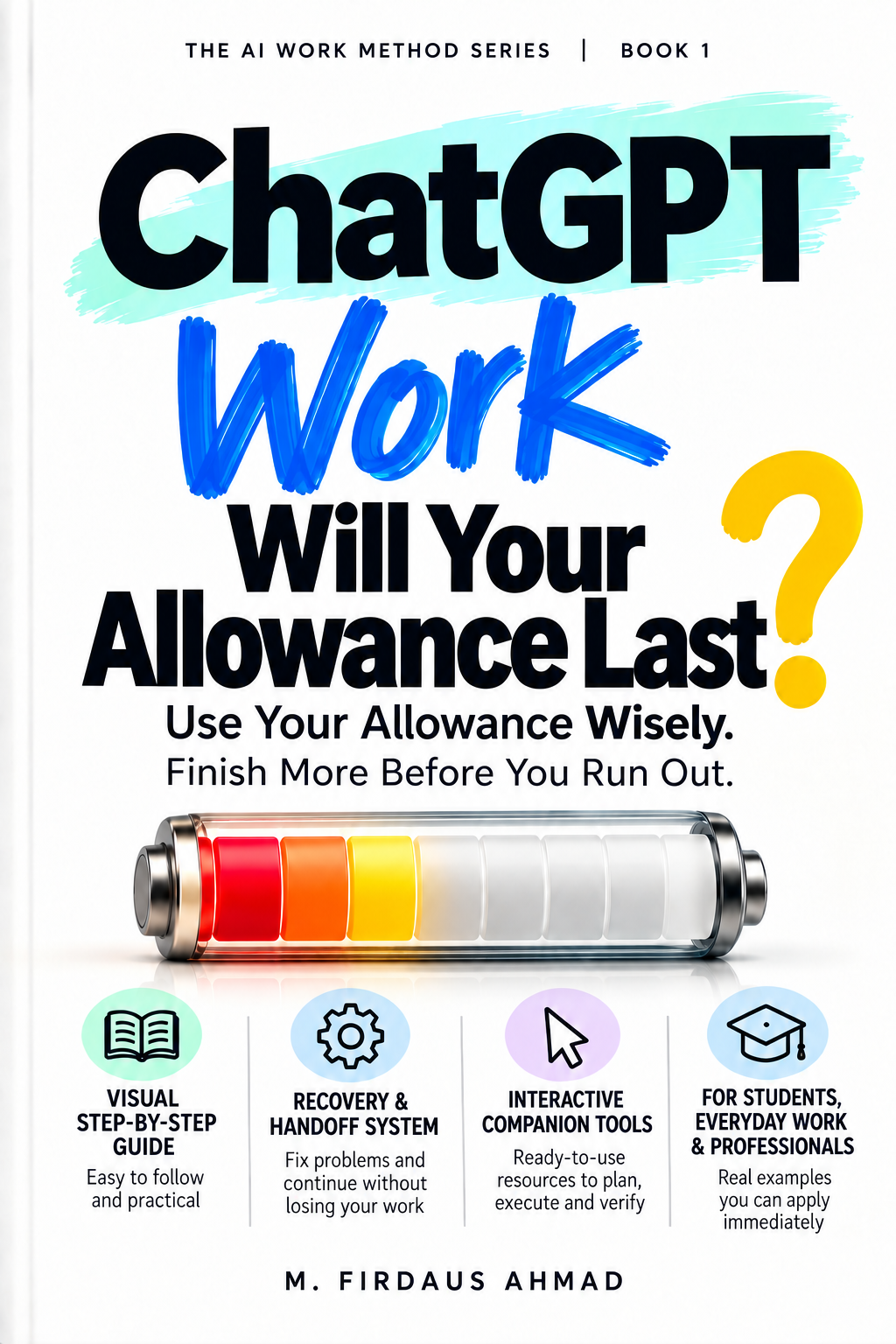




ChatGPT Work: Will Your Allowance Last?
Your reset is 4 days away.
Your project isn't finished.
What do you do now?
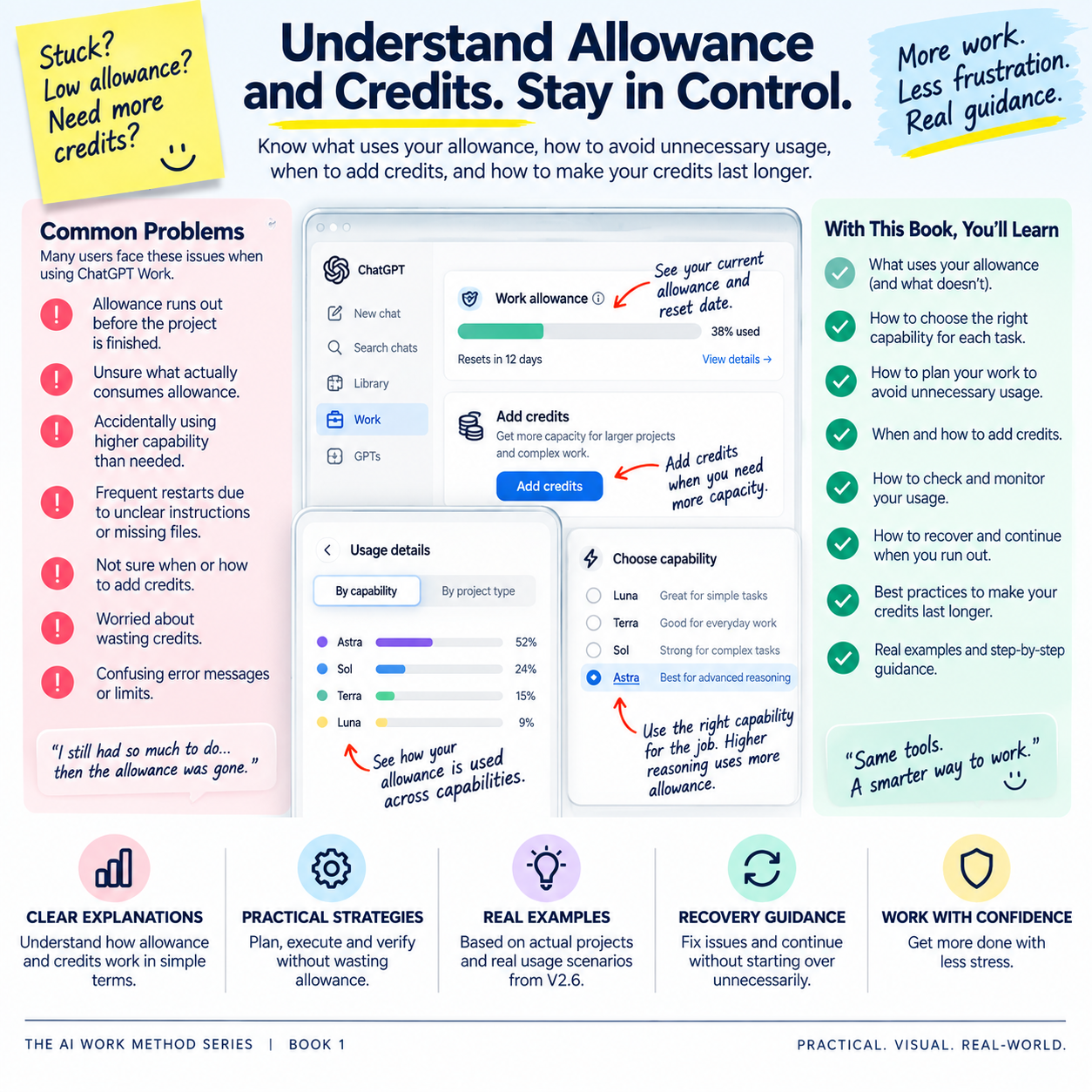
Your ChatGPT Work allowance is running low.
The difficult part of the project may still be ahead.
Research.
Reasoning.
Verification.
Corrections.
Delivery.
And suddenly the percentage on your screen matters a lot more than it did yesterday.
Do you keep going?
Use a different model?
Narrow the work?
Wait for the reset?
Or buy more capacity?
Before making that decision, there is a more useful question:
What work is actually left to do?
40% remaining doesn't always mean the same thing.
Imagine two projects.
In the first, the research is complete. The difficult reasoning is finished. The result has been checked. Only formatting remains.
In the second, research is still underway. Synthesis hasn't started. Important claims need verification. Corrections may still be required.
Both show:
40% REMAINING.
But those projects are in completely different positions.
Your allowance tells you what is left.
It doesn't tell you whether it is enough for the work ahead.
That is where this book begins.
ChatGPT Work: Will Your Allowance Last?
Use Your Allowance Wisely. Finish More Before You Run Out.
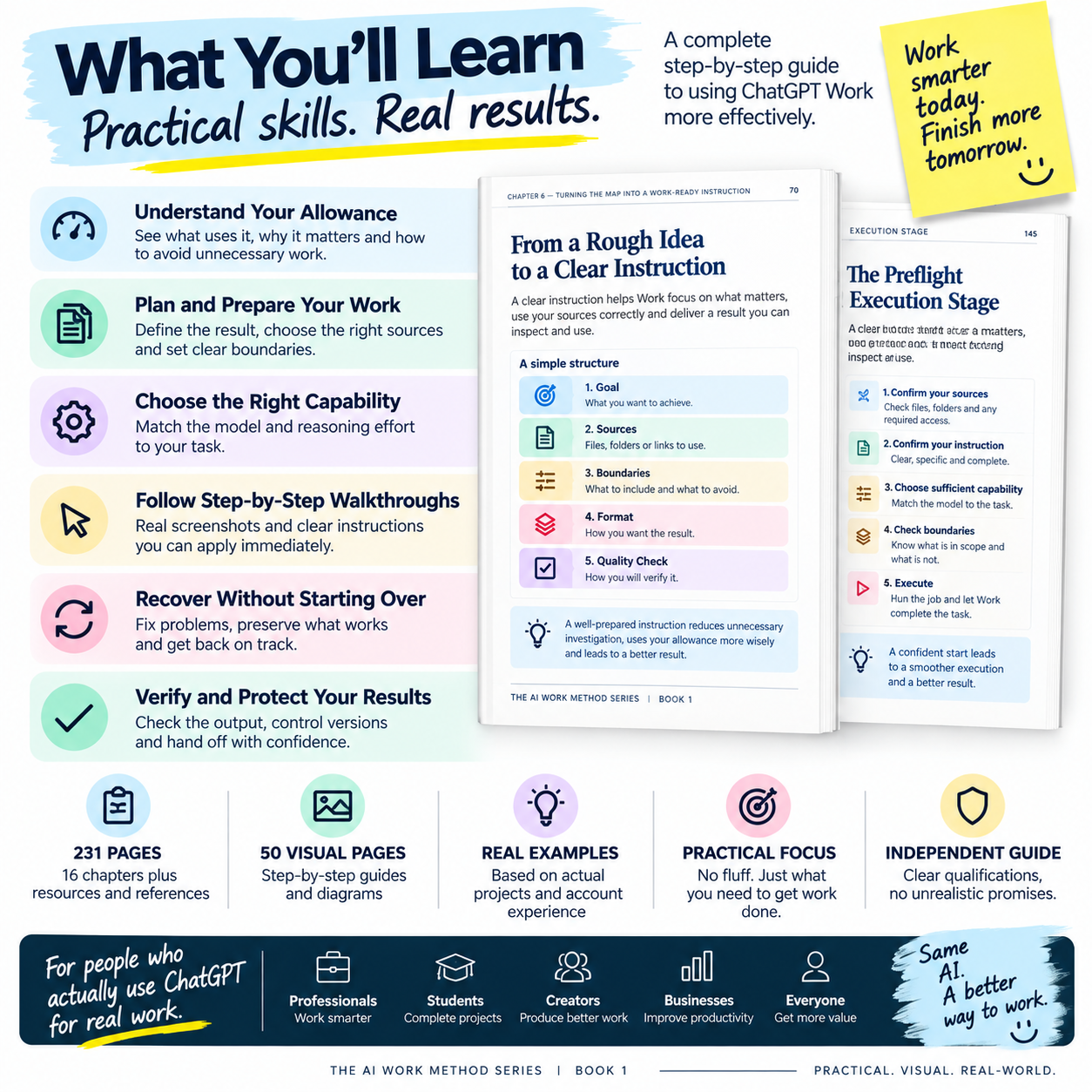
This is a practical visual guide for people using ChatGPT Work on projects that have become larger than a normal conversation.
It is not a prompt library.
It does not promise a trick for bypassing usage limits.
Instead, it deals with the decisions that appear when AI starts doing substantial work:
Before you start
What exactly are you trying to finish?
What sources and context does the work really need?
How much capacity is available?
What kind of capability does the next stage require?
While the project is running
Which work genuinely needs deeper reasoning?
Which work is already clear enough to handle more economically?
What should be checked before spending more capacity?
When something goes wrong
What actually failed?
What useful work is still trustworthy?
Do you really need to start again?
Or can you repair the affected part and continue?
When the project crosses sessions or systems
What needs to travel with it?
What should remain authoritative?
How do you continue without rebuilding the entire project from memory?
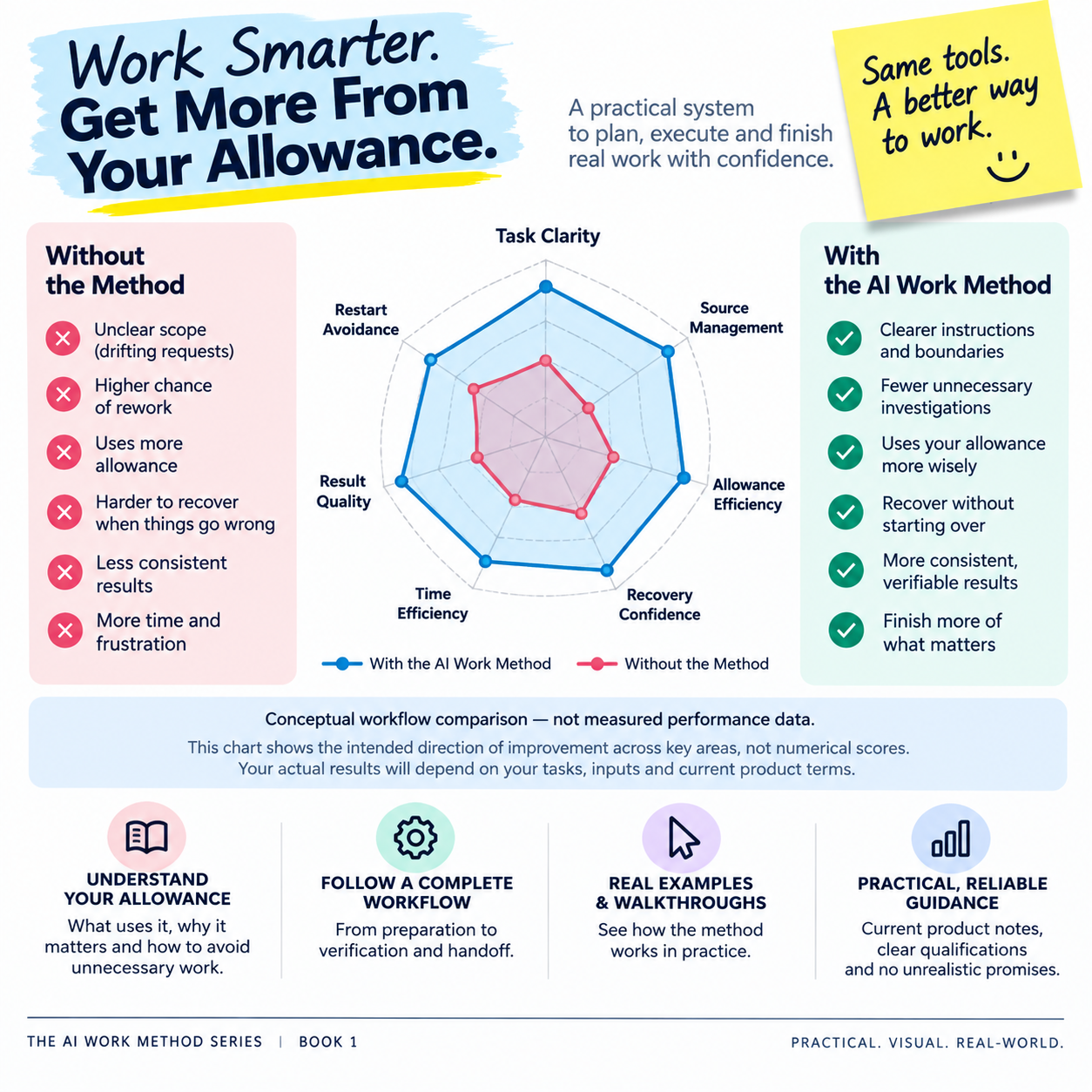
The objective isn't simply to save allowance.
You didn't subscribe to ChatGPT Work so you could admire a high percentage remaining at the end of the week.
The capacity is there to be used.
The question is whether you're spending it on the work that actually moves the project toward completion.
Sometimes that means using more capability.
Sometimes less.
Sometimes stopping before another expensive run.
Sometimes preserving good work instead of starting over.
And sometimes recognizing that the next useful step doesn't require Work at all.
The goal is to finish more of the work that matters with the capacity available to you.
Built for use, not just reading.
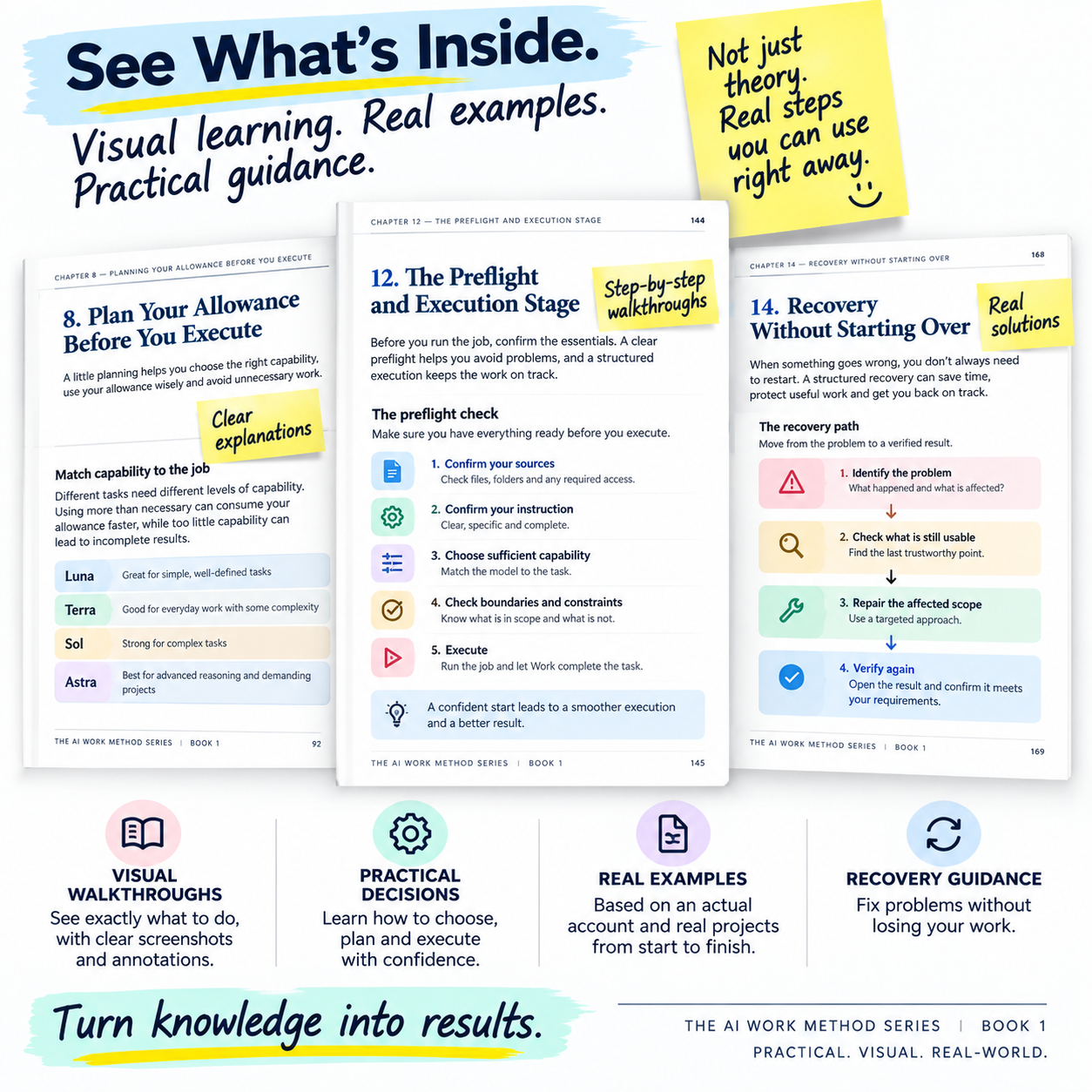
The book is designed as a 231-page visual field guide rather than a dense technical manual.
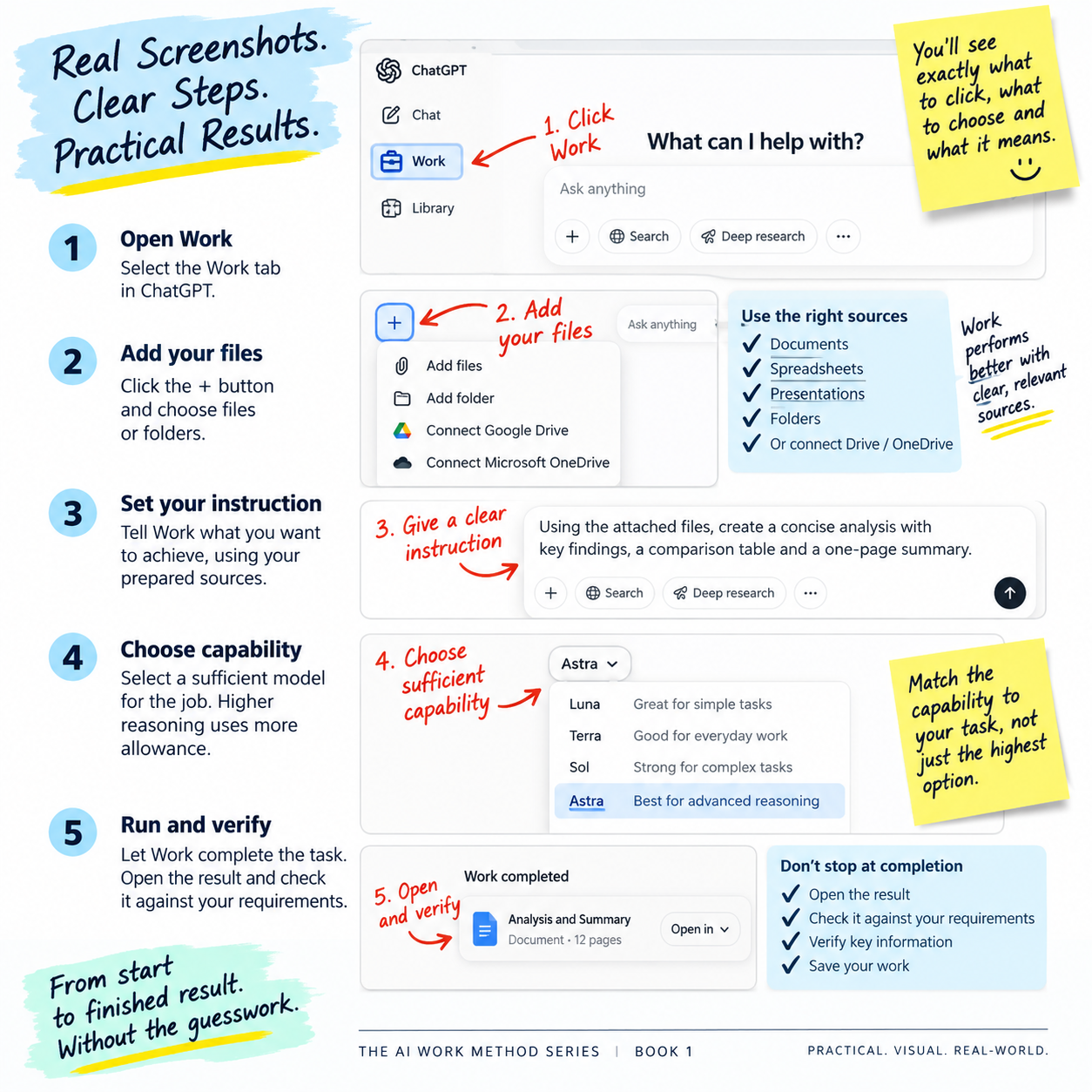
You'll move through practical examples, visual walkthroughs, decision points and reusable project tools designed around real long-running AI work.
You do not have to read it cover to cover before using it.
If your immediate problem is allowance, start there.
If you're about to launch a substantial project, go to planning.
If something failed, go to recovery.
If you need to continue elsewhere, go to continuity and handoff.
Use the part that solves the problem in front of you.
This book may be useful if...
Your allowance keeps disappearing faster than you expected.
Your reset is still several days away.
You are unsure whether the next task deserves your strongest model.
A long-running project has stalled halfway through.
You are worried that another attempt might overwrite good work.
You keep moving large projects between conversations or AI systems.
Or you've simply reached the point where:
“Just ask ChatGPT” is no longer enough to manage the work you're giving it.
The AI Work Method Series | Book 1
ChatGPT Work: Will Your Allowance Last?
Use Your Allowance Wisely.
Finish More Before You Run Out.
M. Firdaus Ahmad