
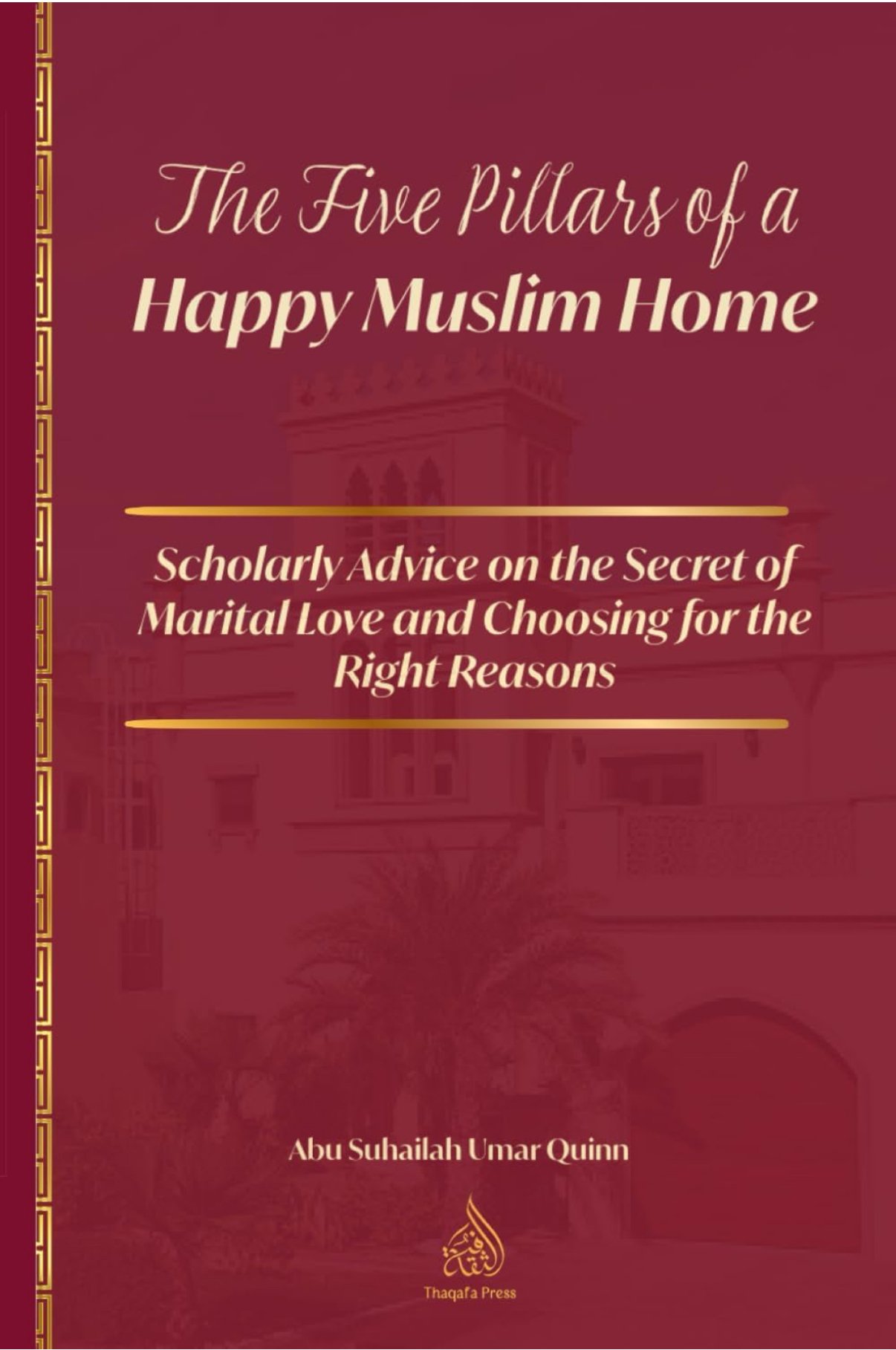
[Digital Edition] Five Pillars of a Happy Muslim Home
Five Pillars of a Happy Muslim Home
Four things are part of happiness: a righteous wife, a spacious home, a good neighbor, and a comfortable ride.
Most Muslims marry hoping for that and are never told what it rests on. This book names the five purposes the jurists identified as the wisdoms of marriage — chastity, children, companionship, community, and continuity — and argues that a marriage is stable to the degree that the people in it are actually married for those reasons.
It also says the less comfortable thing. Two people marrying for status, wealth, or beauty are not doing something forbidden. They are simply building on a foundation that will not hold, and the trouble arrives later.
Inside:
1. The Blessing of an Islamic Marriage. What the Prophet ﷺ described as part of a person's happiness. Why a home built well is itself an act of worship rather than a social arrangement.
2. The Secret Behind Spousal Love. That religiosity and character are the real compatibility criteria, not the ones people screen for. Marriage as the highest degree of companionship, and the scholar who said a man who marries without friendship and love has not married as Allah ordained. Combining inner and outer beauty. Being honest about physical and character flaws before the contract, since a person who cannot love you as you are is not your partner. And Ibn Ḥazm on why affection often arrives only after conflict.
3. Marrying for the Right Reasons. The five objectives set out in full: fulfilling desire lawfully and protecting chastity; lawful procreation and clear lineage; companionship, tranquility, and mercy; social cohesion through kinship and in-laws; and the continuity that makes a marriage distinct from a temporary or conditional arrangement. Then what it means to build a purpose-driven marriage on them.
Conclusion: Questionable Marriage Types That Lack Permanence. A careful treatment of misyār — its definition, why it emerged, the historical precedents for waiving marital rights, and an honest accounting of what it offers and what it costs. Including the argument that it often functions as a problematic route into polygamy by a man who cannot meet the obligations that polygamy requires.
Throughout, the words of Ibn Taymiyyah, Ibn al-Qayyim, Ibn Ḥazm, al-Māwardī, al-Shawkānī, Ibn Ḥibbān, and contemporary scholars, with the Arabic set alongside the English and every citation documented.
What you receive:
- EPUB for phones, tablets, and e-readers
- PDF at 6 × 9, matching the printed edition page for page
- Study guide
The Arabic is fully vocalized and embedded, and displays correctly on any device.
Published by ThaqafaPress.