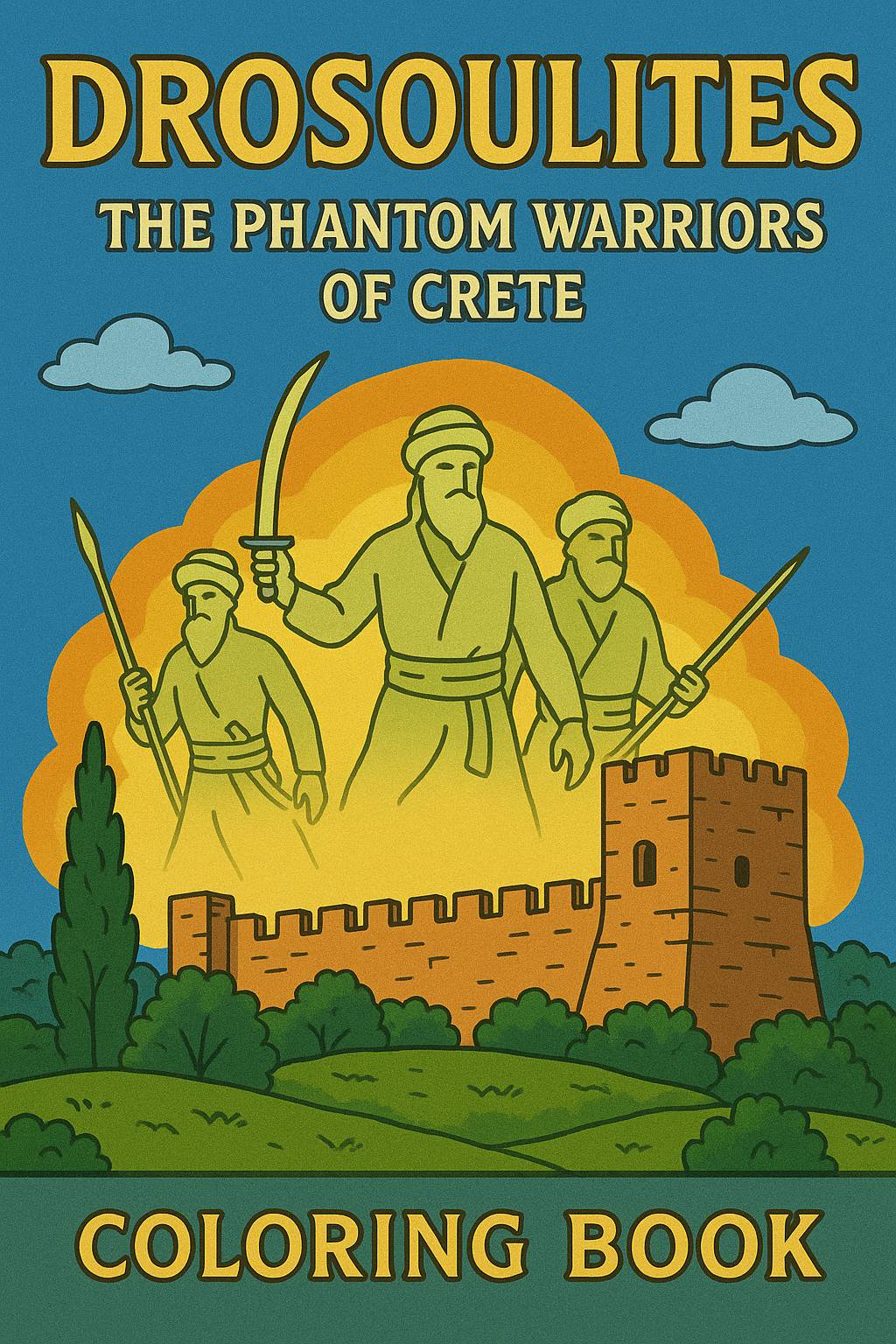
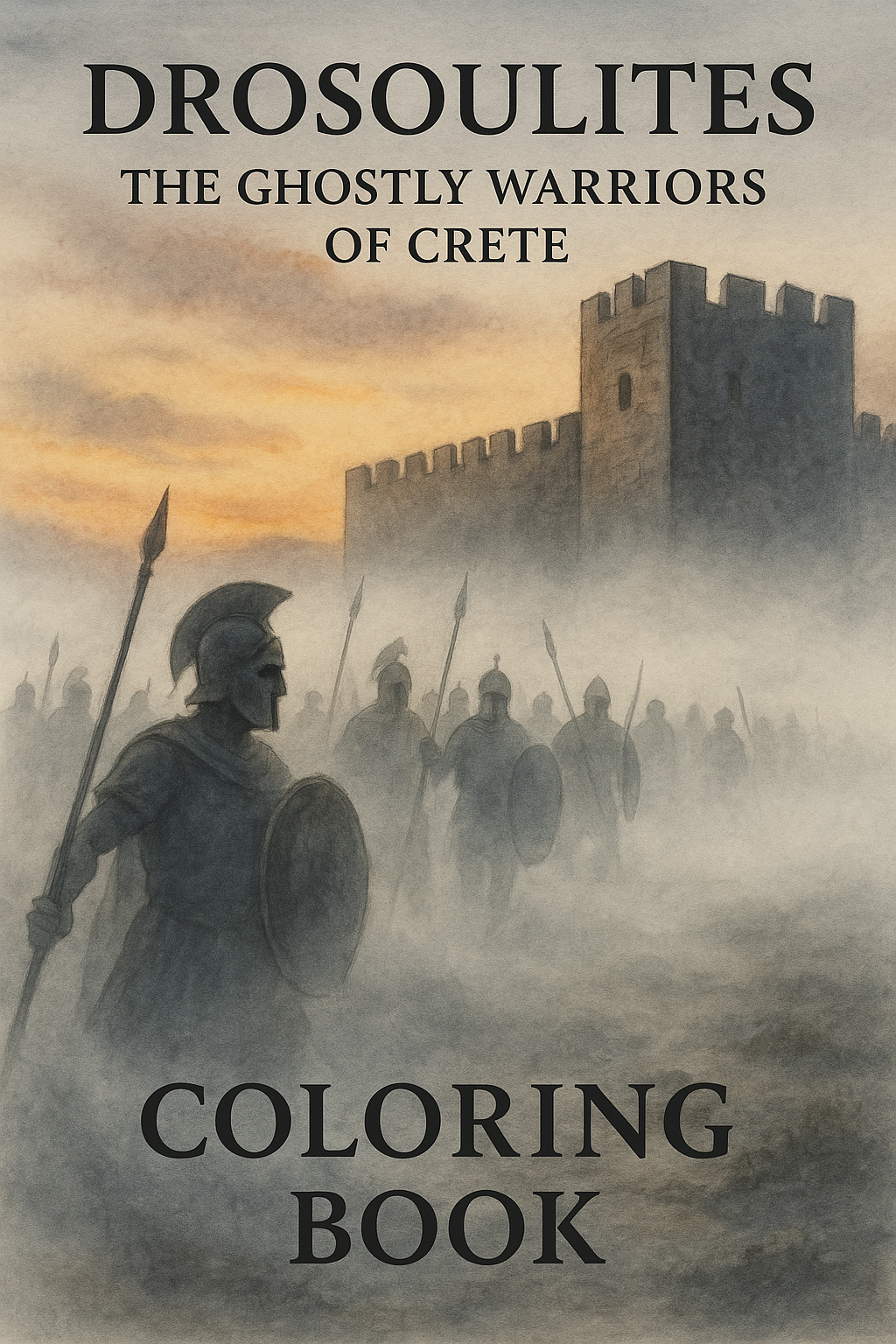
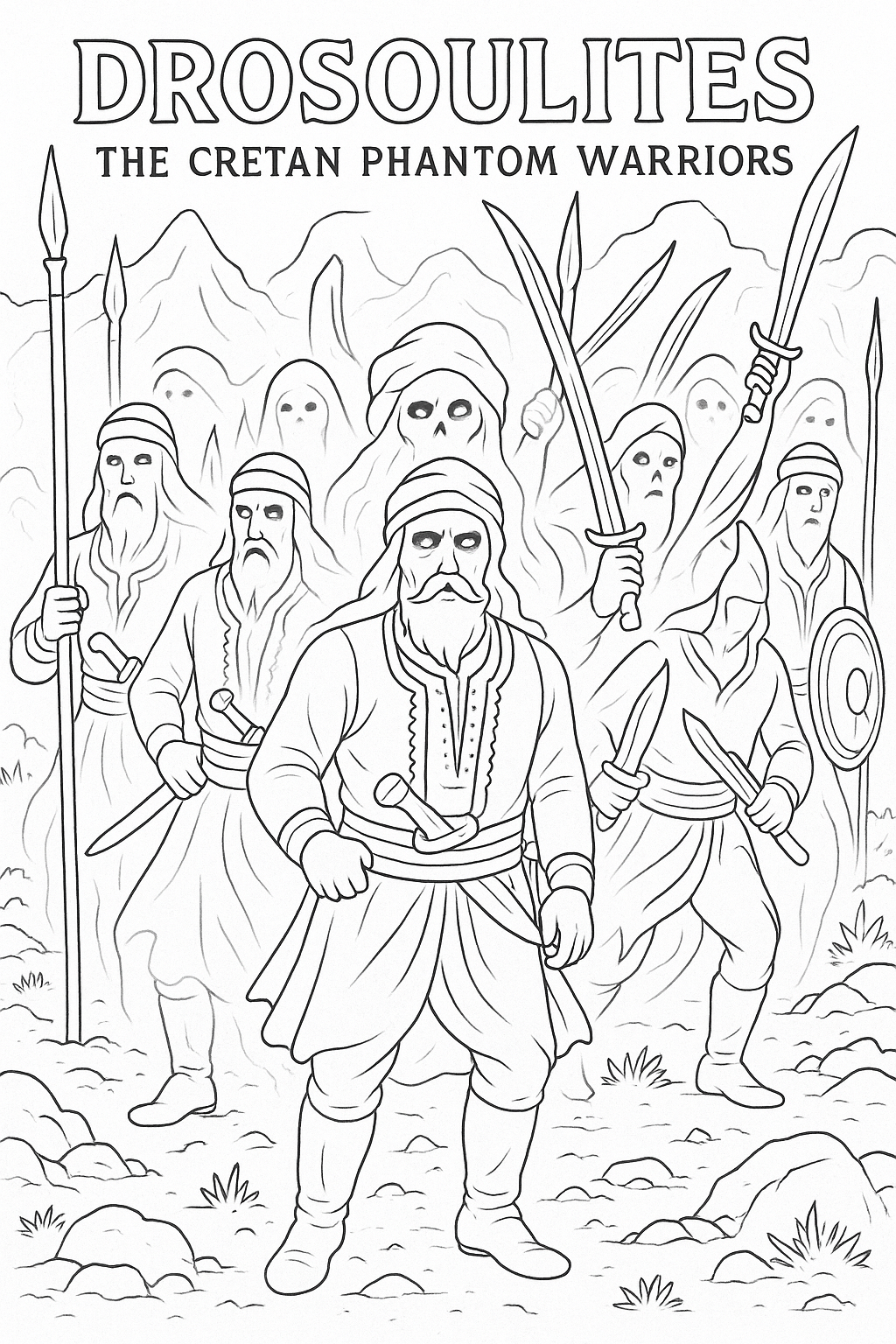

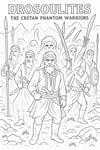
Drosoulites, the Phantom warriors of Crete, coloring ebook, 49 designs, digital product, instantly download
Drosoulites, the Phantom warriors of Crete, coloring ebook, 49 designs, digital product, instantly download.
The Drosoulites of Frangokastelo: Crete’s Most Mysterious Phantom Army
Introduction
On the southeastern coast of Crete, where the Libyan Sea meets a dry and dramatic landscape, stands Frangokastelo, a Venetian fortress whose name is tied to one of Greece’s most enduring mysteries: the Drosoulites—the “Men of the Dew.”
Each spring, as dawn breaks over the castle, shadowy figures appear marching on the plain. Locals, visitors, soldiers, skeptics, and scientists have all reported seeing them. The phenomenon is so consistent that it has become part of Greek folklore and Crete’s identity.
This article explores the history, the legend, possible scientific explanations, and the cultural impact of the Drosoulites, offering a complete look at one of Europe’s most fascinating ghost stories.
1. The Fortress of Frangokastelo
1.1 Origins
Frangokastelo was built between 1371 and 1374 by the Venetians to protect the area from pirates and keep control over the rebellious Cretan population.
Its name comes from the locals' sarcastic nickname: “Frango-kastelo” (“Castle of the Franks”), referring to all Western Europeans as “Franks.”
1.2 Architecture
The structure is rectangular, with strong defensive walls and corner towers. A large Venetian coat of arms once adorned the gate. Despite centuries of battles and weathering, the castle remains remarkably well preserved.
1.3 The Setting
Frangokastelo stands in an open valley near the sea, surrounded by steep mountains. This geography plays a role in both its strategic significance and its supernatural legends.
2. History Behind the Ghosts
2.1 The 1828 Battle
The most important moment in the castle’s history—and the origin of the Drosoulites—took place during the Greek War of Independence. In 1828, Greek rebel commander Hatzimichalis Dalianis from Epirus, along with around 600 men, fortified himself in Frangokastelo.
Ottoman forces under Mustafa Naili Pasha surrounded the castle with thousands of soldiers.
After fierce fighting, the Greeks were overwhelmed. Dalianis and most of his men were killed on the plains outside the fortress.
2.2 Birth of the Legend
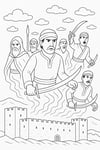
Shortly after the massacre, locals began reporting that, at dawn around late May and early June—the anniversary of the battle—shadows of armed men appeared marching in silence toward Frangokastelo.
These silhouettes looked like warriors carrying weapons, banners, and horses, slowly moving like a real army.
3. The Phenomenon of the Drosoulites
3.1 What Are the Drosoulites?
The name Drosoulites means “Men of the Dew.”
They appear only at sunrise, when the air is cool and the ground still holds moisture.
Witnesses describe:
- Long lines of figures
- Walking or riding
- Silent movement
- Black or grey silhouettes
- Vanishing when the sun rises higher
3.2 When It Happens
The shadows are said to appear between 17 May and early June, roughly the period of the historical battle.
Even today, people claim sightings in this time frame.
3.3 Eyewitnesses Through the Centuries
These are not just ghost stories repeated by villagers. Testimonies include:
- Local shepherds
- Greek soldiers
- German troops during WWII
- Tourists
- Photographers
During the German occupation, soldiers supposedly fired at the shadows, believing them to be rebel fighters, but of course, nothing happened.
4. Possible Explanations
The Drosoulites have inspired debates among historians, meteorologists, psychologists, and folklorists.
4.1 Mirage Effect (Fata Morgana)
The most widely accepted scientific explanation is a superior mirage, a phenomenon known as Fata Morgana.
Conditions around Frangokastelo—humid mornings, temperature inversion, and the sea—can create optical illusions where real distant objects appear enlarged or displaced.
But here’s the mystery:
What distant objects?
There is no known army or moving group that could reflect from miles away at sunrise in early summer.
4.2 Atmospheric Conditions Unique to the Area
The shape of the valley and the reflection of light on the dew could create mysterious shadows that resemble human forms.
Yet, no scientific study has fully reproduced the phenomenon.
4.3 Collective Memory and Expectation
Some argue the legend has been reinforced by tradition. People gather expecting to see the Drosoulites, and the mind may interpret unclear shadows as human shapes. However, this does not explain the numerous detailed reports from skeptics.
4.4 Paranormal Interpretation
For many locals, there is no mystery:
The Drosoulites are the spirits of the fallen warriors, eternally reenacting their final march toward the castle.
Crete’s spiritual folklore and respect for ancestors make this explanation culturally powerful.
5. Cultural and Local Significance
5.1 Symbol of Heroism
The Drosoulites are regarded as symbols of:
- Resistance
- Honor
- Sacrifice
- The Cretan fighting spirit
Local culture embraces the phenomenon not as a ghost story, but as a historical memory that refuses to fade.
5.2 Impact on Tourism
Every year, visitors travel to Frangokastelo hoping to witness the sunrise phenomenon.
The castle has become one of the most famous destinations in Sfakia due to the legend.
5.3 Presence in Literature and Art
Greek poets, painters, and writers have portrayed the Drosoulites as mythical guardians of Crete, blending tragedy and heroism into their depictions.
6. Visiting Frangokastelo Today
6.1 What to Expect
Frangokastelo is quiet, serene, and surrounded by one of Crete’s loveliest beaches. The castle is open to visitors, offering panoramic views and a strong sense of history.
6.2 Best Time to Visit
To experience the Drosoulites legend:
- Visit between mid-May and early June
- Arrive before sunrise
- Stand on the plain facing the castle
- Wait as the dew begins to rise
Whether you see figures or not, the sunrise alone is spectacular.
6.3 Nearby Attractions
- Orthi Ammos Beach (golden dunes, accessible by hike)
- Sfakia town
- The gorge of Imbros
- Chora Sfakion villages and traditional tavernas
7. Mystery or Memory?
The Drosoulites remain one of Greece’s most captivating enigmas.
Whether they are:
- Atmospheric illusions
- Collective memory made visible
- Or true spirits marching at dawn
…their presence continues to tie the people of Crete to their past.
Frangokastelo stands as a reminder that history is not always confined to books—sometimes, it walks across a field at sunrise.