

Food Cost and Inventory Playbook
Food Cost & Inventory Playbook
Count, track, and control your stock from receiving to plate. Par levels, variance tracking, stock count, and FIFO/FEFO system included. With ready-to-use spreadsheets.
89 pages. 19 sections. 2 real case studies. With 11 ready-to-use spreadsheets.
A complete system for controlling every stage of product movement through your business, from the moment you place an order to the moment you count what is left.
You have looked at your monthly numbers and thought: where did my money go?
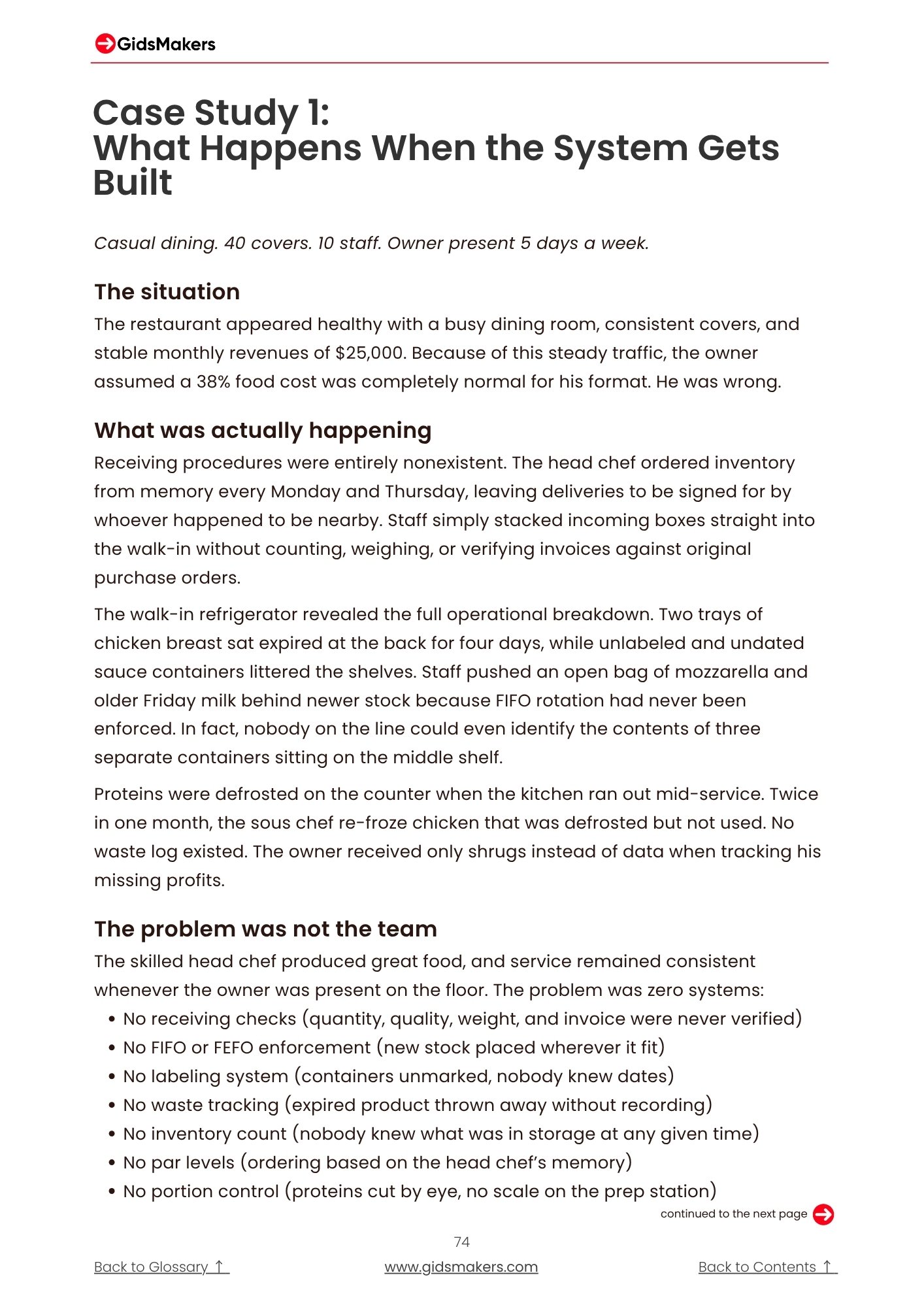
The fridge has expired chicken behind the new delivery, a container of sauce with no label and no date, and milk from Monday stacked in front of milk from Friday. The kitchen is ordering based on memory, prepping the same quantities on a Tuesday and a Saturday, running to the supermarket with petty cash because something ran out mid-service.
These failures indicate a completely missing system rather than a temporary operational breakdown.
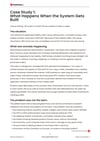
Unchecked receiving gaps, product spoilage, portion variance, and untracked staff meals cost a $25,000 restaurant a staggering $1,500 every month. This blind waste accumulated to $18,000 a year because the team never verified their numbers.
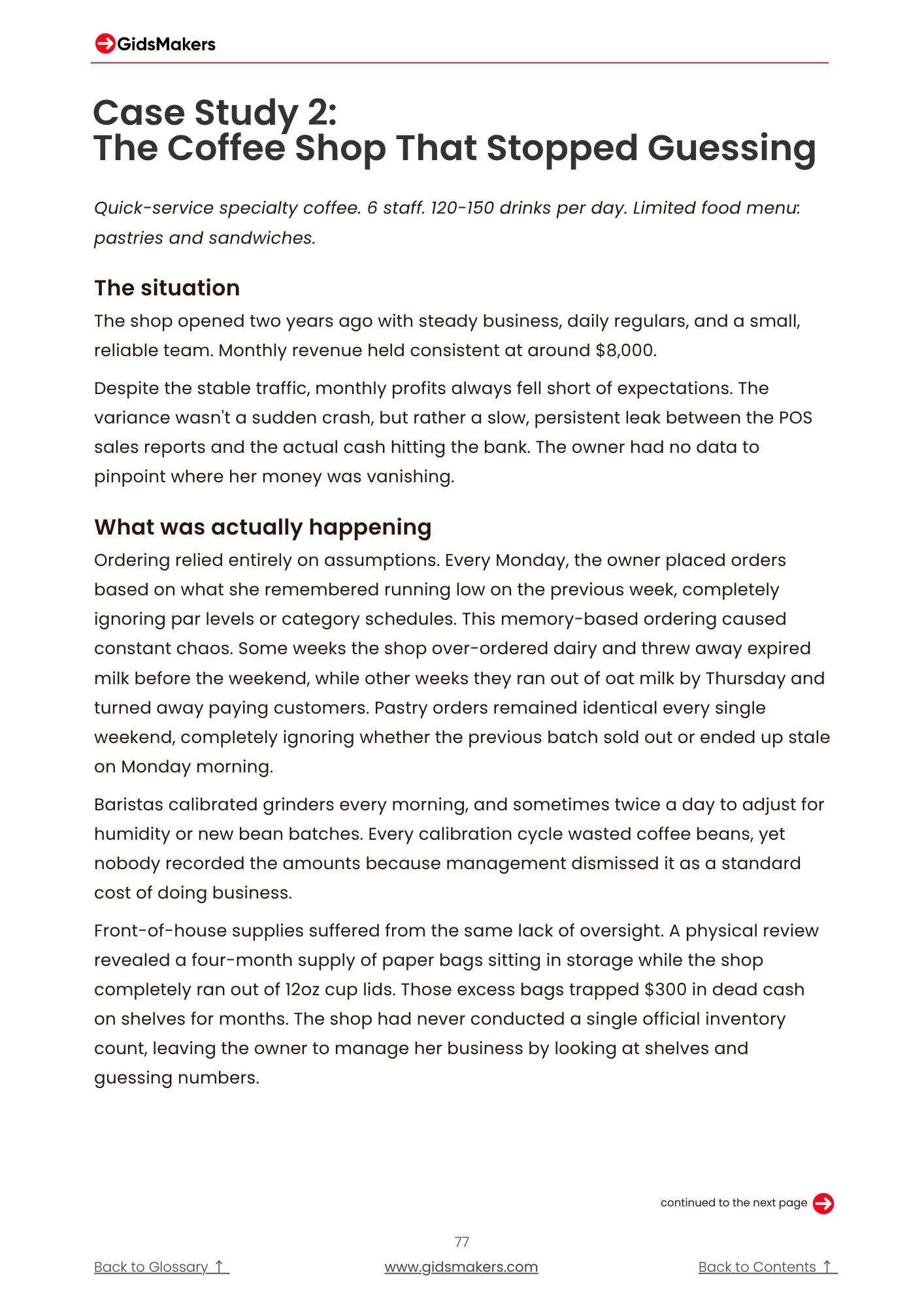
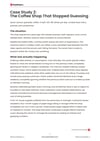
In a smaller setting, a cafe generating $8,000 monthly lost $530 each month to expired dairy, stale pastries, unrecorded grinder calibrations, and $300 in over-ordered paper goods. Financial tracking was completely missing, leaving a highly dedicated owner to run the shop blindly.
Both operators successfully stopped these cash drains within four to six weeks by applying the systems in this playbook.
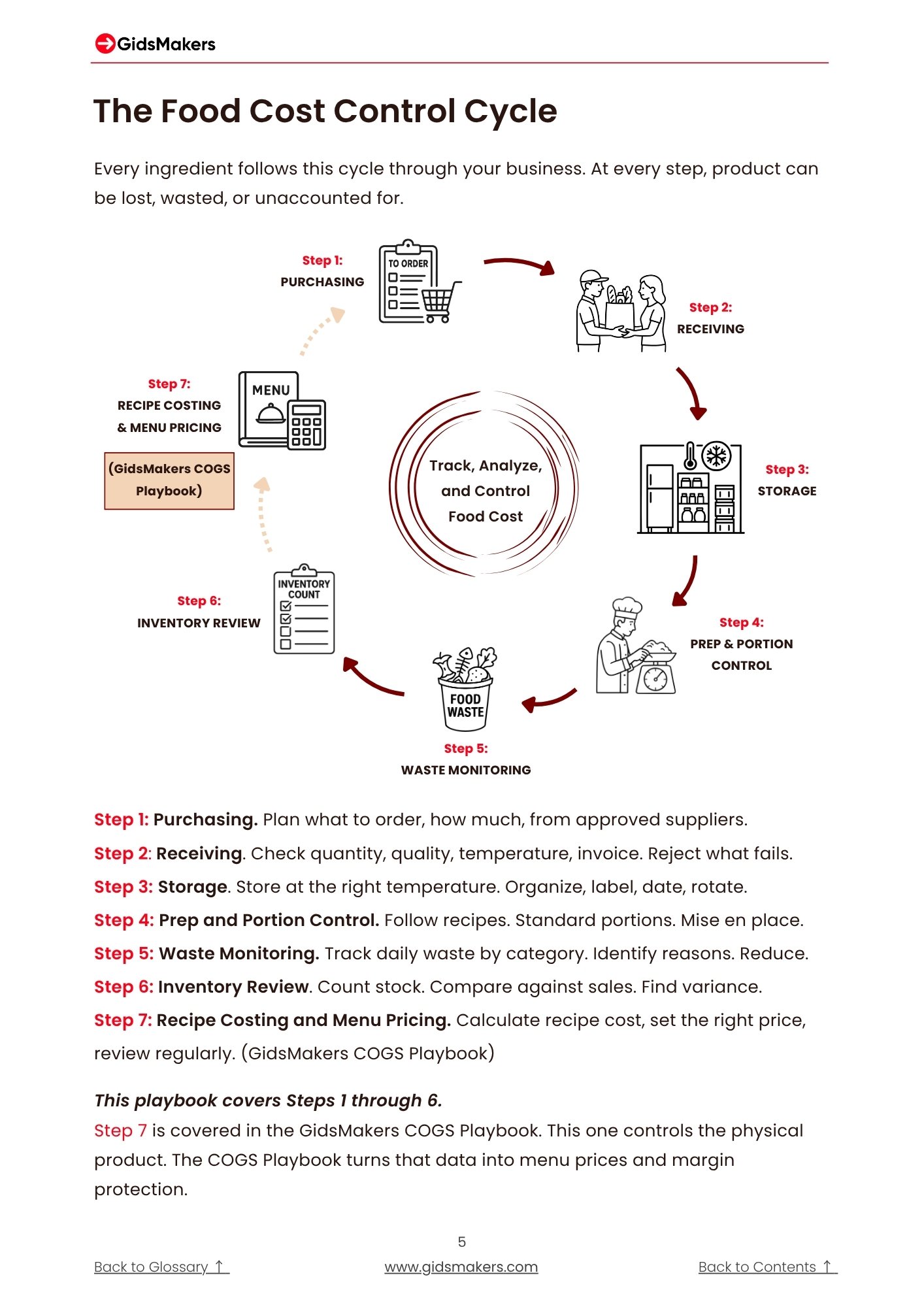
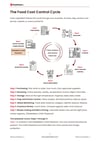
This playbook targets the Food Cost Control Cycle to monitor how inventory moves through your business. Every step in this cycle represents a vulnerability where profits vanish. The following systems are designed to lock down each phase of your operation.
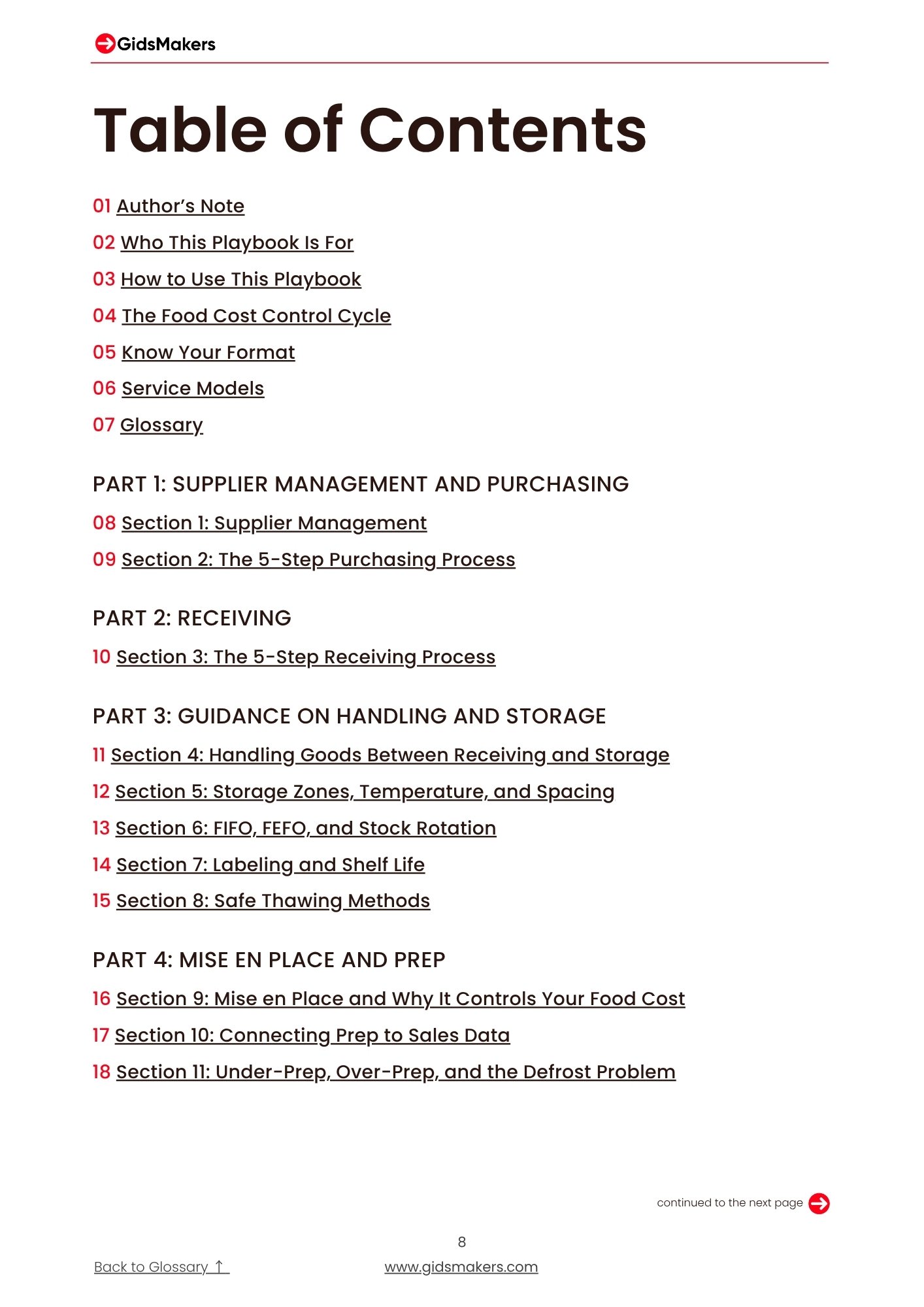
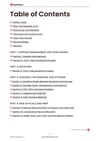
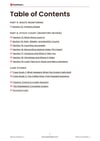
Inside, you get six parts across 19 sections.
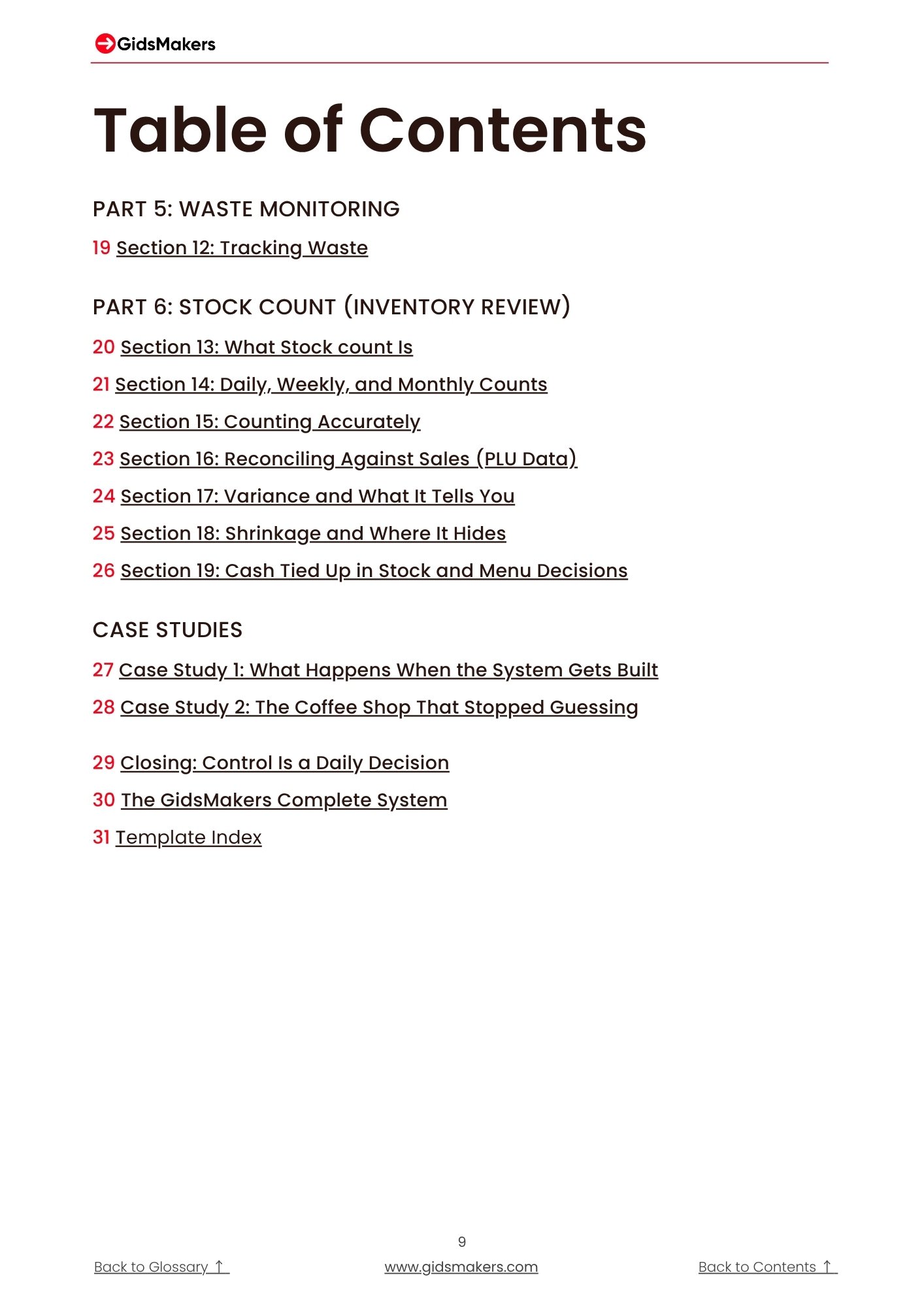
Part 1: Supplier Management and Purchasing. How to evaluate suppliers on quality, price consistency, delivery reliability, lead time, and payment terms. How to build an approved supplier list with a backup for every item. The 5-step purchasing process that separates what your team needs from what actually gets ordered, so every ordering mistake gets caught before money is spent.
Part 2: Receiving. The 5-step receiving process that verifies quantity, weight, quality, temperature, and invoice before anything enters your business. Including a handling quick-reference for every product category from proteins to chemicals, so nothing gets stored incorrectly from the moment it arrives.
Part 3: Handling and Storage. Storage zones and temperature requirements for every product type. FIFO and FEFO rotation explained and applied. Labeling and shelf life standards. Safe thawing methods. The systems that keep what you paid for usable long enough to sell.
Part 4: Mise en Place and Prep Control. Why mise en place controls your food cost more than any other daily habit. How to connect prep quantities to actual sales data by day of week instead of gut feeling, then assign each item to daily, weekly, or batch prep based on shelf life. The under-prep, over-prep, and defrost problems, and exactly how to fix them before they cost you service and product.
Part 5: Waste Monitoring. Six waste categories and what each one tells you about which system is breaking. Expired in storage means FIFO is not being followed. Over-production means prep is not based on data. Plate waste returned by customers means portion size or quality needs review. Track by category, not just amount. The daily waste log that makes invisible waste visible and traceable.
Part 6: Stock Count and Inventory Review. How to count accurately by weight and unit, not by eye. Daily, weekly, and monthly count cadences and who runs each one. The 7-step reconciliation process that compares what you actually used against what you should have used based on sales. Variance analysis, shrinkage identification, and what your inventory data tells you about your menu and your cash flow.
Plus two real case studies showing exactly what was leaking, what was built, and what changed. And a closing section that maps where to go next depending on which problem you are facing.
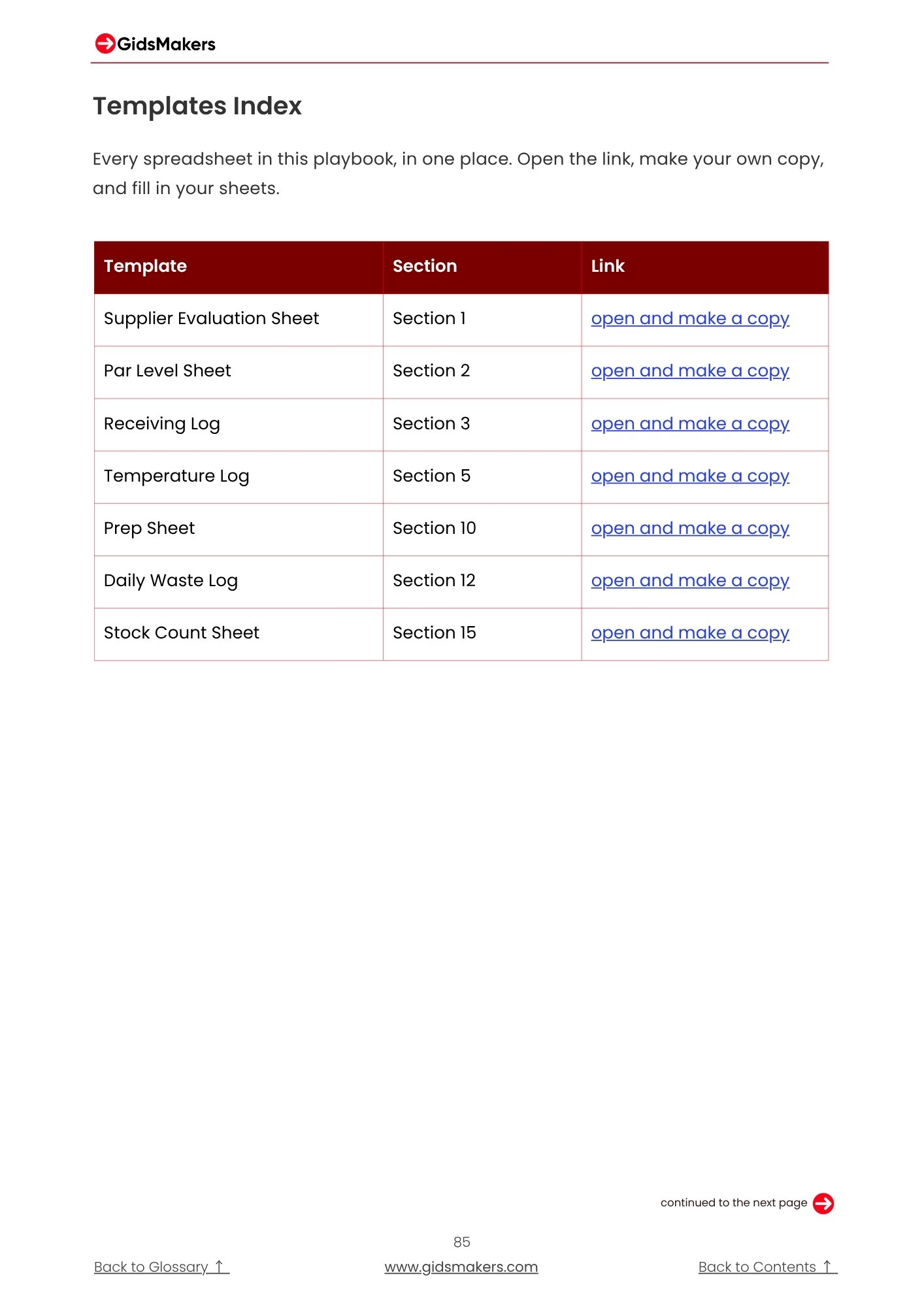
Every section includes a downloadable template. Supplier Evaluation Sheet, Stock Count Sheet, Daily Waste Log, and more. Open, copy, fill in your numbers. The system works from day one.
Built by Tara Mangan. 15 years inside F&B operations. Certified Excellence in Restaurant Service Management. Perfect scores in P&L Management, Strategic Operational, Staffing and Scheduling, and Complaint Handling.
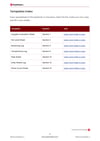
Explore all current and upcoming GidsMakers resources here:
For direct support or business-specific diagnosis, you can also contact us at: hello@gidsmakers.com