
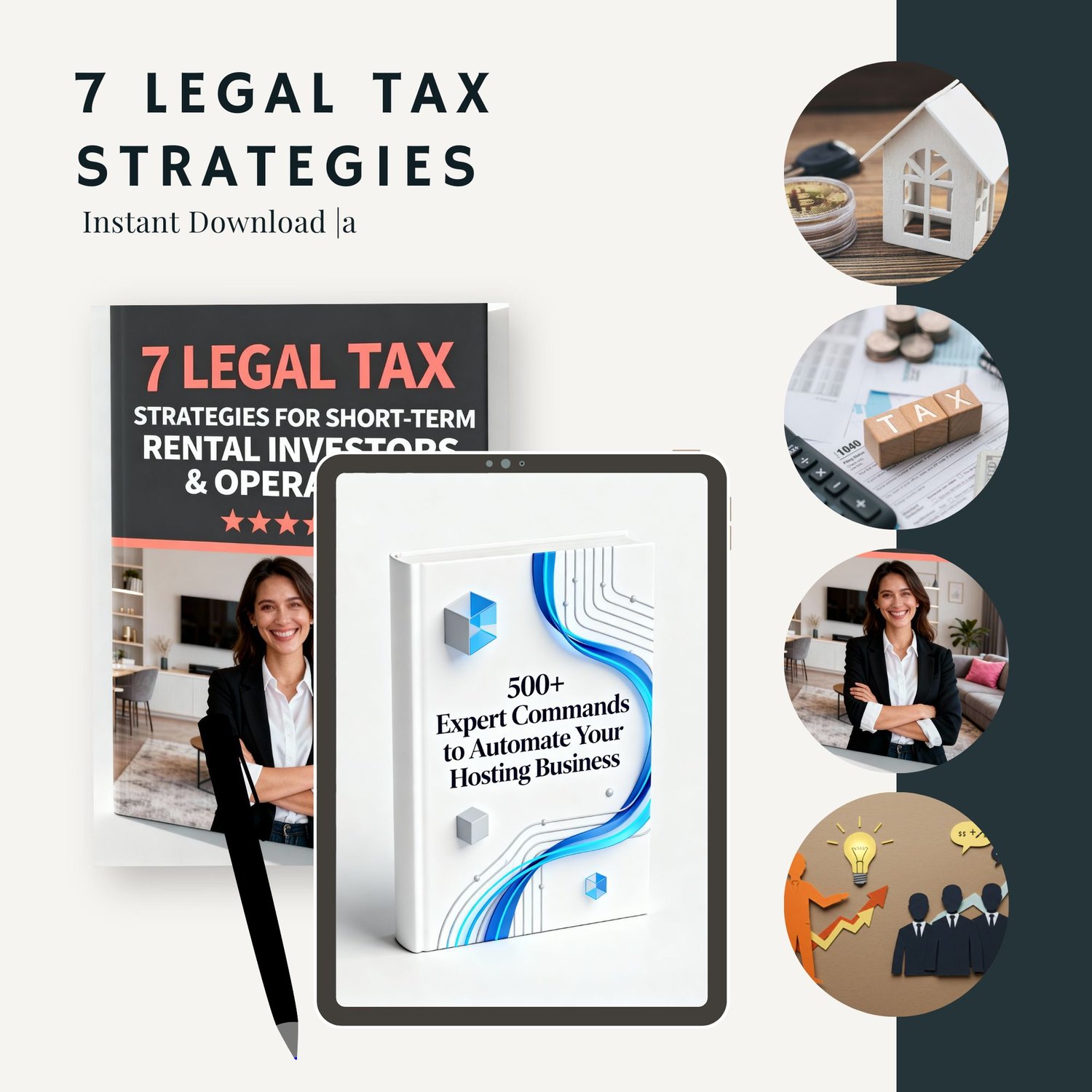






7 Legal Tax Strategies for Short-Term Rental Investors & Operators +FREE BONUS INCLUDED
IMPORTANT: READ THIS BEFORE PROCEEDING
This guide is for educational purposes only. It is not legal or tax advice. Tax laws are complex, change frequently, and depend on your unique circumstances. Always consult a qualified CPA or Tax Attorney who specializes in Real Estate and Short-Term Rentals before making major tax decisions.
Introduction: The Pain You Feel Is Real
Welcome: Why This Guide Exists
If you’re reading this, tax season is either weighing heavily on your mind or you suspect you overpaid last year. Hosting on Airbnb, VRBO, or Booking.com is far from passive. From late-night guest messages to coordinating cleaners and handling maintenance, your hard work deserves reward, not a confusing tax bill. This guide cuts through the jargon to give clarity, relief, and actionable strategies to legally keep the money you earned.
The Real Problem With Airbnb Taxes
Most hosts—and even generalist accountants—misunderstand Short-Term Rentals (STRs). They treat your Airbnb business like a passive rental or a hobby, leaving thousands of dollars on the table.
Why Hosts Overpay:
- TurboTax or basic software doesn’t ask STR-specific questions.
- Expenses are categorized incorrectly, missing key deductions.
- Fear of audits leads hosts to skip legitimate write-offs ("The Fear Tax").
Every missed deduction costs real money. Multiply small mistakes across multiple properties, and you’re effectively working for free for months.
Part 1: Stop the Bleeding – How Airbnb Income Is Actually Taxed
Rental vs. Business Income
Short-term rentals often sit in a unique middle ground between passive rental and active business. If the average stay is 7 days or less, the IRS may treat it as a business.
Active vs. Passive Rules
Material participation—managing the property yourself, handling repairs, communicating with guests—can convert losses from passive to non-passive, allowing them to offset W-2 or other active income.
The $350/Month Leak
Small oversights drain cash:
- Missed deductions on everyday purchases.
- Subscription creep for unused tools.
- Comingled funds with personal credit cards.
- Plugging these leaks can save $4,000+ annually in deductions alone.
Part 2: The Deduction Goldmine – 37 Legal Deductions Most Hosts Miss
Property-Related: Mortgage interest, property taxes, insurance, utilities, repairs & maintenance.
Guest-Related: Welcome gifts, consumables, linens & towels.
Operations & Tech: Platform fees, software subscriptions, internet/Wi-Fi, smart home devices.
Travel & Education: Property trips, courses, coaching, seminars.
Home Office: Deduction for dedicated spaces used exclusively for Airbnb management.
Deductions That Trigger Audits: Avoid exaggerating or misclassifying expenses; stick to legitimate write-offs.
Part 3: Structure Like the Pros – Entity Strategy Explained
Sole Proprietorship: Easy filing, no liability protection.
LLC: Legal protection, separates personal assets, extra paperwork.
S-Corporation: Tax savings on self-employment taxes for active, profitable STRs.
Millionaire Investor Framework: Separate asset ownership from operations to minimize risk across multiple properties.
Part 4: Depreciation & Advanced Savings
Depreciation Basics: Claim wear-and-tear over 27.5 years on residential properties.
Advanced Cost Segregation: Accelerate deductions on components like carpets, cabinets, and driveways.
Bonus Depreciation: Certain years allow 60–100% of short-life asset deductions in Year 1, generating massive legal paper losses.
Part 5: Audit-Proof Your Life – Documentation That Protects You
Simple Folder System:
- Digital: Google Drive / Dropbox folders by year and month.
- Physical: Shoebox with digitized receipts.
- Bank Statements: Separate personal and business accounts.
Audits are a verification process, not punishment—being organized makes it simple.
Part 6: Systems That Save You Every Year
Year-End Rescue Checklist:
- Download Airbnb/VRBO transaction CSVs.
- Track mileage.
- Review credit card statements for unused subscriptions.
- Pre-pay bills to maximize current-year deductions.
Quarterly Tax Calendar: Pay as you earn to avoid penalties.
Part 7: The Transformation – From Anxiety to Control
Mastering Airbnb taxes gives peace of mind, financial control, and smarter business decisions. Real hosts report thousands saved, paper losses offsetting W-2 income, and overall reduced stress.
Conclusion: Your Next Move
Two Paths Forward:
- Do nothing—overpay taxes, mix funds, lose sleep.
- Take control—implement these systems, consult a pro, document everything, and keep the money you earned.
Final Reminder: Tax laws are learnable. This is legal, actionable, and worth mastering. Read the rules, play the game, and win.
Bonus Sections
- Audit Protection Guide: Mileage logs, listing calendars, contracts with cleaners.
- Video Masterclass (2+ hours)
- Expense Tracker Instructions – Simple spreadsheet setup.
- Email Support & 1-on-1 Call Prep: Forms, P&L, property list, and management hours.