
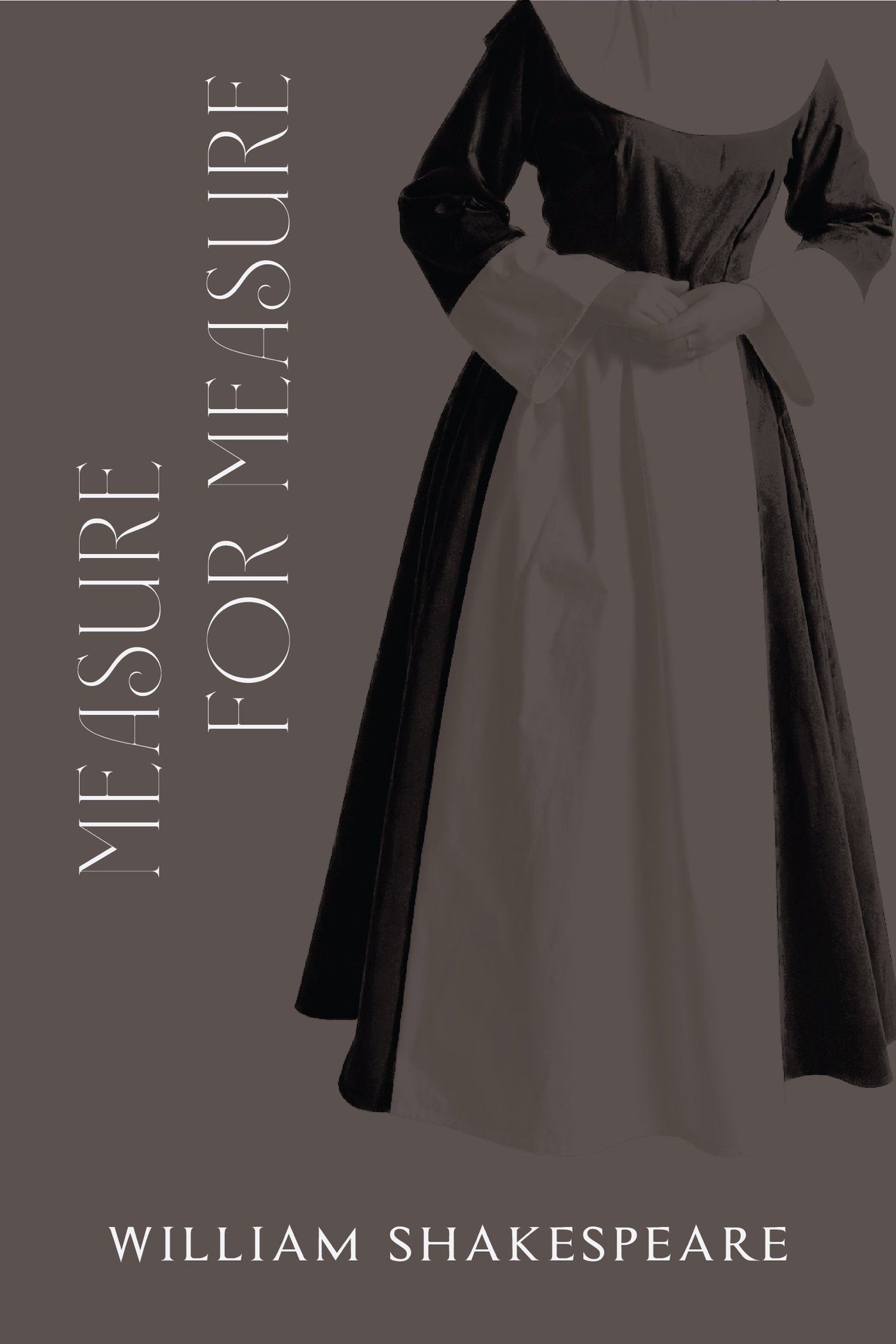
Measure for Measure
William Shakespeare’s Measure for Measure begins with a city in moral crisis. Vienna’s laws against sexual immorality have been ignored for years under the permissive Duke Vincentio, who decides to re-establish order without taking the political heat himself. He appoints Angelo, famously incorruptible, rigidly principled, utterly without mercy, as his deputy and disappears, secretly returning disguised as a friar to watch what happens. Angelo’s first major act is to condemn Claudio to death for getting his fiancée, Juliet, pregnant before their official marriage. Claudio’s friends scramble for a solution. His only hope is his sister Isabella, a young woman about to take holy vows as a nun, whose very piety might move the unmovable Angelo to mercy.
Isabella’s plea for her brother’s life does move Angelo catastrophically. The man who has condemned others for fornication is consumed by lust for this virtuous young woman and offers her an obscene bargain: sleep with him or watch your brother die. Isabella is horrified. She refuses and tells Claudio, expecting his support; instead, Claudio breaks down and begs her to reconsider, unleashing one of Shakespeare’s most shattering scenes about the terror of death and the limits of principle. The Duke, watching from the shadows in his friar’s disguise, intervenes with a scheme: Angelo’s abandoned former fiancée, Mariana, will take Isabella’s place in the darkness—the bed trick again—obtaining Angelo’s compliance without Isabella’s sacrifice. But Angelo, believing he’s gotten what he wanted, orders Claudio’s execution anyway, revealing the full depth of his corruption.
The resolution is deeply uncomfortable. Angelo is exposed, confesses everything, and begs for death. The Duke offers mercy instead, forcing Angelo to marry Mariana while also proposing marriage to Isabella himself. Justice is simultaneously served and subverted—everyone is pardoned, paired off, and the Duke reasserts control. But Isabella never answers his proposal, Claudio’s execution was nearly carried out, and Angelo’s punishment is to live. Measure for Measure refuses to function as a proper comedy, leaving audiences disturbed rather than satisfied. It’s Shakespeare’s most forensic examination of power: how it corrupts absolutely, how the righteous become hypocrites, how mercy and justice can’t coexist without compromise. Dark, morally complex, and provocative in ways that cut deeply today, in a world still debating who gets to judge, who gets mercy, and what the powerful do when nobody’s watching.
About the author
William Shakespeare (1564-1616) is widely regarded as the greatest writer in the English language and the world’s preeminent dramatist. Born in Stratford-upon-Avon, he wrote approximately 39 plays and 154 sonnets that have shaped literature, theater, and the English language itself for over four centuries. His works, from tragedies like Hamlet and King Lear to comedies like A Midsummer Night’s Dream and histories like Henry V, explore the full range of human experience with unmatched psychological insight, poetic brilliance, and emotional power. Shakespeare’s influence extends far beyond the stage; his phrases and characters have become woven into the fabric of modern culture, and his exploration of timeless themes—love, power, ambition, jealousy, mortality—continues to resonate with audiences worldwide. Despite the passage of centuries, his work remains startlingly contemporary, speaking to each new generation with fresh relevance and inexhaustible depth.