

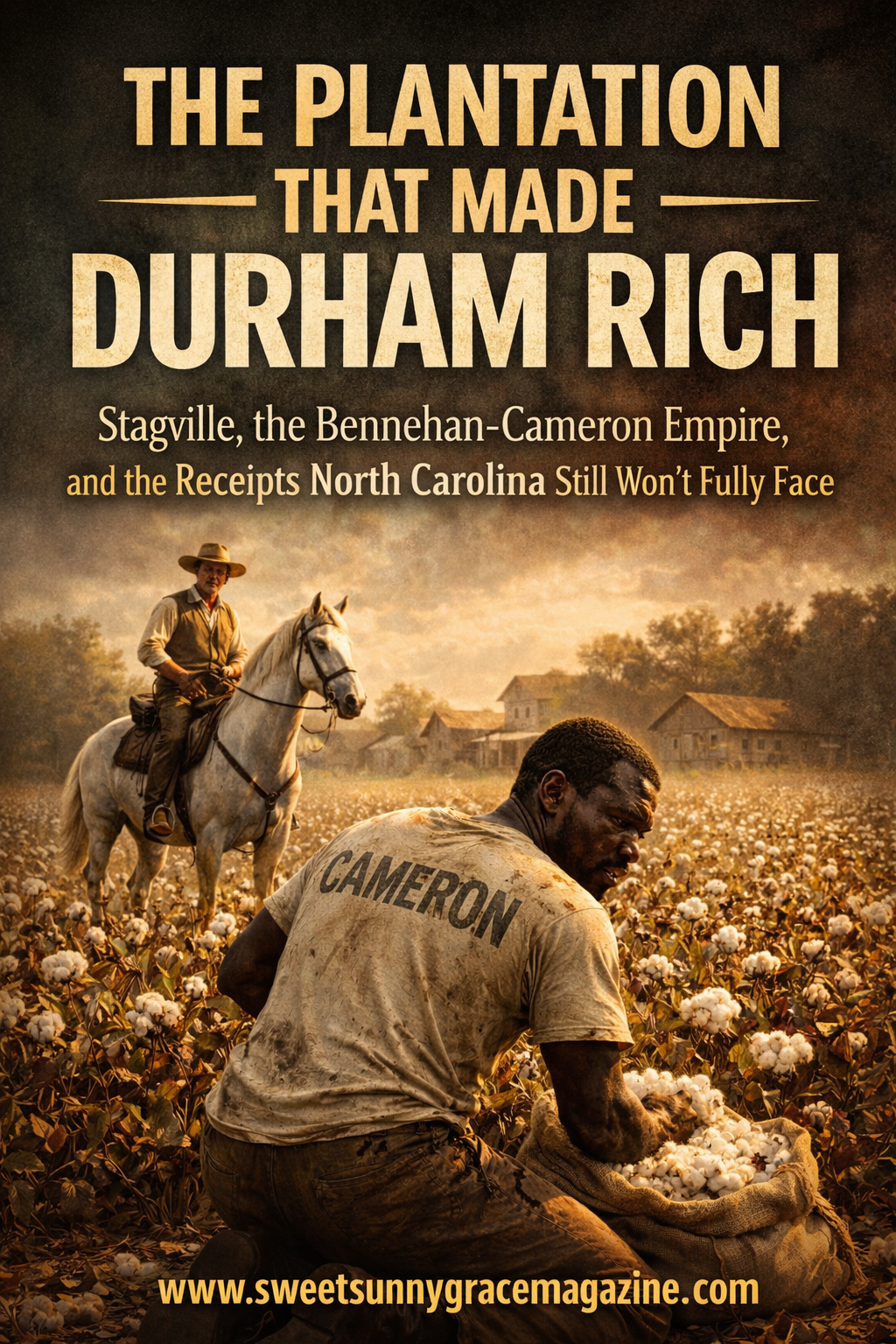
THE PLANTATION THAT MADE DURHAM RICH Stagville, the Bennehan–Cameron Empire, and the Receipts North Carolina Still Won’t Fully Face
Payhip Description
THE PLANTATION THAT MADE DURHAM RICH
Stagville, the Bennehan-Cameron Empire, and the Receipts North Carolina Still Won’t Fully Face
Before Durham became known for universities, medicine, tobacco fortunes, downtown development, and booming real estate, enormous wealth was already being built across the region.
And much of that wealth came from enslaved labor.
The Plantation That Made Durham Rich takes readers into the history of Stagville and the Bennehan-Cameron plantation network, one of the largest slaveholding operations in North Carolina, and examines how land, agriculture, forced labor, family wealth, and political power helped shape the economic world that came afterward.
This is not simply another plantation story.
It is an investigation into who worked, who profited, what was inherited, and what happened to that wealth after slavery ended.
Inside, you’ll explore:
- The rise of the Bennehan and Cameron families
- How Stagville became part of a massive plantation empire
- The lives and labor of the hundreds of enslaved Black men, women, and children connected to the plantations
- How enslaved labor created wealth that could survive for generations
- The importance of land ownership in building elite power
- What plantation records can reveal about people who were treated as property
- The connection between slavery-era wealth and the development of North Carolina
- What freedom actually looked like for formerly enslaved families after emancipation
- Why ownership changed faster than economic power
- The difference between preserving plantation buildings and fully confronting what happened inside them
- How Durham and the surrounding region should talk about this history today
The story of slavery is often presented as though everything changed the moment emancipation arrived.
But money does not disappear because a law changes.
Land does not vanish.
Family connections do not vanish.
Political influence does not vanish.
And wealth created over generations can continue shaping communities long after the original system is gone.
That is where this book goes deeper.
The Plantation That Made Durham Rich asks readers to follow the land, follow the labor, and most importantly—
follow the money.
This book is for anyone interested in Durham history, North Carolina history, Black history, slavery, plantations, generational wealth, Reconstruction, economics, race, power, and the hidden history behind modern American cities.
The buildings are still standing.
The records still exist.
And the story is bigger than what most people were taught in school.
History left receipts. This book starts reading them.
Instant digital download.
www.sweetsunnygracemagazine.com