

Budget Planner for Ireland
What's inside
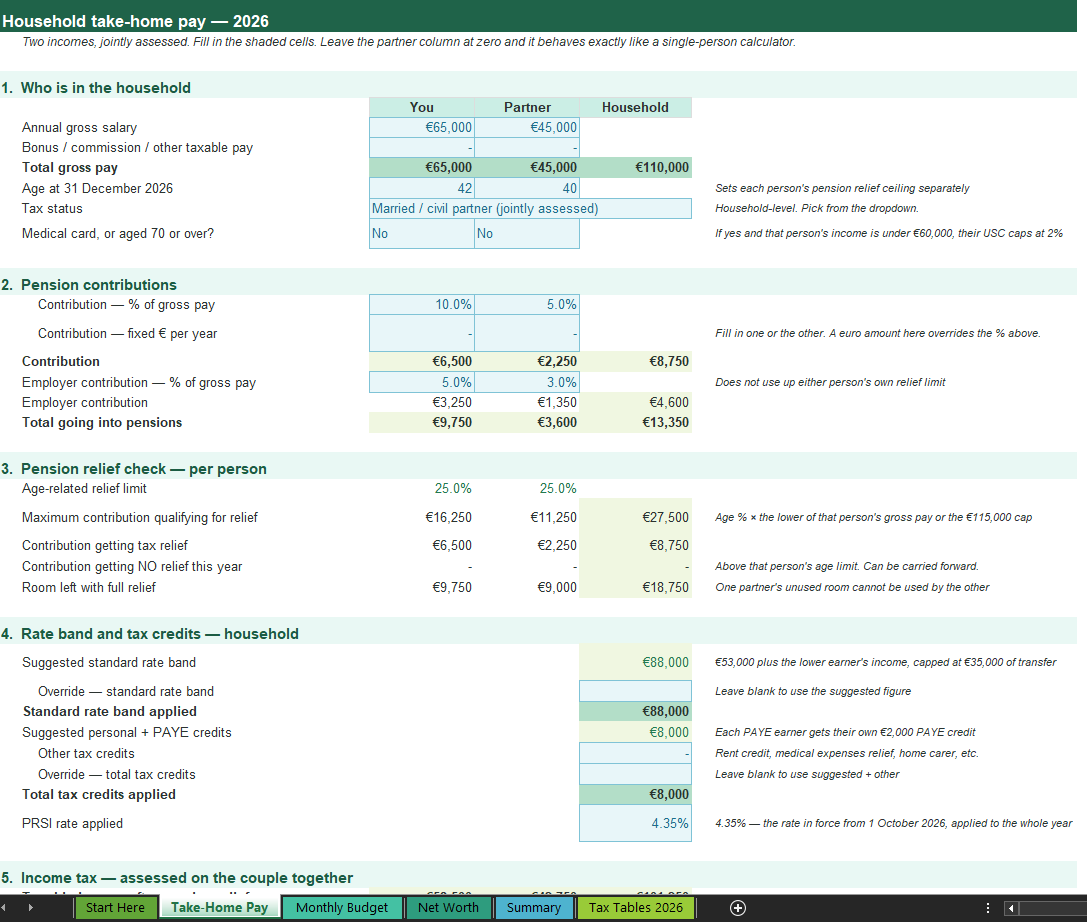
A household take-home calculator for 2026 rates. The joint rate band, including the €35,000 transfer between you and exactly where it stops. Separate USC and PRSI for each of you, including the reduced rate and the weekly PRSI threshold that matters if one of you is part-time.
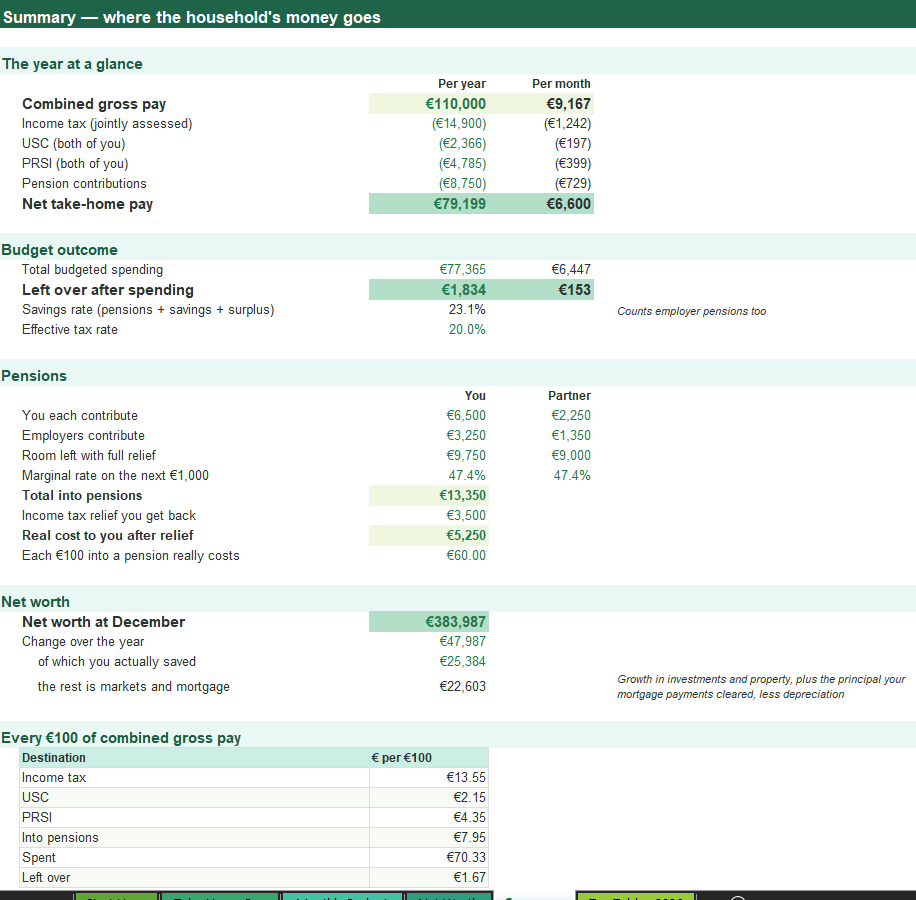
Both pensions, handled properly. Each of you has your own age-related relief limit against your own salary. One of you having room left over does not mean the other can use it. That is the single most common thing couples get wrong about Irish pensions, and it quietly costs money every December.
Your two marginal rates side by side. They are often different, and the difference decides who should take the overtime, and which of you gets more back from an extra €100 into a pension.
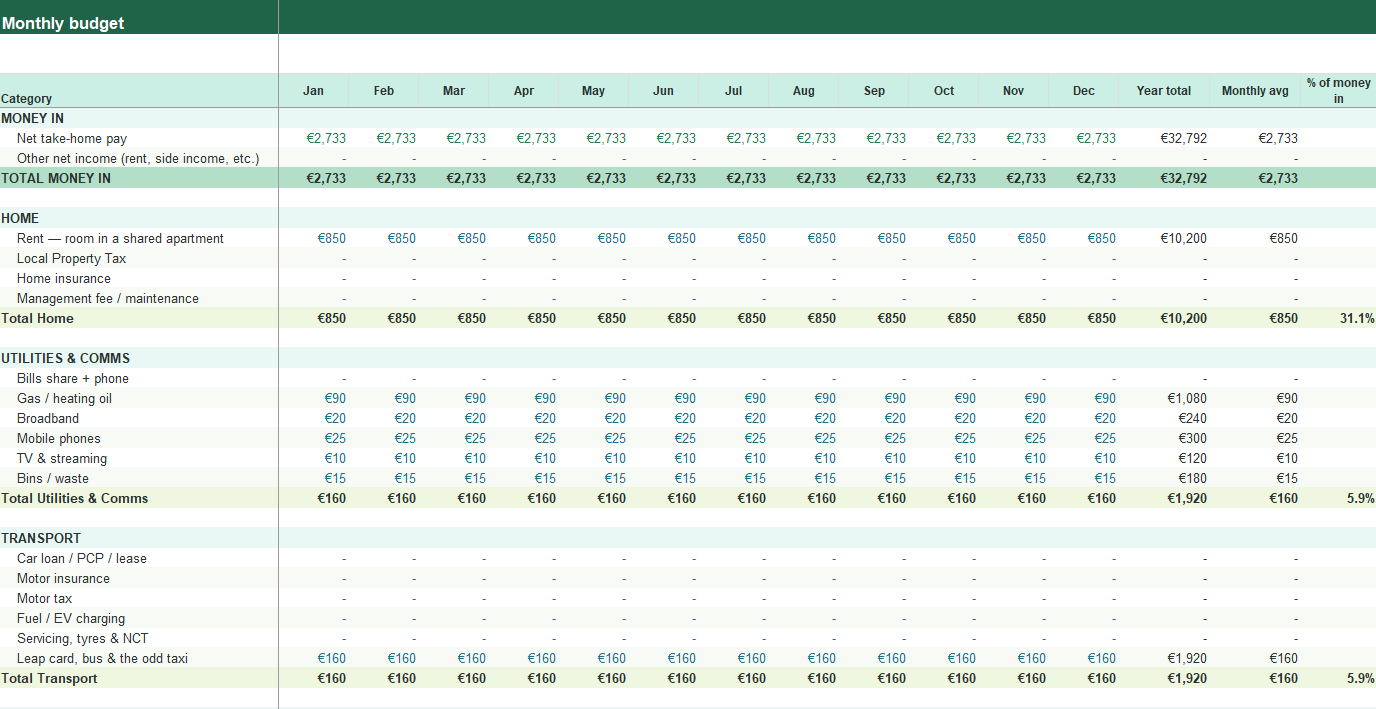
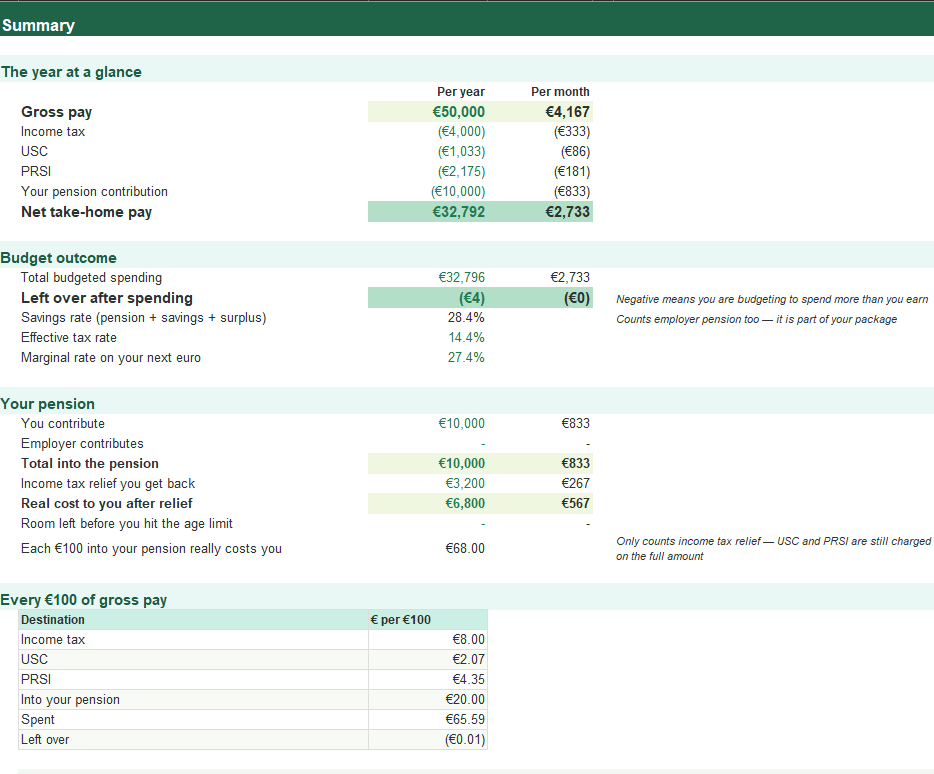
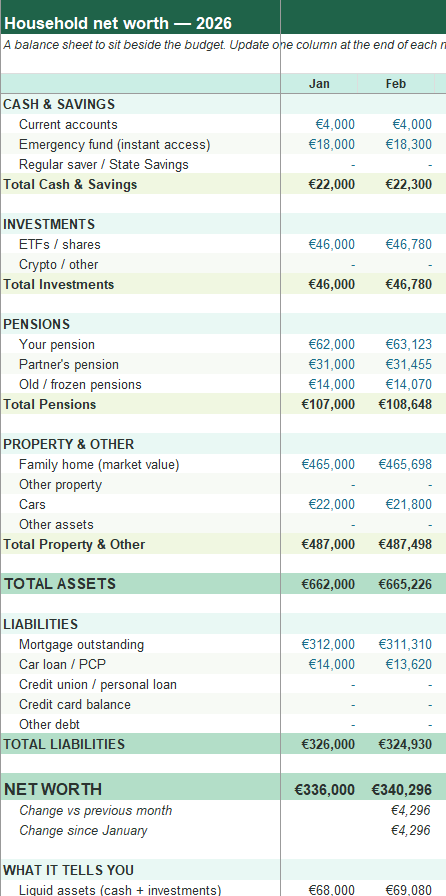
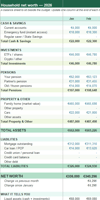
A twelve-month budget, so the car insurance sits in March and Christmas sits in December instead of being smeared across the year. A household net worth sheet. And a summary that reconciles the two: how much your net worth moved, how much of that you actually saved, and how much was just the house and the markets.
Every rate sits on its own sheet. Nothing locked, nothing hidden.
What it won't do
It's a planning tool, not tax advice, and not payroll. It assumes you are both PAYE and jointly assessed. If either of you is self assessed, or there is rental or foreign income, this is not built for that. The annual household figure is exact, but how the tax splits across your two payslips depends on how you have asked Revenue to divide your band and credits.
Built on 2026 rates. Budget Day is 6 October, and if anything changes, you get the updated file free.