
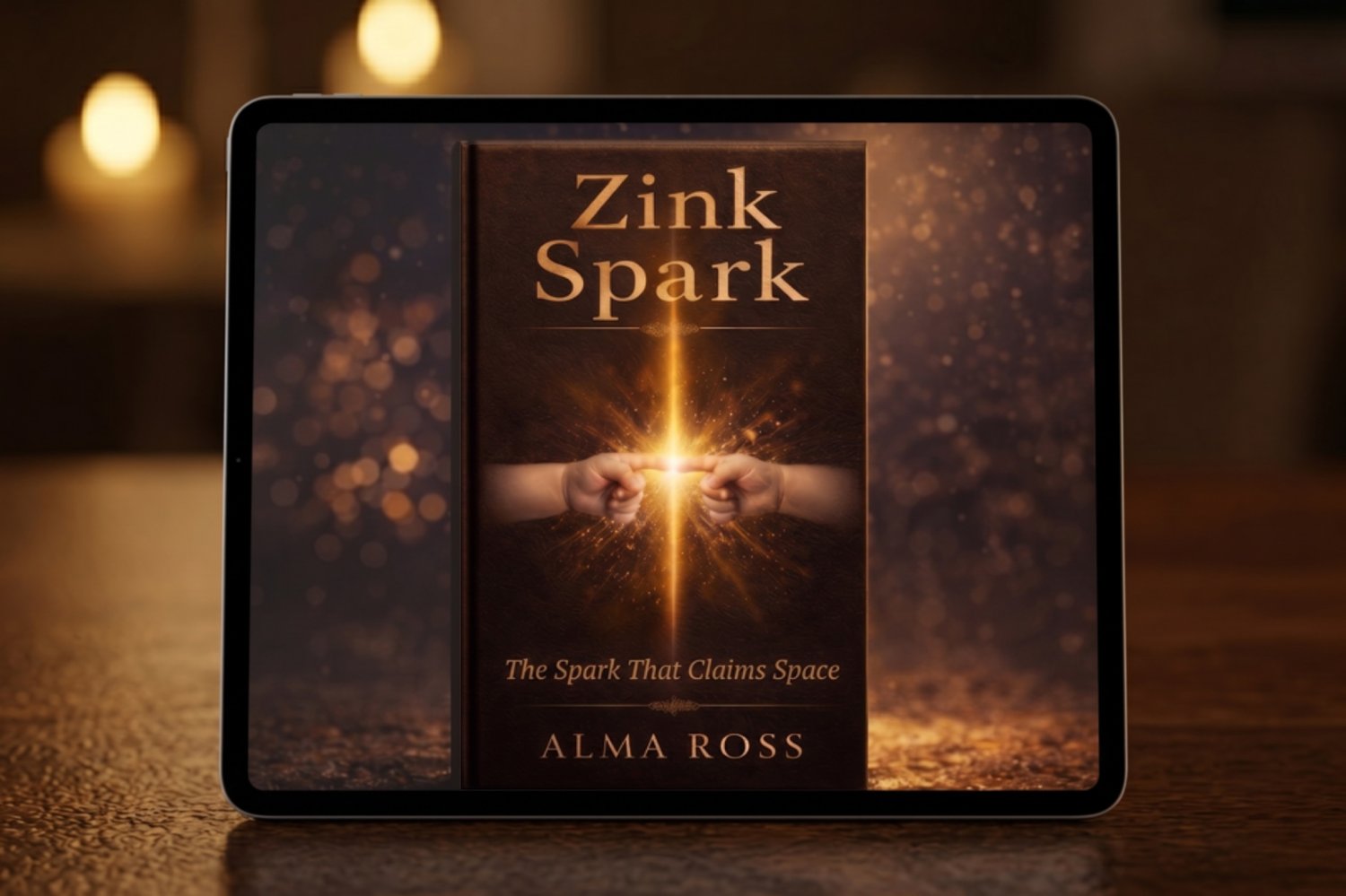
Zink Spark: The Spark That Claims Space. Online.
Spark I is the foundational volume of the tetralogy, the clinical archive where the thermodynamic rules of the "Physics of the Spark" are established. The work documents how, at the exact moment of fertilization, every human being emits an identical electromagnetic discharge called a zinc spark. However, the universe responds to this anomaly by imposing two relentless and inseparable filters: the genetic code and the postal code.
The Mechanism of Destruction
Through rigorous "historical autopsies," the book dissects how society's blind system manages anomalies that stand out. Ross establishes a lethal physical law: in a closed system, the light that shines twice as intensely lasts half as long. The volume demonstrates that the world destroys these exceptional sparks in two ways:
- Blind destruction: Crushing individuals through poverty or a lack of support scaffolding.
- Destruction by design: The system recognizes talent, extracts its value, and then discards the body when it is no longer profitable.
Case Studies Audited by the Book
To test this forensic thesis, the book audits real cases of geniuses whom the system devoured or formatted:
- Talent consumed to the point of exhaustion: Figures such as Édith Piaf, Jean-Michel Basquiat, Kurt Cobain, and Amy Winehouse, whose bodies were pushed to the limit to extract the product demanded by the industry and the public.
- Isolated or ignored genius: Such as Srinivasa Ramanujan, who discovered revolutionary mathematics from a hospital bed without being validated by the colonial system, or Nikola Tesla, who died in poverty while the world was illuminated by his inventions.
- Deliberate destruction: As in the case of Alan Turing, where the state system that used his mind to win a war later applied the law with clinical precision to destroy him for his homosexuality.
- Those who became the system: The book explores disturbing paradoxes, such as Thomas Edison, a spark who discovered that the only way to survive was to learn the logic of the system and become the very mechanism that extracts others' talent.
The Variable of Survival: Presence
Finally, the volume introduces a single variable capable of altering this pattern of destruction: presence.
Through cases such as Serena Williams or Taylor Swift, the book reveals that a spark only has a chance of surviving intact if someone (a parent or a family) arrives before the system to:
- Build a scaffold of support.
- Move their postal code if necessary.
- Teach them that their talent belongs to them, thereby preventing the mechanism from claiming it as property.