

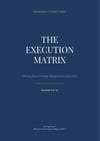
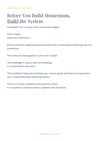


The Execution Matrix
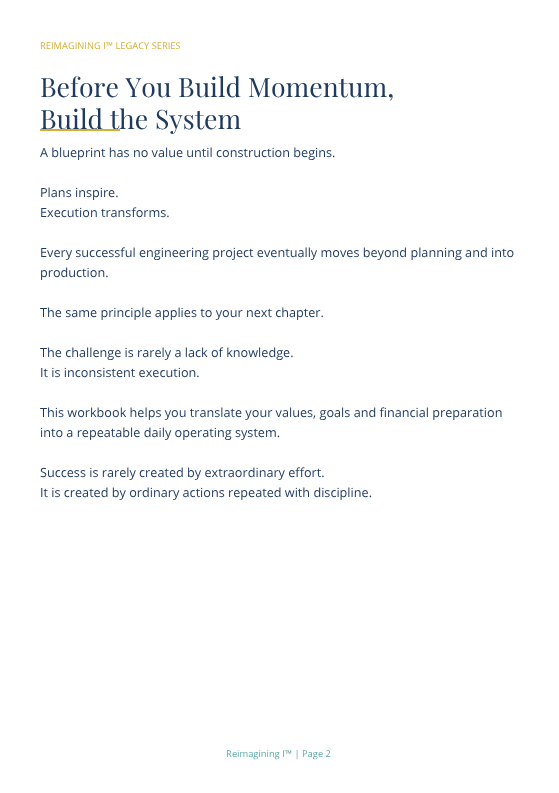
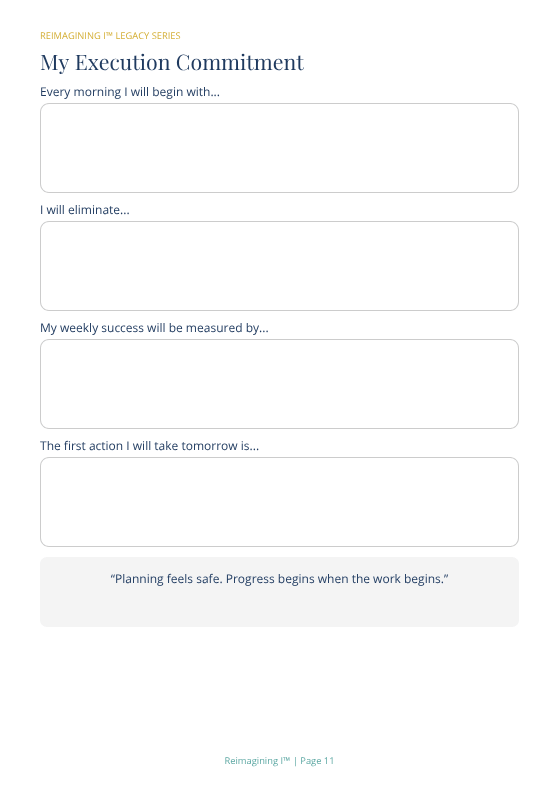
The Execution Matrix, Book 9 in the Reimagining I series by Neil Nelson, outlines the transition from strategic planning to high-leverage daily execution. It emphasises that professional growth requires moving beyond "planning loops" into consistent, daily operational output.
Key Principles for Execution:
- The Rule of the Critical Few: Focus exclusively on the 20% of tasks that drive results, disregarding the 80% that yield nothing.
- Time Blocking: Replace to-do lists with non-negotiable time slots for high-leverage activities.
- Weekly Review Protocol: Perform an operational audit every Friday to maintain efficiency.
- Ruthless Consistency: Consistent execution of a mediocre plan is superior to an unimplemented perfect strategy.
The Operational Audit (10 Heavy Hitter Questions):
The text provides a framework to audit business operations, including:
- High-Leverage Filtering: Identifying the two tasks that directly generate income or value.
- Morning Production Windows: Protecting peak cognitive hours for deep work, free from administrative distractions.
- Outreach Metrics: Committing to a specific, trackable number of weekly direct connection points.
- Automation: Utilising software to manage administrative bottlenecks.
- Content Systems: Repurposing existing material (such as booklet pages) into social media assets.
Standard Operating Shift:
To maintain structural integrity, the booklet suggests a daily schedule:
- 05:00–07:00: Inner Work (fitness, values check).
- 08:30–11:30: High-Leverage Block (content creation).
- 11:30–13:00: Administrative Operations.
- 13:30–16:30: Market Interface (outreach, networking).
- 16:30–17:00: Daily Demobilisation.
This process prepares the reader for the final stage, covered in Booklet 10: The Commissioning Stage.
Disclaimer: The information contained in this booklet is for educational and personal growth
purposes only. It does not constitute legal, financial, psychological, or medical advice.