

Chinese Gardens & Parks Guide (2026 Edition)
You walk into a Chinese garden. You see rocks, a pond, a pavilion. You take a photo, walk on in ten minutes. You just missed the entire point.
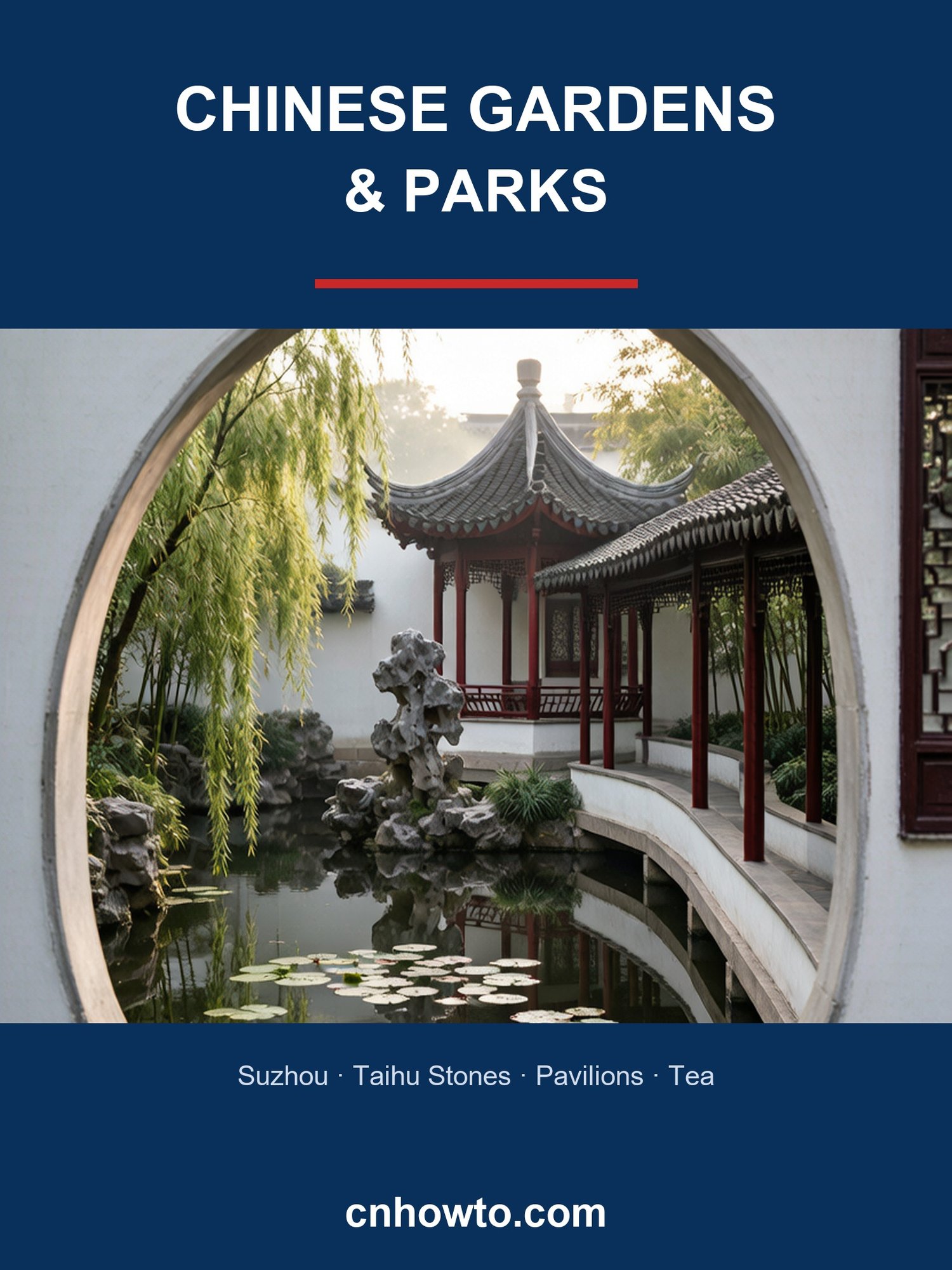
A Chinese garden is not a botanical garden — it's a three-dimensional landscape painting designed to be unrolled step by step like a scroll. The rocks are mountains. The pond is the sea. The zigzag bridge isn't inefficient — it's forcing you to slow down and see the water from every angle. And that moon gate? It's framing the view like a painting.
This guide teaches you how to walk through a garden like the scholar who designed it — and then takes you into the public parks where modern Chinese life actually happens.
WHAT'S INSIDE (8 Chapters):
- The reality check: why Chinese gardens are not about plants, the "three-dimensional scroll painting" concept, and the core difference from Western gardens
- Garden philosophy: borrowed scenery (借景), framed views (框景), the microcosm principle, the scholar who retired to build a garden
- Rockeries & water: why the uglier the rock the better (太湖石: four beauty standards), the pond as the garden's heart, the symbolic landscape in miniature
- Garden architecture: pavilions for stopping and looking, covered walkways for rain, moon gates as picture frames, zigzag bridges to slow you down
- Suzhou's five masterpieces: Humble Administrator's Garden, Lingering Garden, Master of the Nets, Surging Waves Pavilion, Lion Grove
- Imperial & regional gardens: the Summer Palace, Chengde Mountain Resort, Shanghai's Yu Garden, Chengdu's tea gardens
- Public parks: the morning tai chi, the singing groups, the ground calligraphy artists, the chess players, the matchmaking corners, the bird-walking retirees — park etiquette for foreigners
- Quick reference: garden vocabulary, how to visit (go early, go slow, look through every window), best gardens by city
FORMAT: PDF (instant download) UPDATED: July 2026 PRICE: $7.99