
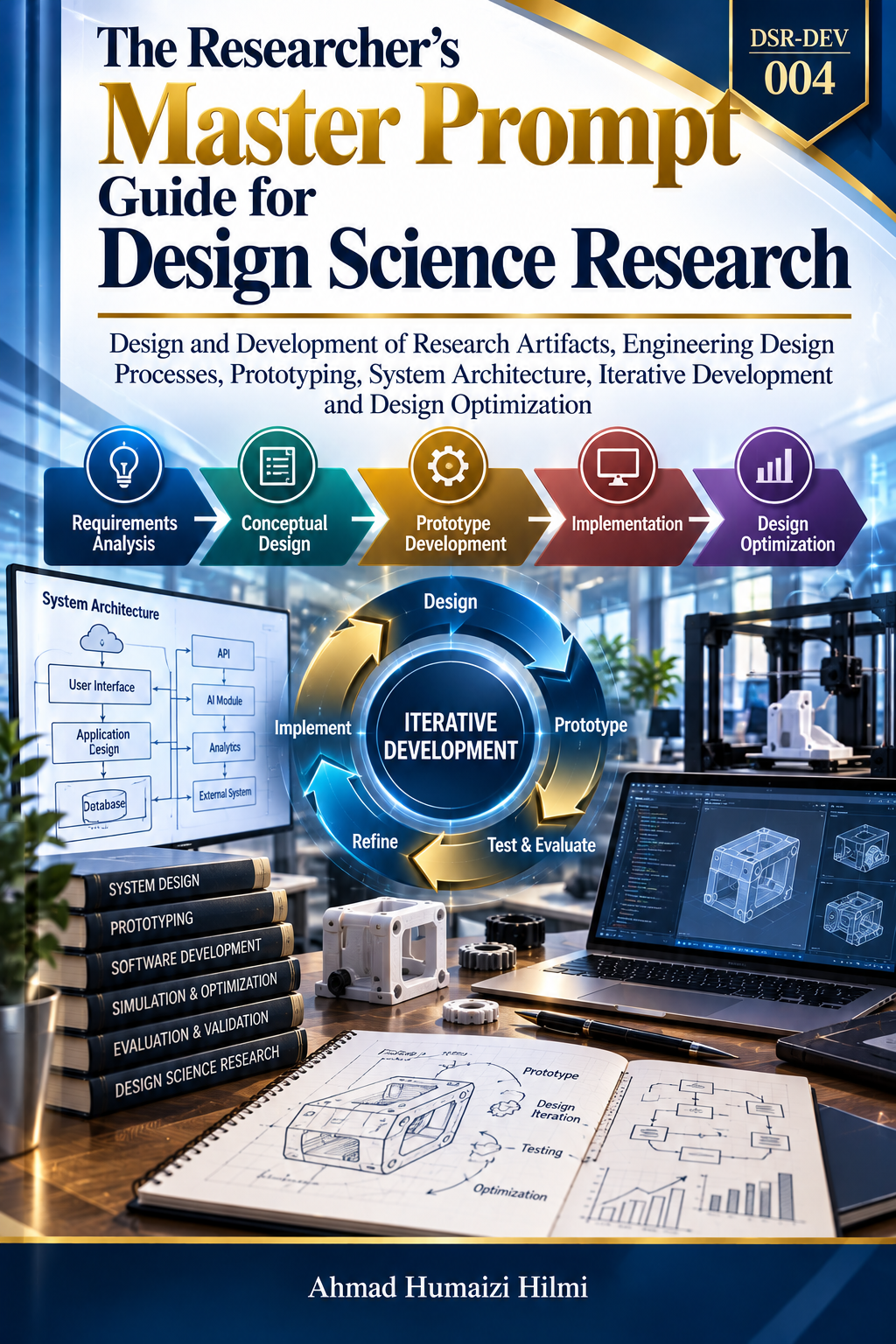
4. DSR-DEV-004 — Design and Development of Research Artifacts, Engineering Design Processes, Prototyping, System Architecture, Iterative Development and Design Optimization
Description
This Master Prompt provides a comprehensive framework for the systematic design, development, implementation and refinement of artifacts through iterative Design Science Research methodologies. It examines the transformation of identified problems, stakeholder requirements, theoretical foundations and design objectives into functional artifacts, including software applications, information systems, computational models, engineering solutions, decision-support systems, digital services, operational frameworks, process improvement tools and intelligent technological platforms. Particular emphasis is placed on requirements-driven design, conceptual development, architectural modeling, prototype construction, iterative experimentation, design optimization, technical implementation and the documentation of artifact evolution. The framework integrates engineering design methodologies, systems engineering, software development life cycles, Agile development, user-centered design, design thinking, model-driven development, rapid prototyping, simulation-based design, computational experimentation, optimization techniques and structured design iteration. Researchers are guided in developing artifact specifications, selecting appropriate technologies, designing system architectures, defining functional modules, constructing algorithms, developing prototypes, establishing implementation procedures and documenting technical decisions. The Master Prompt also addresses the relationships among design alternatives, technical feasibility, resource constraints, scalability, maintainability, interoperability, usability, performance and implementation complexity. It supports the development of system architecture diagrams, process flowcharts, functional decomposition models, algorithmic representations, design matrices, prototype illustrations, computational models, engineering equations, simulation outputs and artifact development roadmaps. Particular attention is given to documenting iterative design cycles, identifying design failures, evaluating alternative configurations, incorporating stakeholder feedback, optimizing artifact performance and maintaining traceability between research objectives, design requirements, implementation decisions and resulting artifact characteristics. The framework ensures that artifact development is treated as a scientifically documented research process rather than an isolated technological implementation activity.