
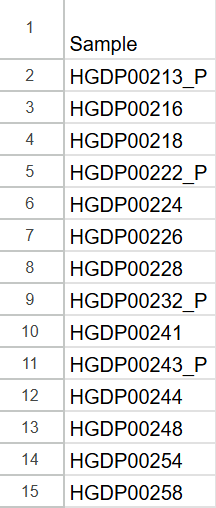
Pathan.HO 14 samples 23andme format
The Pashtuns, also known as Pathans or Pukhtuns, are an Iranian-speaking ethnic group native primarily to Afghanistan and northwestern Pakistan, with significant diasporas across South and Central Asia. They number around 50–60 million people worldwide, making them one of the largest tribal societies in the world.
Historically, the Pashtuns have played a central role in the politics and empires of the greater Afghan region. The earliest known Pashtun polities emerged during the Ghazanavid and Ghurid Empires (10th–13th centuries AD), when many Pashtun tribes served as military elites and administrators. However, it was in the 16th century that the Pashtuns began to establish their own powerful states. The most notable among these was the Hotak Empire (1709–1738), founded by Mirwais Hotak in Kandahar, who successfully rebelled against Safavid Persian rule and created a short-lived Afghan kingdom stretching across present-day Afghanistan and Iran.
Following the fall of the Hotaks, Ahmad Shah Durrani, a member of the Sadozai clan of the Durrani tribe, established the Durrani Empire (1747–1826), often regarded as the foundation of the modern Afghan state. Under his rule, the empire expanded to include all of modern Afghanistan, Pakistan, eastern Iran, and northern India. Ahmad Shah Durrani, known as Ahmad Shah Baba (“Father of the Nation”), unified the Pashtun tribes and led successful campaigns into India, capturing Delhi in 1761 after the famous Third Battle of Panipat.
For this video, I’ve gathered the raw genomes of 14 ethnic Pashtuns from the Human Origins dataset. They come from Pakistan. I used academic tools, such as admixtools 1 and 2, but also tools I developed myself, such as trait predictor, betacalc, and mageplot to analyze these genomes.