
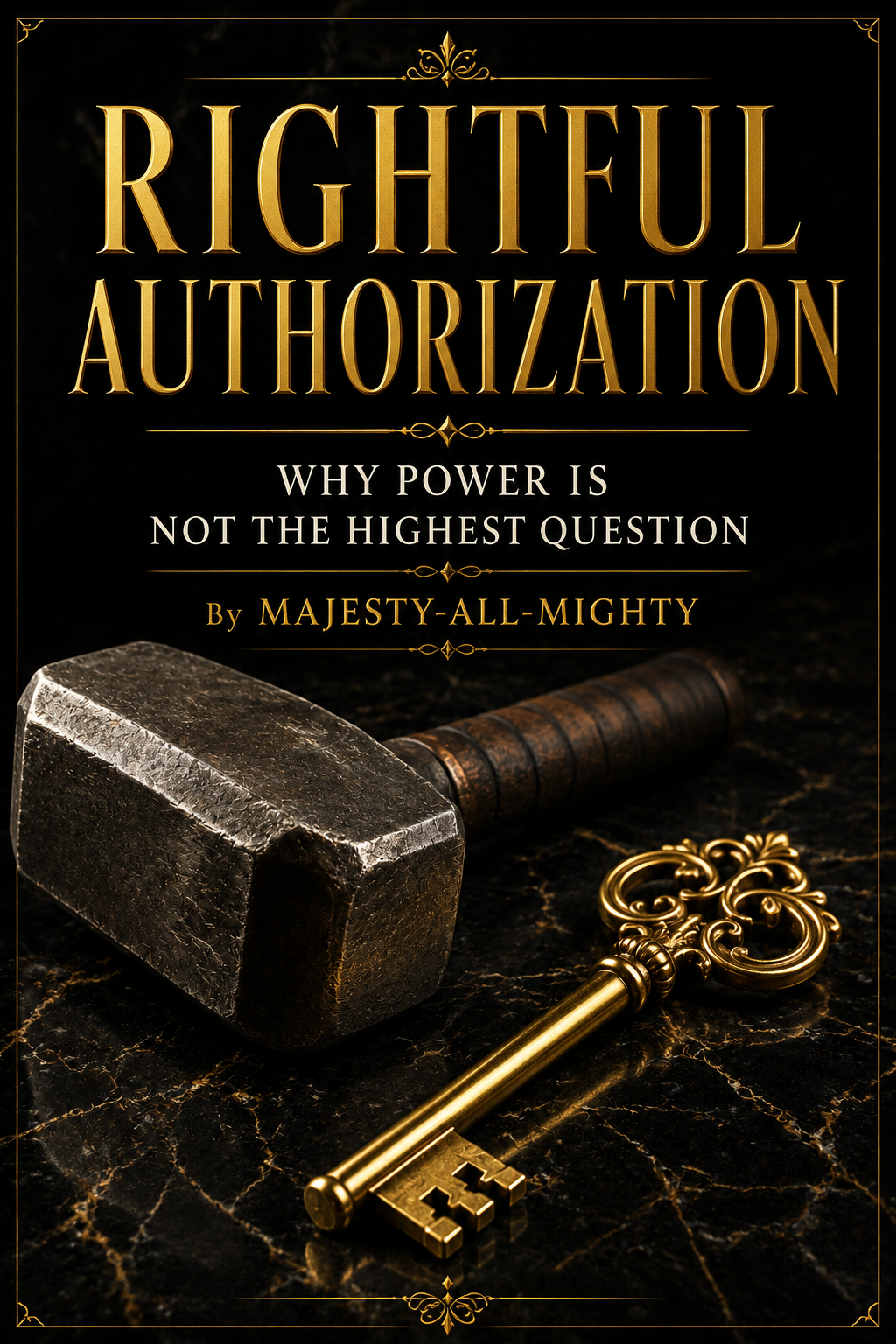
RIGHTFUL AUTHORIZATION: Why Power Is Not the Highest Question
RIGHTFUL AUTHORIZATION
Why Power Is Not the Highest Question
What if one of the most important questions we ask is not, "Who has the power?" but rather, "Who possesses rightful authorization?"
Throughout history, conversations about influence, control, strength, and authority have often centered on power. Yet power alone does not answer every question. Capacity does not automatically establish legitimacy. Influence does not automatically establish jurisdiction. And appearance does not automatically establish enduring authority.
RIGHTFUL AUTHORIZATION invites readers to explore a deeper framework, one that carefully distinguishes between power and legitimacy, influence and authorization, observation and governance, and participation and rightful stewardship.
At the heart of this report is a simple yet transformative realization:
Power explains capacity. Authorization explains legitimacy.
Within these pages, you'll explore:
- Why power and authorization are not synonymous.
- How unauthorized authority quietly emerges through assumptions, labels, appearances, and repeated narratives.
- The role of agreement in granting ongoing legitimacy to interpretations and conclusions.
- The importance of recognizing rightful jurisdiction in determining what deserves enduring influence.
- How to restore thoughtful stewardship without denying reality or minimizing life's complexities.
Rather than encouraging control over every circumstance, RIGHTFUL AUTHORIZATION offers a balanced perspective rooted in discernment, responsibility, and intentional participation.
This is not about accumulating more power.
It is about recognizing what genuinely deserves the authority to govern your understanding, your identity, your decisions, and your trajectory.
If you've ever questioned what truly qualifies to shape your life, this report offers a compelling invitation to look beyond appearances and ask a deeper question.
Because not everything that appears deserves jurisdiction.
Not everything that influences deserves authorization.
And not everything that persists deserves permanent legitimacy.
The highest question is not simply who has power.
The higher question is:
Who possesses rightful authorization?