
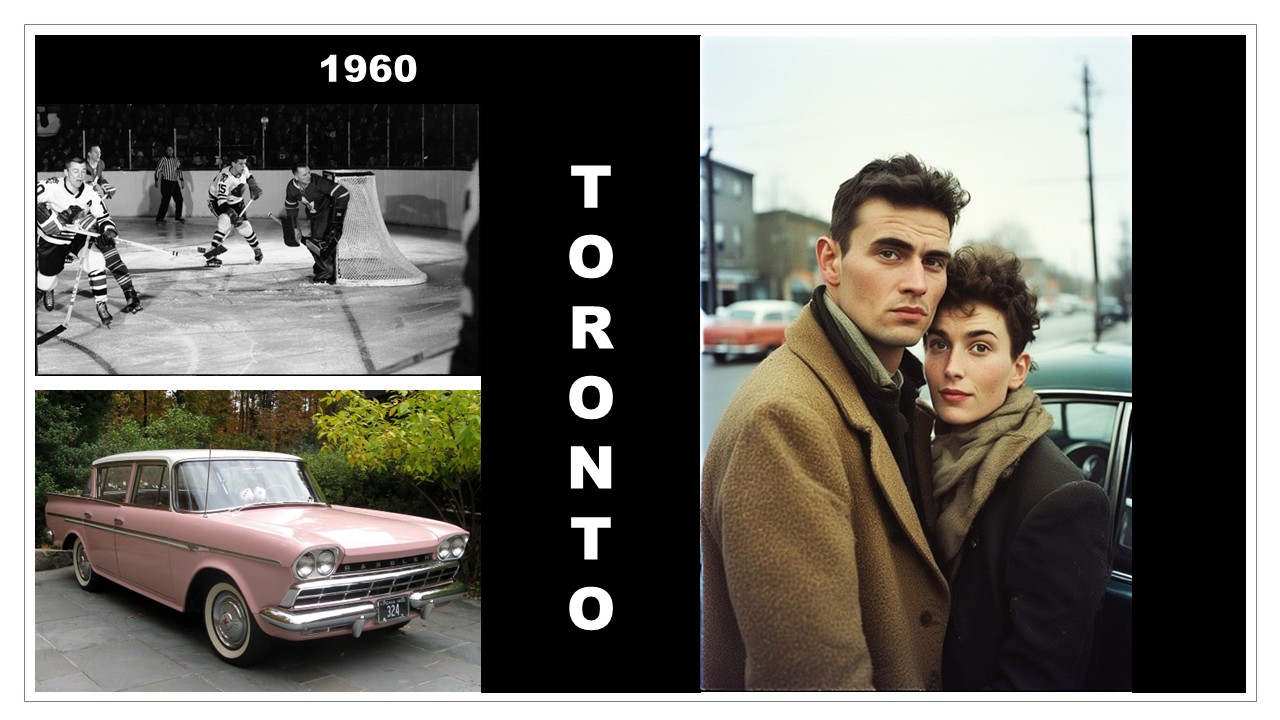









Toronto 1960 (AI English)
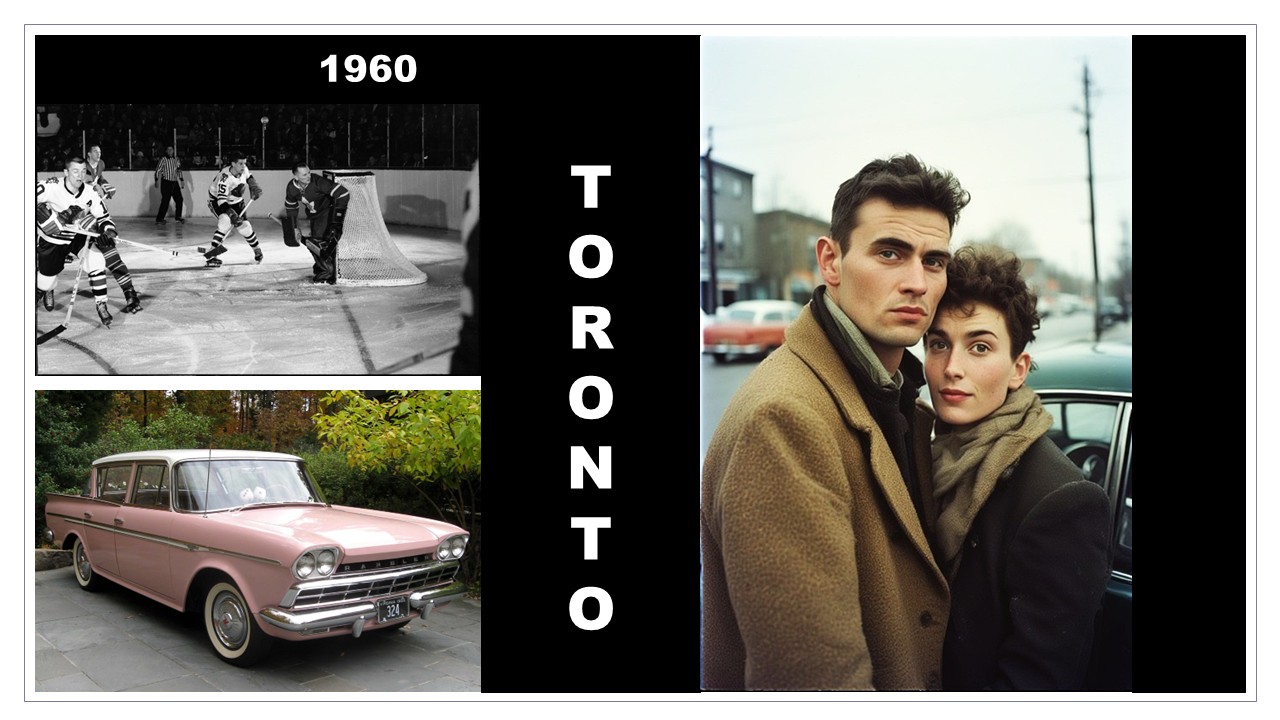
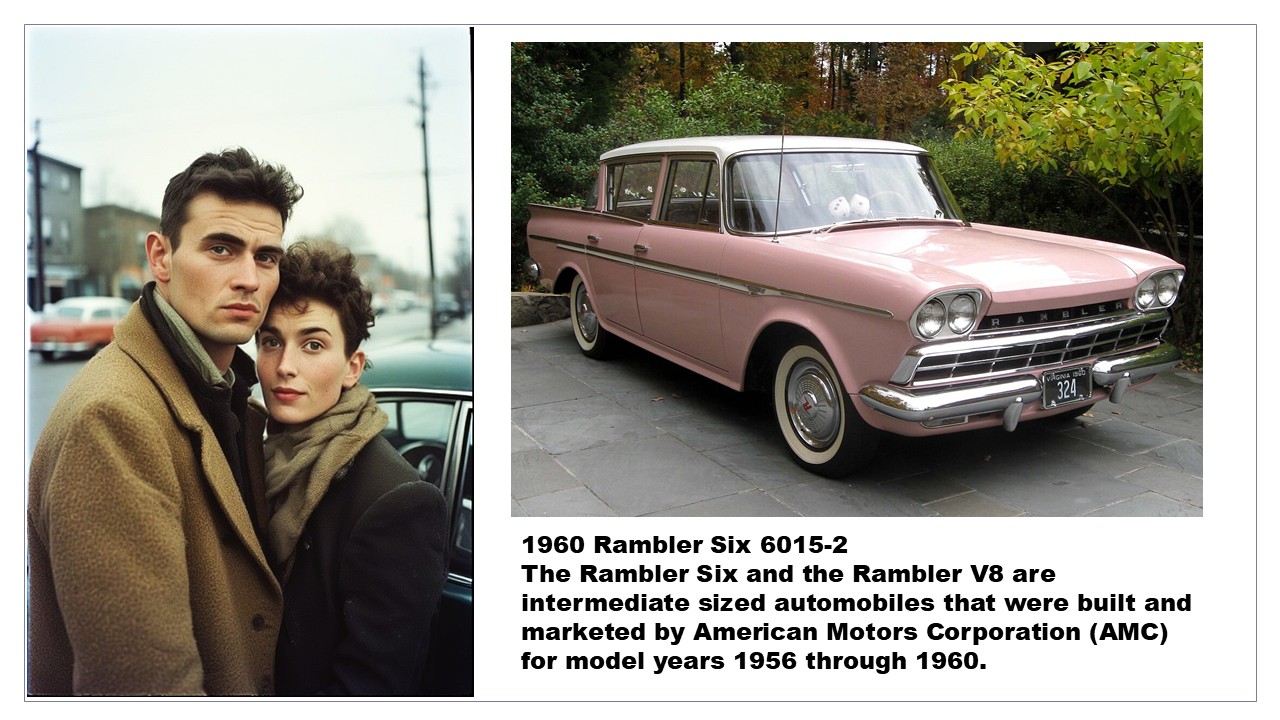
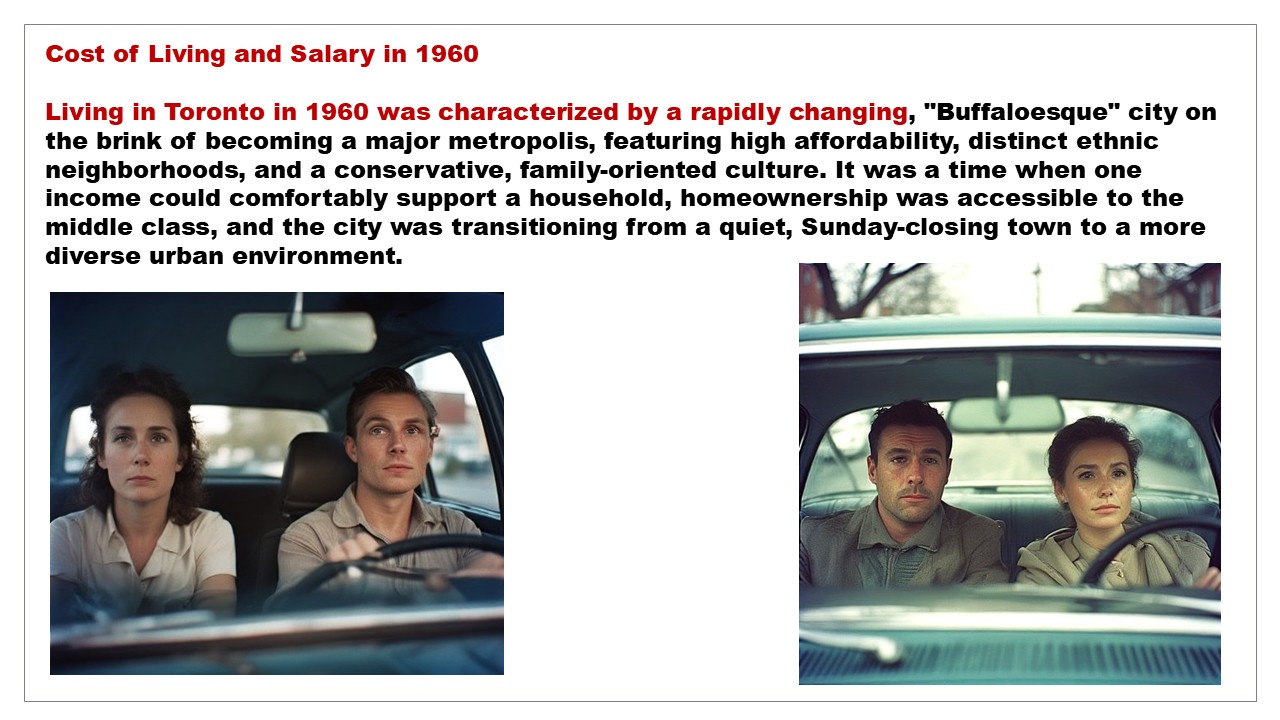
Living in Toronto in 1960 was characterized by a rapidly changing, "Buffaloesque" city on the brink of becoming a major metropolis, featuring high affordability, distinct ethnic neighborhoods, and a conservative, family-oriented culture. It was a time when one income could comfortably support a household, homeownership was accessible to the middle class, and the city was transitioning from a quiet, Sunday-closing town to a more diverse urban environment.
Average Income: In 1960, the average Canadian income was approximately $1,672-$5,600, with Toronto having some of the highest wages in the country.
Affordability: A, full-time blue-collar labourer in Toronto earned about $2.25 an hour ($4,680 annually).
Daily Costs: Food was affordable; a quart of milk cost 24 cents, and a dozen eggs were 55 cents. A typical apartment near the city could be rented for roughly 20 hours of minimum wage work per month.
Lifestyle: Life moved at a slower pace. Stores closed by Saturday afternoon, and Sundays were completely quiet.
Home Prices
Average Price: Homes in the early 1960s were generally sold for under 200K in today's dollars, with average prices in the $30k–$40k range later in the decade.
1960 Specifics: A new, detached house could be purchased for around $11,900 to $16,745, which was roughly 2x the median family income.
Leverage: Many families could afford a house on a single income.
Social Life and Culture
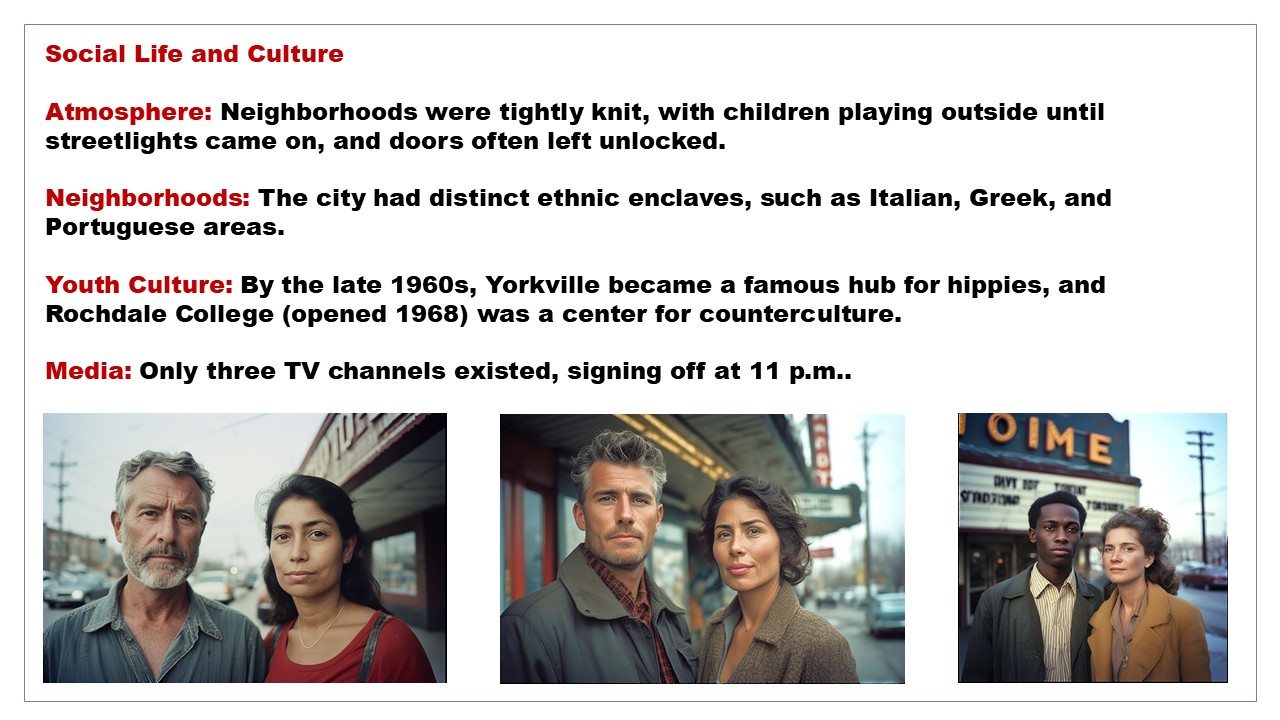
Atmosphere: Neighborhoods were tightly knit, with children playing outside until streetlights came on, and doors often left unlocked.
Neighborhoods: The city had distinct ethnic enclaves, such as Italian, Greek, and Portuguese areas.
Youth Culture: By the late 1960s, Yorkville became a famous hub for hippies, and Rochdale College (opened 1968) was a center for counterculture.
Media: Only three TV channels existed, signing off at 11 p.m..
Racism and Social Structure
Social Attitudes: While the city was becoming more diverse, society was still quite traditional. Early in the decade, "white collar" jobs were often stratified by gender, with women earning less than men in similar roles.
Bigotry: The city still grappled with bigotry, and industrial areas were often dirty, with "ugly bigotry" still present in some social spheres.
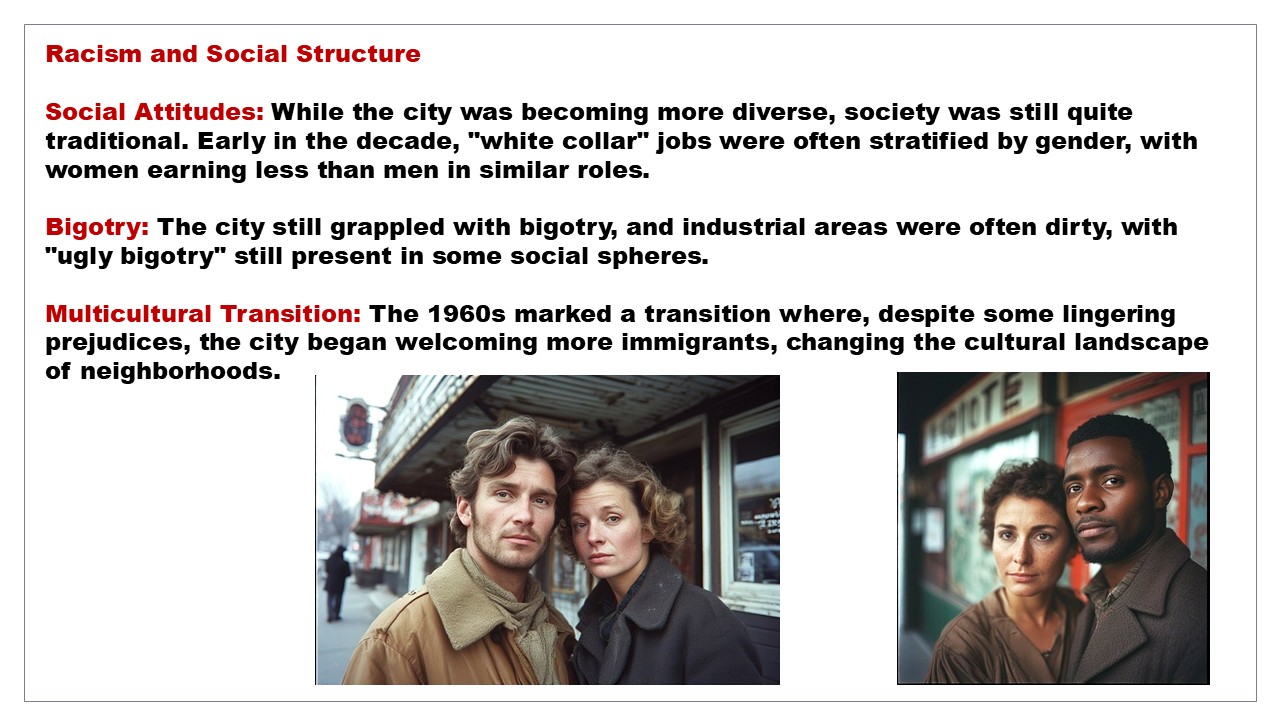
Multicultural Transition: The 1960s marked a transition where, despite some lingering prejudices, the city began welcoming more immigrants, changing the cultural landscape of neighborhoods.
Key Takeaways
House-to-income ratio: A home was about 2x–3x the average annual salary, compared to over 10x-20x today.
Daily Life: People dressed up to go shopping, and it was common for women to be home during the day.
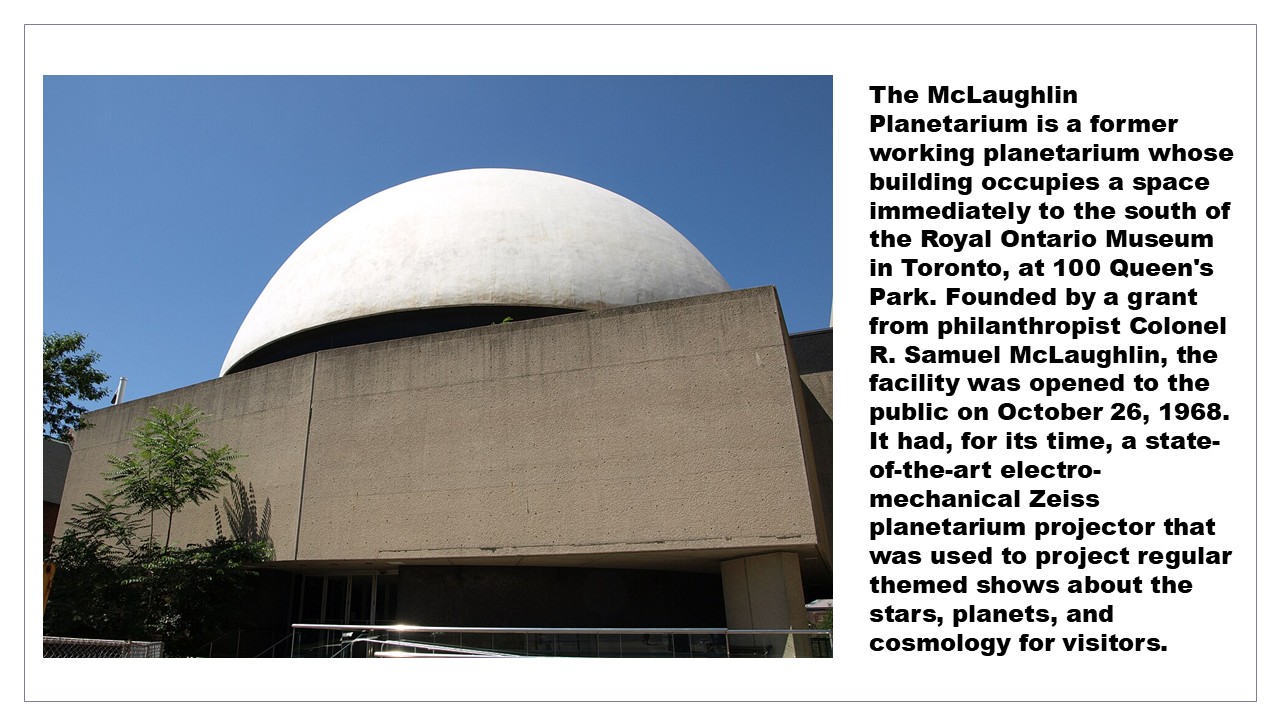
Development: The iconic CN Tower did not exist yet, and the city felt smaller than its current stature.