
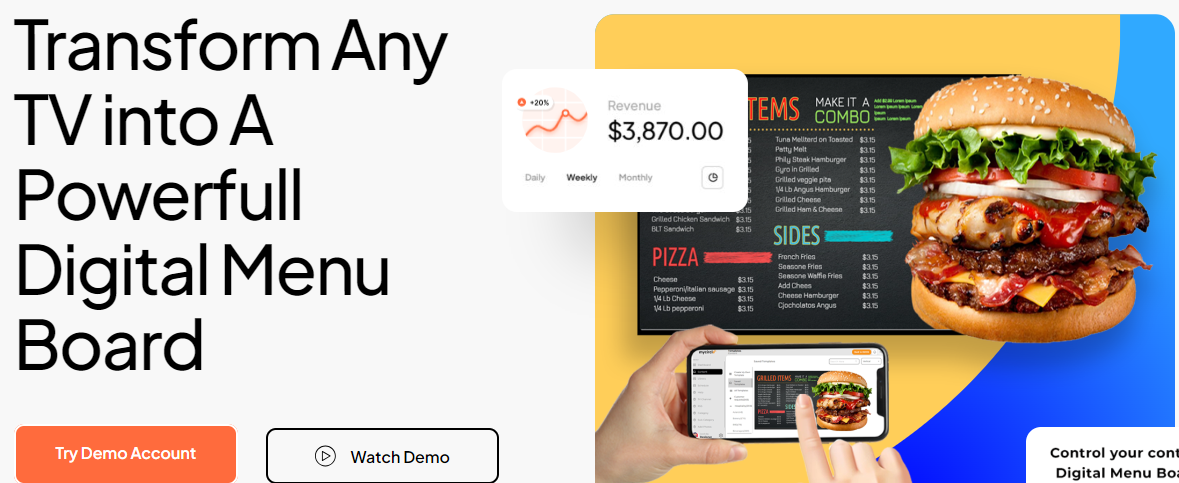
Revolutionizing Dining: The Rise of Digital Menu Boards for Restaurants
The restaurant industry is undergoing a technological transformation, with digital menu boards emerging as a pivotal innovation. These dynamic displays have not only enhanced the aesthetic appeal of dining establishments but also improved operational efficiency and customer experience. This article delves into the benefits, implementation strategies, and future prospects of digital menu boards in the restaurant sector.
The Evolution of Menu Boards
Traditional menu boards, typically made of printed materials or chalkboards, have long been a staple in restaurants. However, they come with several limitations. Updating prices or introducing new items can be cumbersome and costly, often requiring a complete reprint or redesign. Additionally, static boards lack the visual appeal that can entice customers and enhance their dining experience.
Enter digital menu boards. Leveraging advanced display technology, these boards offer a versatile and engaging way to present menu items. Restaurants can now easily update their offerings in real-time, display high-definition images, and even incorporate videos or animations. This shift from static to dynamic has revolutionized how menus are presented and perceived.
Benefits of Digital Menu Boards
- Enhanced Customer Engagement: Digital menu boards can captivate customers' attention with vibrant images and videos. Dynamic content, such as rotating specials or promotional offers, keeps the display fresh and engaging. This visual appeal can influence customers' purchasing decisions, often leading to increased sales of highlighted items.
- Easy Updates and Flexibility: One of the most significant advantages of digital menu boards for restaurants is the ease of updating content. Whether it's changing prices, adding seasonal items, or promoting limited-time offers, updates can be made swiftly and remotely. This flexibility ensures that the menu is always current and relevant.
- Cost-Effectiveness: Although the initial investment in digital menu boards may be higher than traditional boards, the long-term cost savings are substantial. Eliminating the need for frequent reprints and manual updates reduces ongoing expenses. Additionally, digital boards can also serve as advertising space for partner brands, creating an additional revenue stream.
- Improved Customer Experience: Digital menu boards can streamline the ordering process by presenting clear and organized information. Features like animated transitions and easy-to-read fonts can reduce decision-making time and enhance overall customer satisfaction. Some boards can even integrate with self-service kiosks, further expediting service.
- Brand Consistency and Modernization: For chain restaurants, digital menu boards ensure consistent branding and presentation across multiple locations. This uniformity reinforces brand identity and provides a cohesive customer experience. Moreover, adopting digital technology conveys a modern and forward-thinking image, appealing to tech-savvy consumers.
Implementation Strategies
- Assessing Needs and Goals: Before implementing digital menu boards, restaurants should assess their specific needs and goals. This involves identifying the key objectives, such as improving customer engagement, increasing sales of certain items, or enhancing brand image. Understanding these goals will guide the choice of hardware, software, and content strategy.
- Choosing the Right Hardware: The hardware selection is crucial for the success of digital signage software. High-resolution displays with good brightness and contrast ratios are essential for visibility. Depending on the restaurant's layout, options include wall-mounted screens, standalone kiosks, or even outdoor displays for drive-thru services.
- Content Management System (CMS): A robust CMS is the backbone of digital menu boards, allowing for easy content updates and management. Restaurants should choose a user-friendly CMS that supports real-time updates, scheduling, and content customization. Integration with existing POS systems can further streamline operations.
- Designing Compelling Content: Effective content design is key to maximizing the benefits of digital menu boards. High-quality images, concise text, and engaging animations can attract and retain customer attention. Collaborating with professional designers or using templates from the CMS provider can help create visually appealing menus.
- Staff Training and Maintenance: Ensuring that staff are trained to use and maintain the digital menu boards is vital. This includes basic troubleshooting, content updates, and understanding the CMS interface. Regular maintenance and software updates will ensure the system runs smoothly and remains reliable.
Future Prospects
The future of digital menu boards is promising, with ongoing advancements in technology set to further enhance their capabilities. Innovations such as AI-driven personalized recommendations, voice-activated interfaces, and augmented reality experiences are on the horizon. These developments will continue to elevate the dining experience, making digital menu boards an integral part of the restaurant industry.
Moreover, the integration of data analytics will provide valuable insights into customer preferences and behavior. Restaurants can leverage this data to optimize menu offerings, tailor promotions, and improve overall service. The ability to adapt quickly to market trends and customer demands will be a significant competitive advantage.
Conclusion
Digital menu boards are revolutionizing the restaurant industry, offering numerous benefits ranging from enhanced customer engagement to improved operational efficiency. By adopting this technology, restaurants can stay ahead of the curve, providing a modern and dynamic dining experience. As the technology continues to evolve, digital menu boards will undoubtedly play an even more significant role in shaping the future of dining.