
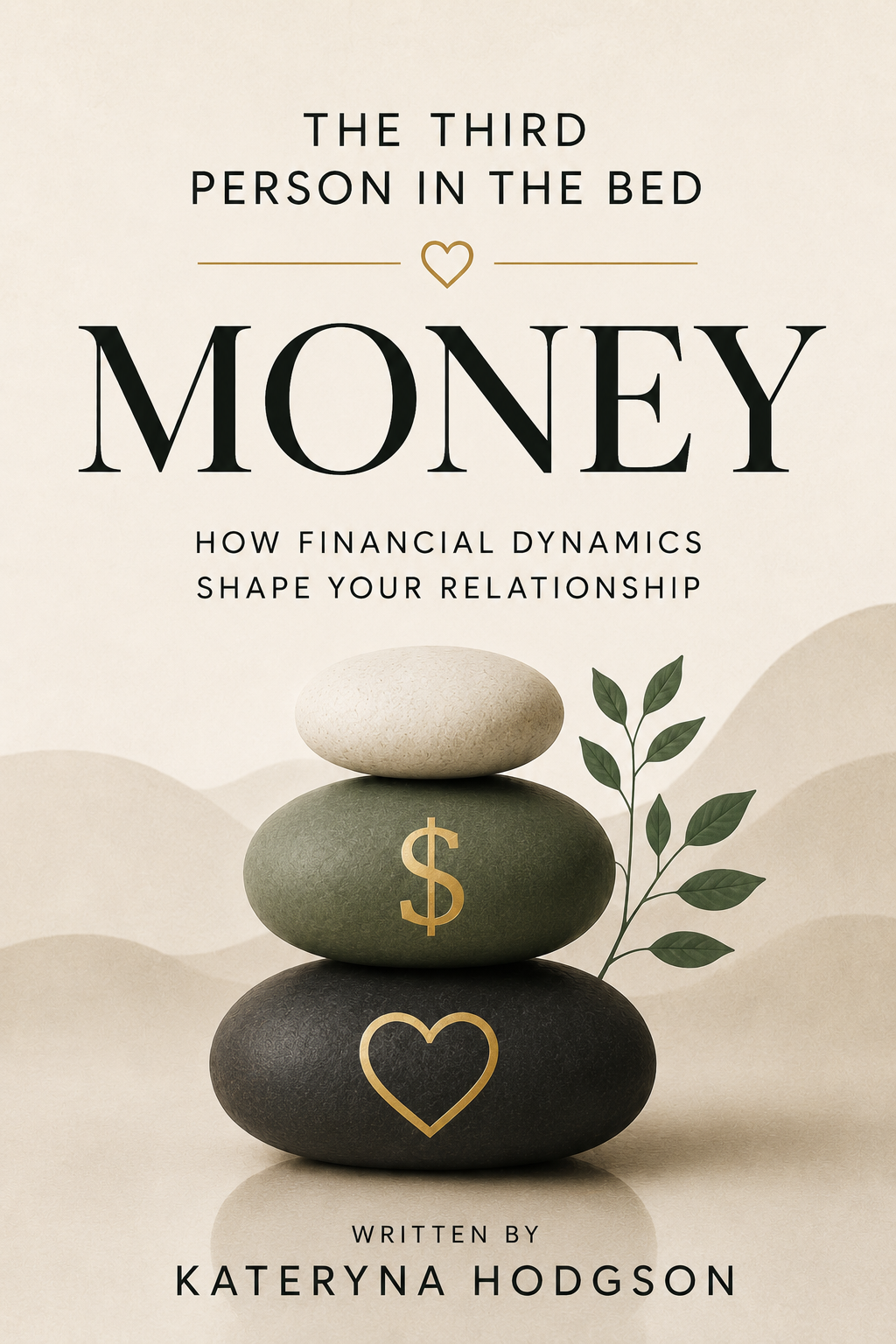







Money: The Third Person in the Bed
What if money is the third person in your bed?
You love each other. You want to build a life together. So why does money keep coming between you?
Perhaps you argue about spending. One of you saves while the other spends. One feels responsible for everything, while the other feels controlled. Maybe money has become a source of silence, resentment, power struggles, or unspoken expectations.
What if your financial conflicts are not really about money—but about something much deeper?
Discover the hidden psychology behind money and love.
In Money: The Third Person in the Bed, Kateryna Hodgson, psychologist, PhD in Economics, and relationship and financial behaviour expert, explores the invisible patterns that shape how couples earn, spend, save, share, and experience money.
Drawing on psychological perspectives, real-life examples, and practical exercises, this book invites you to look beyond financial disagreements and discover the beliefs, childhood experiences, emotional needs, and relationship dynamics that influence your financial life together.
Because understanding money is not only about numbers. It is also about understanding yourself—and the person you love.
What will you discover inside?
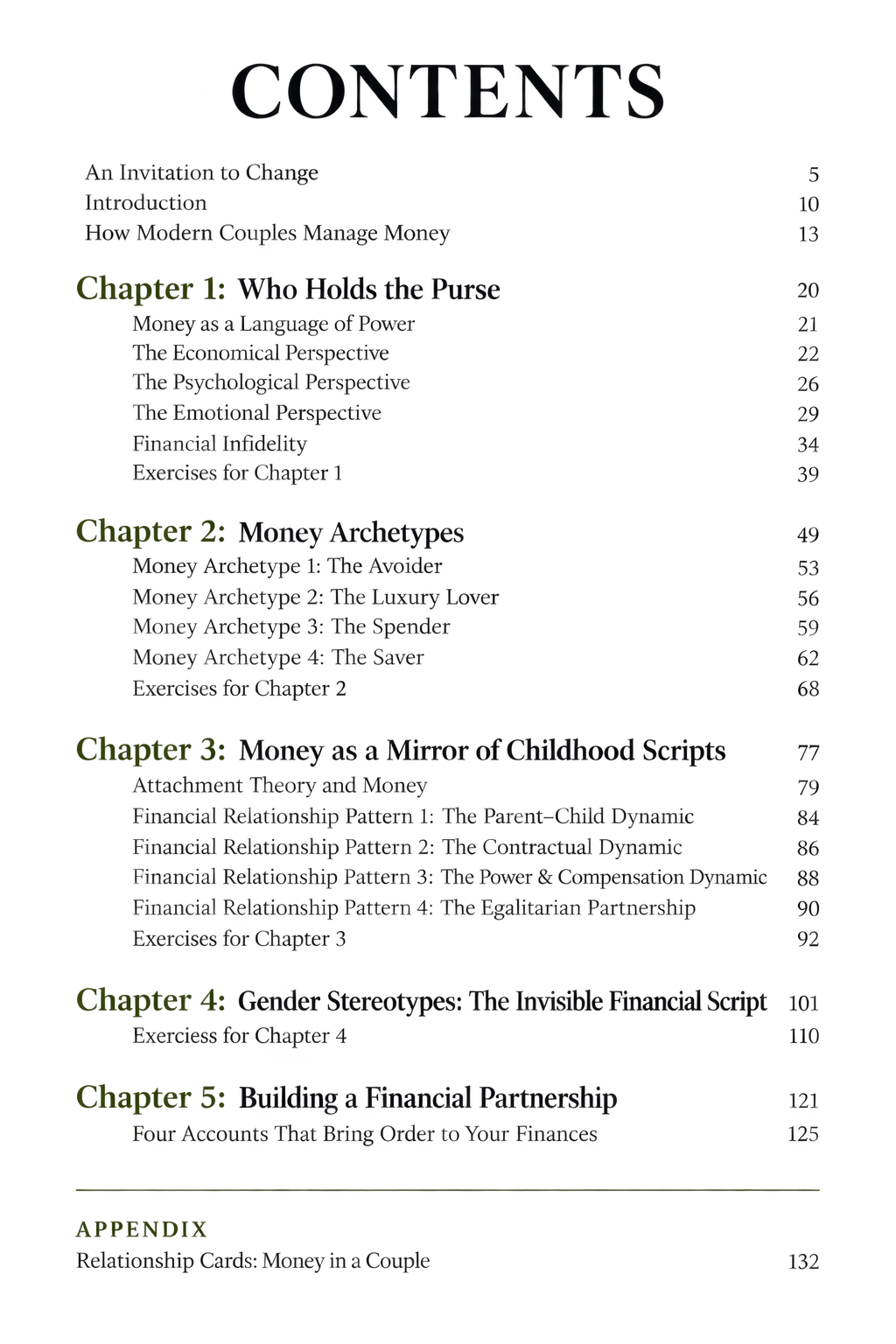
1. Who holds the purse—and what does it mean?
Explore the economic, psychological, and emotional dimensions of financial power in relationships. Understand how money can become connected to control, security, independence, and influence—and how financial infidelity can affect trust.
2. Discover your money archetype.
Are you an Avoider, a Luxury Lover, a Spender, or a Saver?
Explore your relationship with money, recognise your patterns, and understand how different financial attitudes can create tension—or become an opportunity for greater understanding.
3. Uncover the money scripts you inherited in childhood.
Discover how early experiences and attachment patterns may influence the way you approach money, intimacy, and security as an adult.
Explore four financial relationship patterns:
- The Parent–Child Dynamic
- The Contractual Dynamic
- The Power & Compensation Dynamic
- The Egalitarian Partnership
4. Recognise the invisible influence of gender stereotypes.
Explore how inherited beliefs about men, women, responsibility, earning, and financial independence can shape expectations within a couple—and influence the way partners relate to money.
5. Build a financial partnership that works for both of you.
Move towards more conscious financial decisions, clearer communication, and a shared understanding of what money means in your relationship. Discover a practical approach to organising your finances through four accounts designed to bring greater order and clarity.
More than a book: a space for honest conversations
This book includes practical exercises and relationship cards to help you explore topics couples often find difficult to discuss.
Use them to open conversations, reflect on your financial beliefs, understand each other’s perspectives, and bring unspoken expectations into the open.
The cards offer an opportunity to pause, listen, ask meaningful questions, and discover things about yourself and your partner that may have remained unexplored.
You don’t need to have all the answers before you begin. You only need a willingness to look at your relationship with curiosity and honesty.
What could change when you understand your money patterns?
You may begin to:
- Recognise why certain financial conversations trigger strong emotions.
- Understand how childhood experiences influence your present-day money behaviour.
- Identify the expectations and beliefs you bring into your relationship.
- See how financial power and responsibility operate between you.
- Talk about money with greater openness and awareness.
- Explore a financial arrangement that respects both partners.
- Build a relationship with money that supports—not undermines—your connection.
This is not about becoming a perfect couple or agreeing on every financial decision.
It is about developing a deeper understanding of what happens between you when money enters the conversation—and creating space for a more conscious way forward.
Money belongs in your life together—not between you.
Whether you are newly married, have been together for years, are navigating financial disagreements, or simply want to understand each other more deeply, this book offers a thoughtful starting point for exploring the connection between money, emotions, and intimacy.
Open the book.
Start the conversation.
Discover what money has been trying to tell you about your relationship.
Because money doesn’t have to be the third person in your bed.