

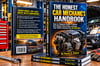
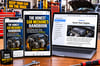
THE HONEST CAR MECHANIC’S HANDBOOK
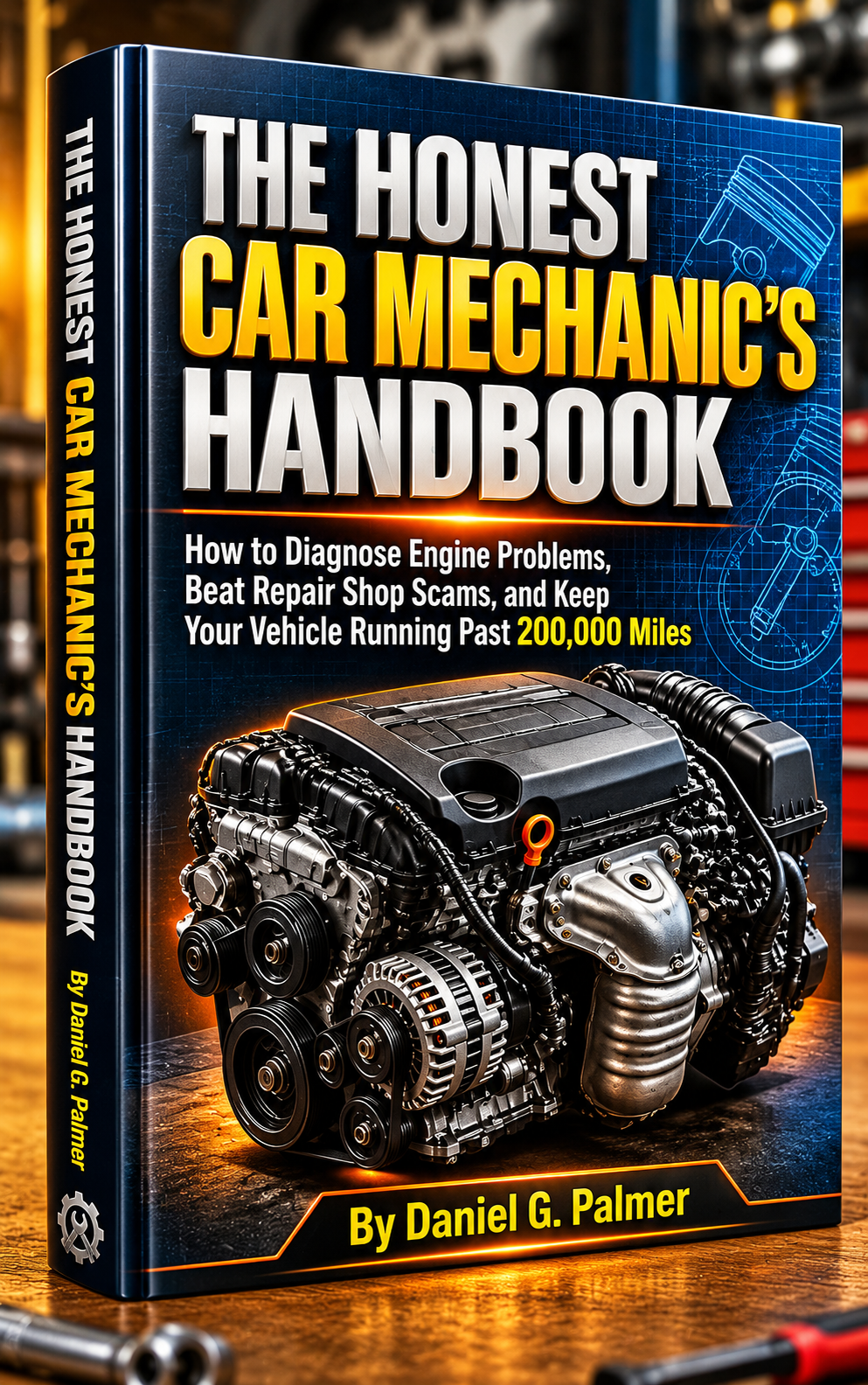
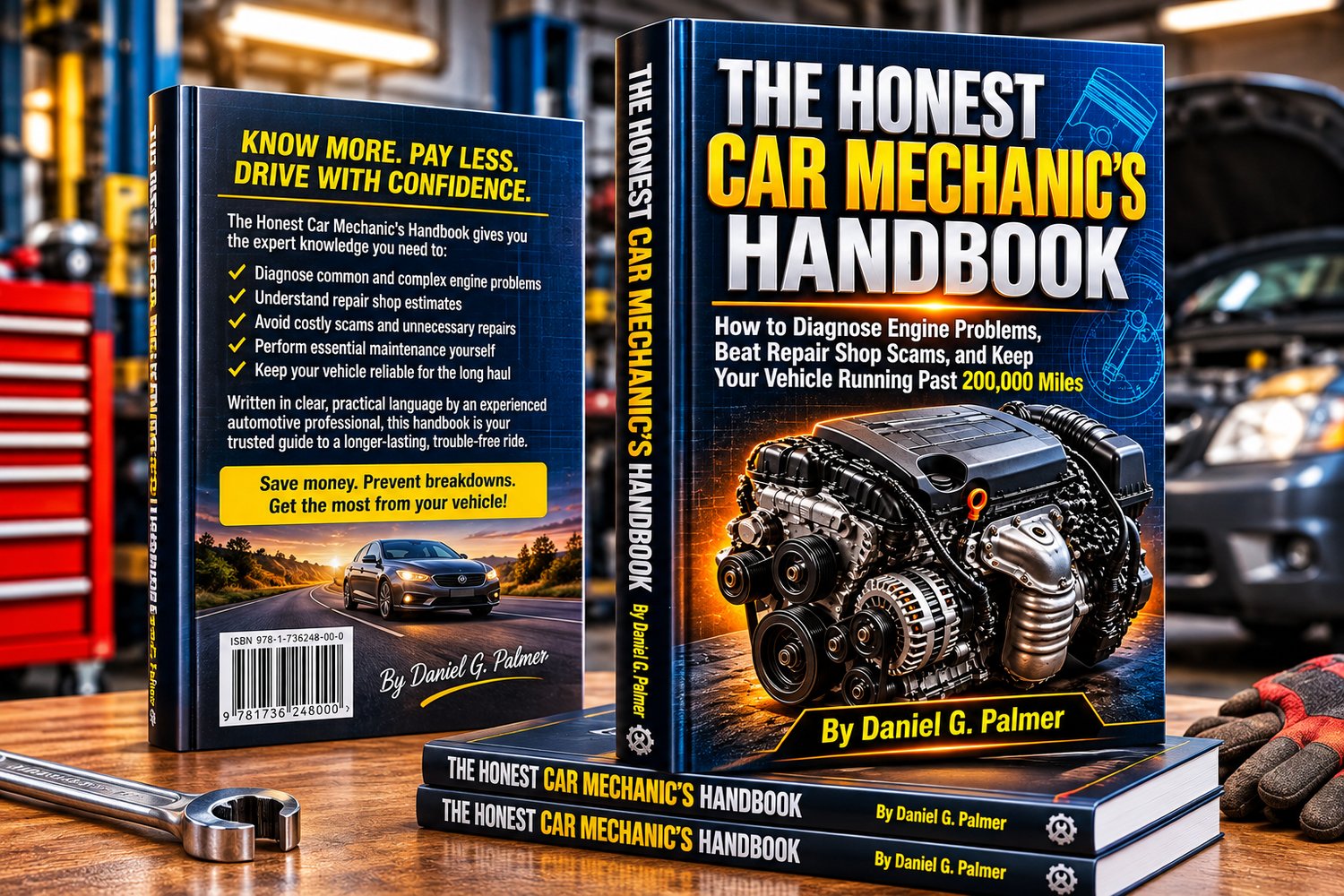
THE HONEST CAR MECHANIC’S HANDBOOK
How to Diagnose Engine Problems, Beat Repair Shop Scams, and Keep Your Vehicle Running Past 200,000 Miles
By Daniel G. Palmer
Your car should not be a mystery. And a repair estimate should never leave you guessing.
Have you ever taken your vehicle in for a routine service, only to be told that several additional repairs are urgently needed?
Perhaps a warning light appeared on your dashboard and you had no idea what it meant.
Maybe your mechanic recommended a transmission service, coolant flush, brake replacement, or expensive sensor—and you were left wondering:
Is this repair genuinely necessary, or should I ask a few more questions before spending the money?
You are not alone.
For many American drivers, owning a vehicle means dealing with unfamiliar mechanical language, unexpected repair bills, confusing diagnostic codes, maintenance schedules, and the constant worry that a small problem could become an expensive one.
You should not have to become a professional mechanic to become a more informed vehicle owner.
You need to understand the warning signs, recognise the questions that matter, know what diagnostic tools can actually tell you, and make better decisions before authorising work.
That is what this handbook is designed to help you do.
MEET THE HANDBOOK THAT PUTS YOU BACK IN THE DRIVER’S SEAT
The Honest Car Mechanic’s Handbook is a practical guide for everyday drivers who want to understand their vehicles, make sense of common engine and mechanical problems, evaluate repair recommendations, and approach vehicle maintenance with greater confidence.
Instead of treating your car as a complicated machine that only a repair shop can understand, this book introduces the basic mechanical principles, diagnostic concepts, and maintenance practices that help you become an active participant in caring for your vehicle.
You will learn how to recognise symptoms, understand what common diagnostic information means, ask more useful questions, and distinguish a warning sign from a confirmed mechanical diagnosis.
The objective is simple:
Understand first. Verify the evidence. Then decide what to do.
WHAT YOU WILL LEARN INSIDE
1. Understand Repair-Shop Recommendations Before You Approve Them
Learn how repair estimates, parts recommendations, labour charges, maintenance packages, and diagnostic fees work.
You will discover how to:
- Ask why a particular repair is being recommended.
- Distinguish scheduled maintenance from optional services.
- Understand different categories of replacement parts.
- Request an itemised estimate.
- Ask whether diagnostic charges are separate from repair charges.
- Recognise when a second opinion may be worthwhile.
- Discuss additional work and approval limits before repairs begin.
The goal is not to assume every repair shop is dishonest. It is to make sure that the work you authorise is properly explained.
2. Understand Dashboard Warning Lights and Engine Symptoms
A dashboard warning can create immediate anxiety, especially when you are far from home.
Learn about common warning indicators and the mechanical systems behind them.
Explore:
- Check-engine warnings.
- Oil-pressure warnings.
- Engine-temperature warnings.
- Battery and charging-system indicators.
- ABS and traction-control warnings.
- Steering-system warnings.
- Unusual engine noises, vibrations, and changes in performance.
Most importantly, learn why a warning must be interpreted in the context of the exact vehicle and its symptoms.
3. Make Better Use of OBD-II Diagnostic Information
Modern vehicles generate diagnostic information that can help identify faults and guide further investigation.
This section introduces:
- The OBD-II diagnostic port.
- Diagnostic trouble codes.
- The structure of common fault codes.
- Basic scanner functions.
- Sensor information and live data.
- Fuel-trim concepts.
- The relationship between a fault code and a possible mechanical problem.
You will also learn an important distinction: a diagnostic code does not automatically identify the component that needs replacing.
4. Understand Strange Noises, Vibrations, and Fluid Leaks
A vehicle often gives clues before a problem becomes obvious.
Learn how different symptoms can help narrow down possible causes, including:
- Squealing and grinding sounds.
- Engine knocking and ticking.
- Unusual vibrations.
- Exhaust-related symptoms.
- Oil leaks.
- Coolant leaks.
- Transmission-fluid concerns.
- Changes in engine performance.
Use these clues to describe the problem more clearly and help guide the next diagnostic step.
5. Understand Starting Problems and Overheating
A vehicle that refuses to start—or suddenly begins overheating—can turn an ordinary day into a stressful situation.
Explore the systems involved in:
- Battery and starter problems.
- Fuel-delivery issues.
- Ignition-related faults.
- Engine cranking without starting.
- Cooling-system operation.
- Radiator and thermostat problems.
- Cooling fans and coolant leaks.
The handbook also explains why certain warning signs call for stopping safely rather than experimenting with a potentially damaged vehicle.
6. Understand Transmission, Drivetrain, Brake, and Electrical Problems
Learn the basic functions of important vehicle systems and the symptoms that may indicate trouble.
Topics include:
- Transmission behaviour and fluid concerns.
- Drivetrain vibrations and unusual noises.
- Brake-pad and rotor inspection concepts.
- ABS-related faults.
- Battery and alternator operation.
- Electrical connections and common testing concepts.
- The role and limitations of a digital multimeter.
These explanations help you understand what a technician is investigating and what questions to ask.
7. Build a More Informed High-Mileage Maintenance Routine
The 200,000-mile goal is about long-term vehicle care, not a promise that every vehicle will reach a particular mileage.
Learn the importance of:
- Following the correct engine-oil specification.
- Understanding manufacturer maintenance schedules.
- Recognising severe-service driving conditions.
- Monitoring cooling-system condition.
- Inspecting belts, hoses, and related components.
- Keeping accurate maintenance records.
- Addressing developing problems before they become more serious.
The most useful maintenance schedule is the one that applies to your exact vehicle.
8. Use the Reference Material and Practical Guides
The book includes diagnostic and maintenance reference material, tables, and an appendix intended to make important information easier to consult.
Rather than relying entirely on memory, you can return to relevant sections when a question arises about your vehicle.
AND YOU ALSO RECEIVE A 15-PAGE BONUS COMPANION
THE HEADS-UP & TECHNICAL REJOINDER
Read this before applying the handbook's general mechanical advice.
This is not simply another collection of automotive tips.
It is a dedicated companion designed to help you understand the limits of general mechanical information and apply it more carefully to the vehicle you actually own.
It explains why two vehicles that look similar may have different service requirements, diagnostic procedures, fluid specifications, and safety instructions.
Inside the companion, you receive:
- A vehicle-specific decision framework: Learn to observe symptoms, record information, verify specifications, authorise work, and confirm repairs.
- A roadside warning guide: Understand important warning signs and the safer first actions to consider.
- An OBD-II clarification guide: Understand what basic scanners can and cannot access.
- A fluid-verification guide: Learn why fluid colour, generic readings, and one-size-fits-all intervals are not enough to establish service needs.
- Cooling-system safety guidance: Understand overheating risks and why a hot pressurised cooling system must never be opened.
- Brake, ABS, steering, and wheel safety: Understand where vehicle-specific procedures and professional equipment matter.
- Electrical testing precautions: Recognise the risks of incorrect multimeter settings and unsafe electrical testing.
- A high-mileage maintenance framework: Build your schedule around the manufacturer's requirements for your own vehicle.
- A repair-estimate audit worksheet: Record the shop's explanation, supporting evidence, proposed parts, costs, and authorisation limit.
- A glovebox rescue card and maintenance record: Keep useful vehicle information and important safety reminders together.
The companion also includes technical references and guidance on where to verify important information.
Read the companion before attempting a test, applying a generic measurement, or following a repair suggestion.
WHO IS THIS HANDBOOK FOR?
This guide is especially useful if you are:
- A car owner who wants to understand what is happening under the hood.
- A driver who wants to make more informed decisions when a warning light appears.
- Someone who has received an expensive repair estimate and wants to understand the recommendation.
- A used-car owner who wants to become more organised about maintenance.
- A driver who wants to learn basic automotive diagnostic concepts.
- A first-time vehicle owner who finds mechanical terminology intimidating.
- A DIY-curious owner who wants to understand which jobs require proper tools, training, or professional assistance.
- Someone who wants a more consistent approach to vehicle maintenance and repair records.
You do not need an engineering degree to benefit from the explanations.
You do need a willingness to learn, verify information, and recognise when a job is beyond your equipment or experience.
YOUR COMPLETE DIGITAL PACKAGE
When you purchase, you receive:
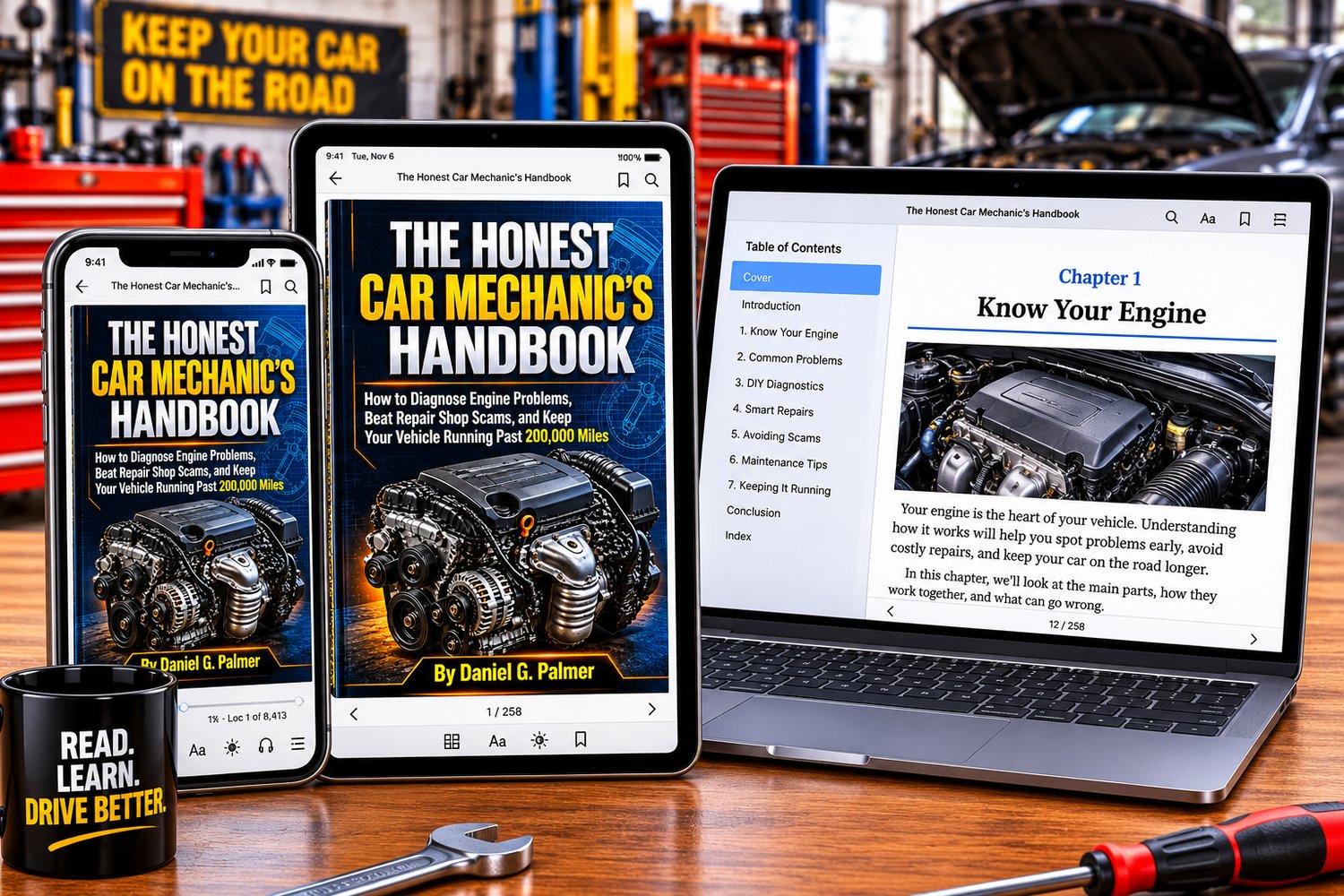
IncludedWhat you getMain handbook — PDFA convenient version for computers, tablets, and PDF readersMain handbook — EPUBA reflowable ebook for compatible ebook applications and devicesComplete ZIP bundleA convenient package containing the included digital materialsBonus technical rejoinder — PDFThe separate 15-page reader companion
One purchase. Four downloadable files.
No physical book will be shipped. This is a digital product.
THE VALUE OF THE COMPLETE PACKAGE
The package brings together the handbook, its technical companion, and the practical reference material included within them.
For a transparent presentation, the following is an illustrative allocation of the package's estimated component value. These are not claims that the components were previously sold separately.
Package component Estimated value. The complete automotive handbook $79 The 15-page Heads-Up & Technical Rejoinder $29 Repair-shop questions and approval guidance $15 Diagnostic and maintenance reference material $12 Printable repair worksheet, glovebox guide, and maintenance record $10 Illustrative combined package value $145
YOUR PRICE TODAY: $9.99
You receive the complete digital package for $9.99 USD.
The estimated component values above are an illustrative valuation of the included material, not a former selling price or a guaranteed saving.
BEFORE YOU BUY: COMMON QUESTIONS
Do I need to be a mechanic to understand this book?
No. The book is intended for ordinary vehicle owners. It introduces mechanical and diagnostic concepts in accessible language. Some procedures and tests still require appropriate training, equipment, or professional assistance.
Will this book teach me to repair every vehicle?
No single general handbook can replace the service information for every make, model, engine, and transmission. This book helps you understand common systems, symptoms, and diagnostic concepts so you can make better-informed decisions.
Will a basic OBD-II scanner identify every fault?
No. Basic generic scanners have limitations. Some vehicle systems require enhanced, manufacturer-capable diagnostic equipment. The bonus companion explains this distinction.
Can this book guarantee that my vehicle will reach 200,000 miles?
No. Vehicle longevity depends on many factors, including design, condition, maintenance history, driving conditions, corrosion, and repairs. The book focuses on informed maintenance practices rather than promising a particular mileage.
Is the bonus included in the purchase price?
Yes. The 15-page Heads-Up & Technical Rejoinder PDF is included in the complete digital package.
What format will I receive?
You receive PDF and EPUB versions of the main handbook, the bonus PDF, and a ZIP bundle containing the digital package.
Will I receive the files immediately?
Payhip provides access to digital downloads after successful checkout. Your download link is also provided through the purchase process and receipt email.
Is this a physical book?
No. This listing is for digital downloads only.
A FINAL THOUGHT BEFORE YOU AUTHORISE YOUR NEXT REPAIR
A warning light does not always tell the whole story.
A diagnostic code is not automatically a failed part.
A maintenance recommendation deserves an explanation.
And an expensive repair estimate should be something you understand before you approve it.
You do not have to become a mechanic to become a better-informed vehicle owner.
You can learn to recognise the signs, ask more precise questions, keep better records, and make decisions with a clearer understanding of what is happening.
Start with knowledge. Verify the evidence. Protect the vehicle you depend on.
GET THE COMPLETE HANDBOOK + BONUS COMPANION
The Honest Car Mechanic’s Handbook
By Daniel G. Palmer
Complete digital package: $9.99 USD
Get the PDF, EPUB, ZIP bundle, and 15-page Heads-Up & Technical Rejoinder.
Choose the informed approach to vehicle ownership. Get your copy today.