
Activate Your Growth Hormone AudioBook MP3
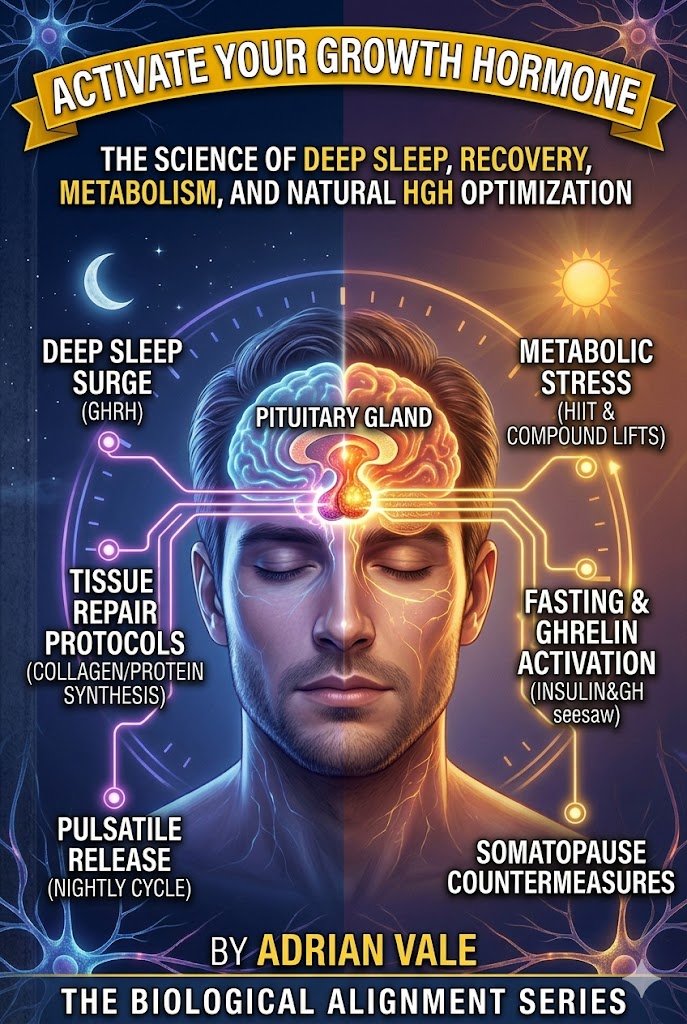
Growth hormone, or somatotropin, is a protein secreted by the anterior pituitary gland, which is controlled by the hypothalamus. The hypothalamus uses two signals: Growth Hormone-Releasing Hormone (GHRH) to stimulate release and somatostatin to stop it.
GH is not released in a steady stream but in distinct pulses or bursts, with the majority occurring at night. This pulsatile release prevents cells from becoming insensitive to the hormone and times the release with periods of biological need, such as during fasting and sleep when tissue repair is optimal.
The Hormonal Network
GH acts within an interconnected network:
- IGF-1: When a GH pulse reaches the liver, it stimulates the production of Insulin-like Growth Factor 1 (IGF-1), which mediates many tissue-building effects.
- Insulin: GH and insulin operate on a "biological seesaw." High insulin (after eating) suppresses GH, while low insulin (during fasting or intense exercise) allows GH release.
- Cortisol: While acute stress can trigger a temporary GH spike, chronic elevation of cortisol (from modern stress) suppresses normal GH pulses.
- Melatonin: Melatonin signals the onset of biological night, priming the brain for the nighttime GH surge.
The Function of Growth Hormone
In adults, GH focuses on metabolism and maintenance:
- Tissue Repair and Protein Synthesis: GH and IGF-1 stimulate cells to use amino acids to build new proteins, repairing micro-damage from daily life and maintaining collagen for joint and skin health.
- Fat Mobilization: GH binds to fat cells and triggers lipolysis, breaking down stored fat into usable energy. This is crucial during nighttime fasting.
- Muscle Preservation and Bone Metabolism: GH prevents muscle breakdown during fasting or stress and ensures bone density and structural strength in adults.
The Nighttime Surge and Sleep Architecture
The single most significant release of GH occurs shortly after sleep onset, dependent on the quality of slow-wave sleep (NREM Stage 3). During this phase, the hypothalamus releases GHRH, leading to a massive GH pulse that initiates repair.
Modern life disrupts this process through artificial light (suppressing melatonin), fragmented sleep (increasing cortisol), alcohol consumption (fracturing sleep cycles and elevating body temperature), and conditions like sleep apnea (preventing deep sleep).
Modern Saboteurs of GH
The modern environment clashes with our ancient biology, suppressing natural GH production:
- Constant Grazing: Frequent eating keeps insulin elevated, suppressing GH. Late-night snacking is particularly detrimental as it prevents the nighttime GH surge.
- Visceral Fat: Deep abdominal fat releases free fatty acids, tricking the brain into suppressing GH and creating a vicious cycle of weight gain and further GH suppression.
- Sedentary Lifestyle: A lack of mechanical stress signals to the body that repair is unnecessary, leading to decreased daytime GH pulses.
- Chronic Stress and Sleep Debt: Chronic stress elevates cortisol, suppressing GH. Digital overstimulation and lack of sleep prevent the sustained deep sleep required for the nighttime surge.
Daytime Activation through Exercise and Fasting
Intense exercise is necessary to trigger daytime GH pulses.
- Metabolic Stress (Cardio): High-Intensity Interval Training (HIIT) creates a buildup of lactate, which the brain interprets as systemic damage, triggering a massive GH release.
- Mechanical Tension (Weightlifting): Heavy compound lifts cause micro-tears in muscle fibers, signaling the need for repair and growth, driven by GH and IGF-1.
- Fasted Training: Exercising with low insulin levels (fasted) removes the biological brake on GH, amplifying the pulse.
However, overtraining leads to chronic stress and elevated cortisol, suppressing GH and causing muscle wasting. Fasting also increases ghrelin (the hunger hormone), which directly triggers GH release to mobilize energy.
Aging and the Longevity Paradox
As we age, natural GH and IGF-1 levels drop in a process called somatopause, leading to physical changes. This is due to the brain altering its signaling, often tied to a decrease in deep sleep.
The "Longevity Paradox" reveals that while GH promotes growth, lower GH levels are associated with increased lifespan and reduced cancer risk in various species, as the body shifts from "build" to "maintain" mode (autophagy).
Using synthetic HGH or peptides to artificially elevate GH bypasses natural rhythms and carries significant risks, including insulin resistance, water retention, organ growth, and potentially accelerated cancer growth. Optimal health relies on aligning with natural rhythms rather than forcing an older body into a constant state of growth.