








The EICR Survival Guide & Inspection Pack
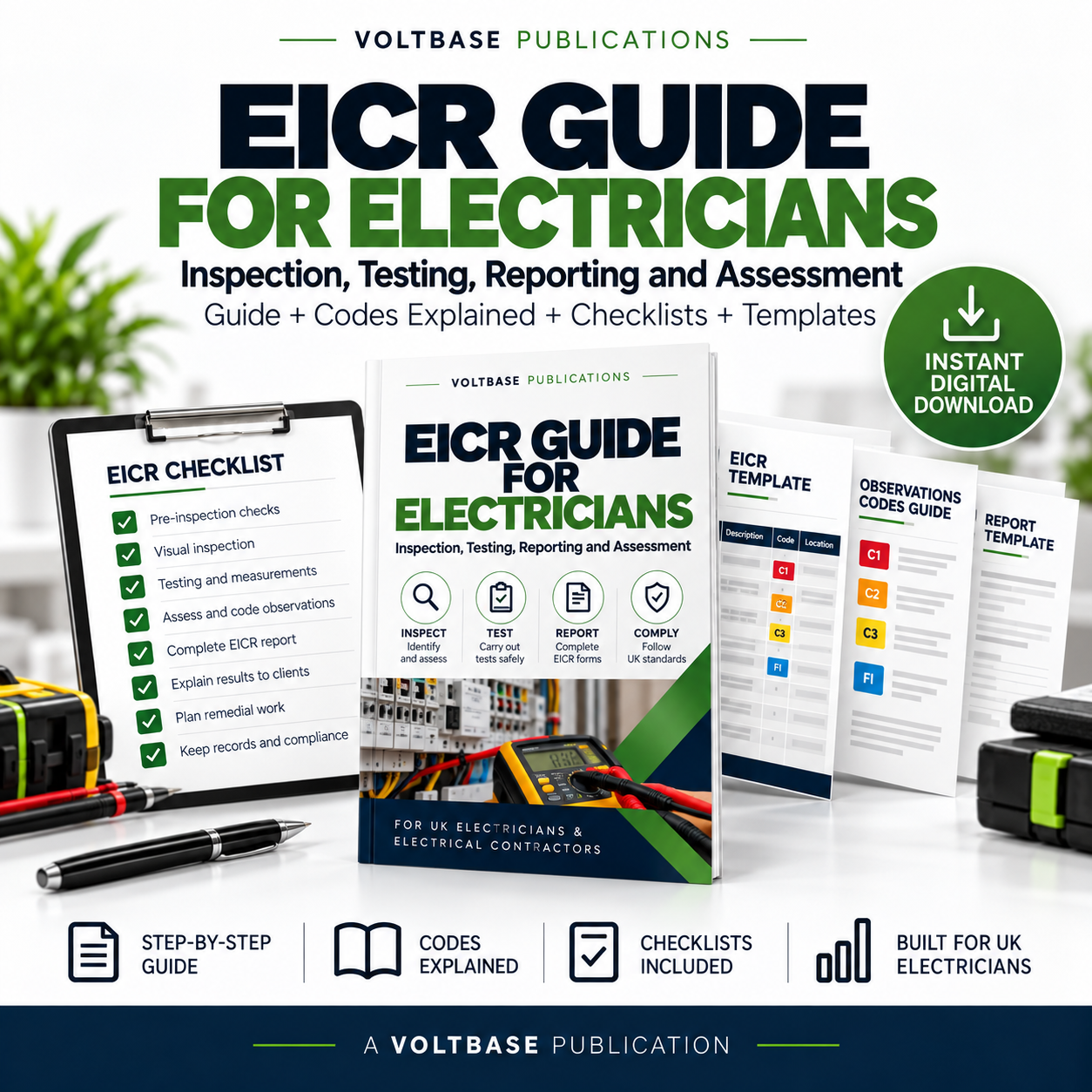
EICR Guide for Electricians – Inspection, Testing, Reporting and Assessment
Build your confidence with Electrical Installation Condition Reports using this practical, electrician-focused digital guide designed for UK electricians, electrical contractors, learners and anyone preparing to improve their EICR knowledge.
This guide brings together the key stages of the EICR process in one clear resource, from preparation and inspection through to testing, coding observations, completing reports and communicating findings professionally.
Rather than simply listing regulations, the guide is designed to help you understand how the EICR process works in practice and how the different stages fit together.
It is suitable as a revision aid, a practical reference document, an assessment-preparation resource and a useful guide for electricians who want a clearer, more structured approach to EICRs.
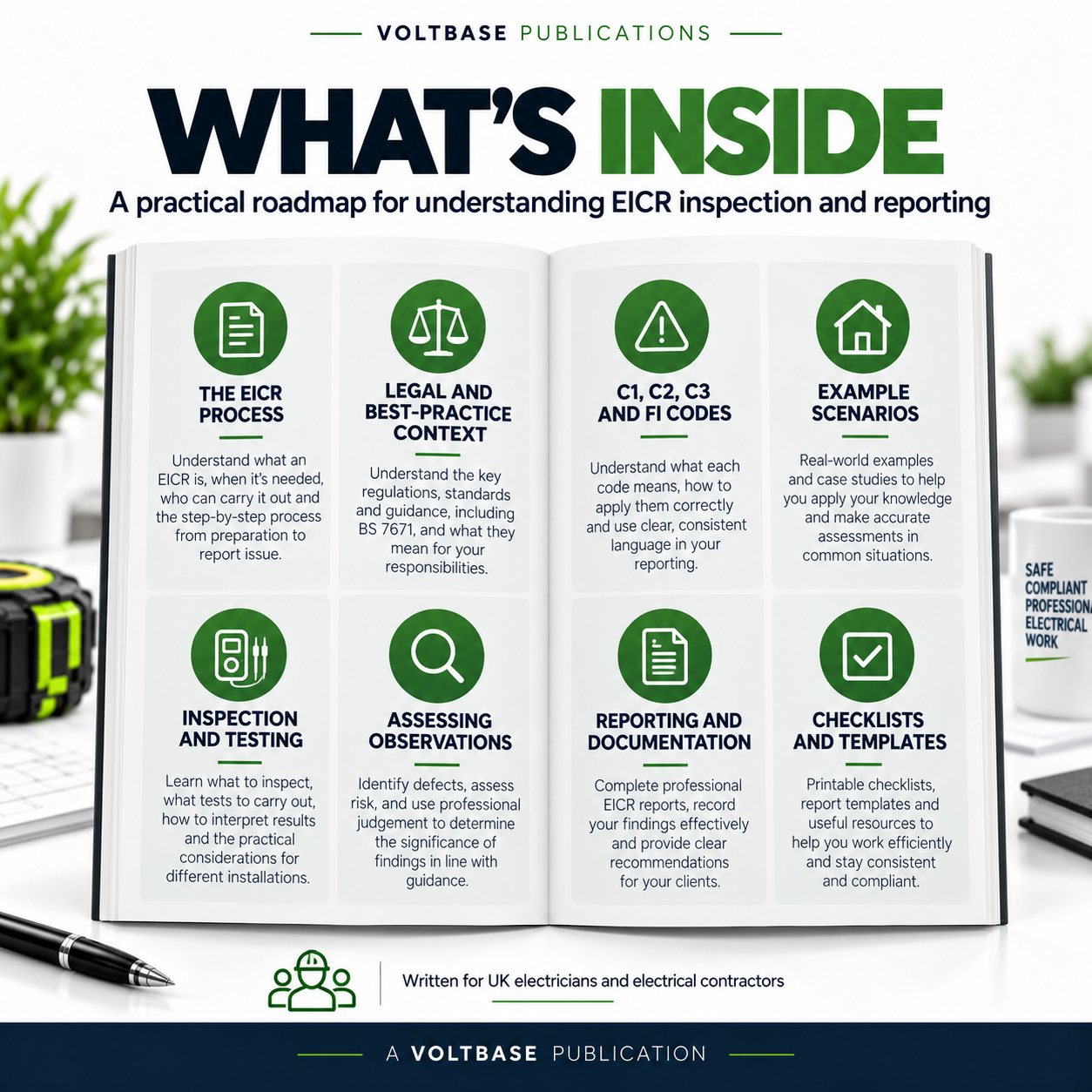
What this guide covers
The guide includes practical information around:
• The purpose of an Electrical Installation Condition Report
• When EICRs are required and where they are commonly used
• Preparing for an inspection
• Understanding the scope and limitations of an EICR
• Visual inspection considerations
• Inspection and testing principles
• Recording test results
• Assessing observations
• Understanding EICR coding
• C1, C2, C3 and FI classifications
• Writing clear observations
• Reporting defects professionally
• Completing EICR documentation
• Communicating findings to customers
• Planning remedial actions
• Record keeping
• Domestic and commercial inspection considerations
• Landlord and rental-property considerations
• Competent Person Scheme and assessment considerations
• Practical examples and example scenarios
• Good reporting habits and professional presentation
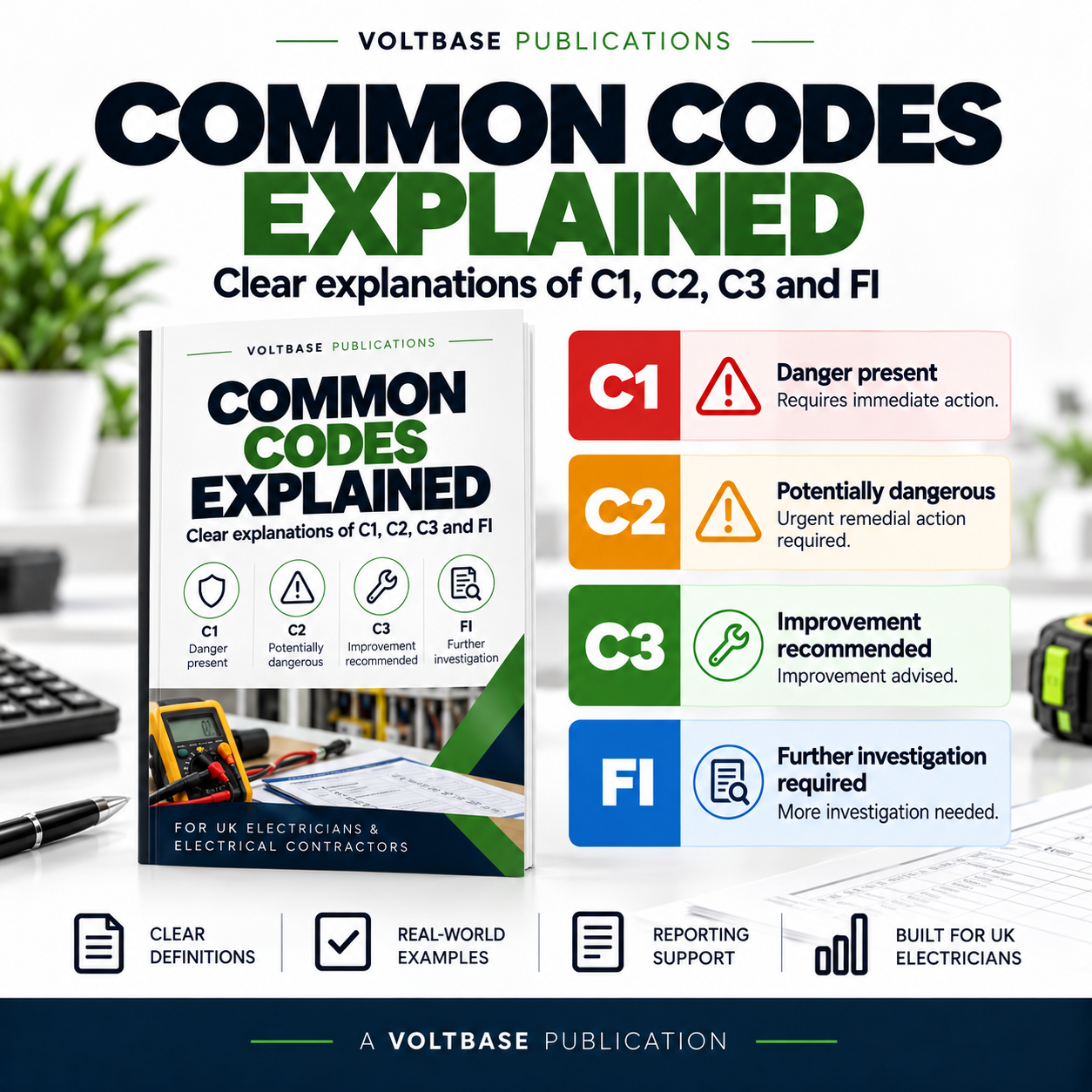
Common EICR codes explained
A major part of the guide focuses on understanding the commonly used EICR observation codes:
C1 – Danger Present
Used where there is an immediate risk of injury and urgent action is required.
C2 – Potentially Dangerous
Used where a condition is not immediately dangerous but could become dangerous and remedial action is required.
C3 – Improvement Recommended
Used where improvement is recommended but the condition does not normally make the installation unsatisfactory by itself.
FI – Further Investigation Required Without Delay
Used where there is insufficient information to determine the safety of the installation and further investigation is required.
The guide helps explain the purpose of these classifications and how they fit into the overall inspection and reporting process.
Practical inspection and testing guidance
The guide also covers the practical flow of an EICR, including areas such as:
• Pre-inspection preparation
• Reviewing available documentation
• Visual inspection
• Protective conductor continuity
• Insulation resistance
• Polarity
• RCD testing
• Earth fault loop impedance
• Protective bonding
• Consumer units and distribution equipment
• Accessories and final circuits
• Recording observations
• Comparing results with expected values
• Completing inspection schedules
• Preparing the final report
The aim is to help electricians understand the structure of the process rather than simply memorise isolated test procedures.
Example scenarios
The guide includes practical examples intended to help you understand how defects may be assessed and recorded.
Examples may include issues involving:
• Consumer units
• Protective devices
• Earthing and bonding
• Damaged accessories
• Missing or inadequate protection
• Wiring defects
• Loose or damaged connections
• Inappropriate alterations
• Older installations
• Incomplete information requiring further investigation
These examples are intended as learning aids and should always be considered alongside the actual installation, current standards and professional judgement.
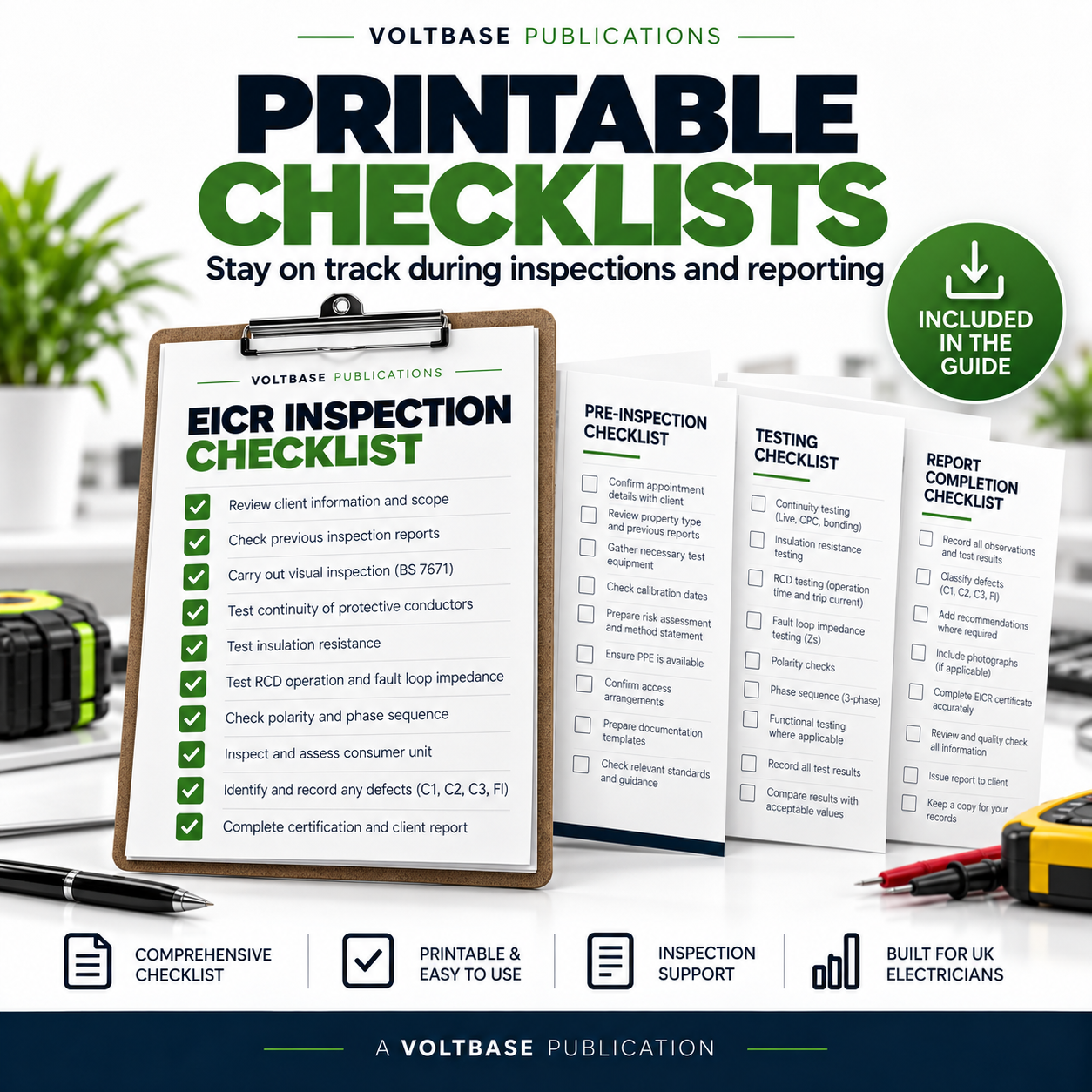
Printable checklists included
To help make the guide useful in day-to-day work, it includes practical checklist-style resources such as:
• EICR preparation checklist
• Pre-inspection checklist
• Visual inspection checklist
• Testing checklist
• Report completion checklist
• Observation-recording checklist
• Client information checklist
• Assessment-preparation checklist
These can be used as prompts for revision, preparation and workflow organisation.
Templates and practical resources
The guide also includes example templates and structured resources to help with organisation and reporting, such as:
• Observation record template
• EICR preparation sheet
• Client information sheet
• Inspection planning template
• Remedial actions sheet
• Assessment preparation notes
• Evidence planning resources
• Reporting prompts and structured examples
These are designed to support your own working methods and professional documentation.
Who is this guide for?
This guide is suitable for:
• Qualified electricians
• Electrical contractors
• Sole traders
• Electricians preparing to carry out EICRs
• Electricians returning to inspection and testing work
• Apprentices and learners
• Inspection and testing students
• Electricians preparing for assessment
• Competent Person Scheme applicants or members
• Electricians wanting to strengthen their understanding of EICR reporting
It can also be useful as a refresher for experienced electricians who want a structured reference document.
UK-focused guidance
This guide has been created specifically with UK electrical work in mind.
It is written around the way EICRs are typically carried out, recorded and assessed in the UK electrical industry, with reference to recognised inspection and testing practices and the wider framework of BS 7671.
It is intended to complement, not replace, the current edition of BS 7671, official guidance, scheme-provider requirements, manufacturer instructions or other authoritative technical publications.
Ideal for assessment preparation
If you are preparing for an inspection and testing assessment, Competent Person Scheme assessment or professional review, this guide can help you structure your preparation.
It can help you think about:
• What documentation you may need
• How to organise your evidence
• How to prepare test equipment and records
• What assessors may discuss
• How to explain your inspection process
• How to demonstrate professional judgement
• How to discuss observations and coding
• How to present completed documentation clearly
Use it as a reference guide
This is not designed to be read once and forgotten.
You can keep it as a reference resource for:
• Revision
• Assessment preparation
• Inspection planning
• Reporting practice
• Coding refresher
• Business procedures
• Staff training
• CPD and professional development
Digital download
This is a digital product only.
✓ Instant digital download
✓ No physical item will be posted
✓ Read on computer, tablet or phone
✓ Save and revisit whenever you need it
✓ Suitable for printing for personal use where required
Your files will be available through the Payhip digital download system after purchase.
Important professional disclaimer
Electrical inspection and testing should only be carried out by persons with appropriate competence, training, experience and equipment.
This guide is an educational and reference resource. It does not replace:
• BS 7671
• current IET or industry guidance
• statutory requirements
• scheme-provider rules
• manufacturer instructions
• professional judgement
• formal training or assessment
Electrical regulations, guidance and scheme requirements can change. Users should always verify technical and regulatory information against current authoritative sources before applying it in practice.
Coding decisions must be based on the actual condition of the installation, the associated risk and the professional judgement of the competent person carrying out the inspection.
About Voltbase Publications
Voltbase Publications creates practical guides, resources and professional content for electricians and technical industries.
Our aim is to produce clear, useful resources that help electricians work more professionally, prepare more confidently and develop their knowledge.
## Scheme names and trademarks
Any references to competent person scheme providers are included for general informational purposes only.
Voltbase Software Ltd is not affiliated with, endorsed by or officially connected to any scheme provider unless expressly stated otherwise. All organisation names and trademarks remain the property of their respective owners.
### Usage licence
Your purchase is for personal use and use within your own electrical business.
The files and content must not be:
* Resold
* Shared or redistributed
* Rebranded
* Uploaded to other websites
* Included in paid training courses without permission
* Copied to create competing digital products
* Distributed to other businesses or assessment candidates
© Voltbase Software Ltd. All rights reserved.