
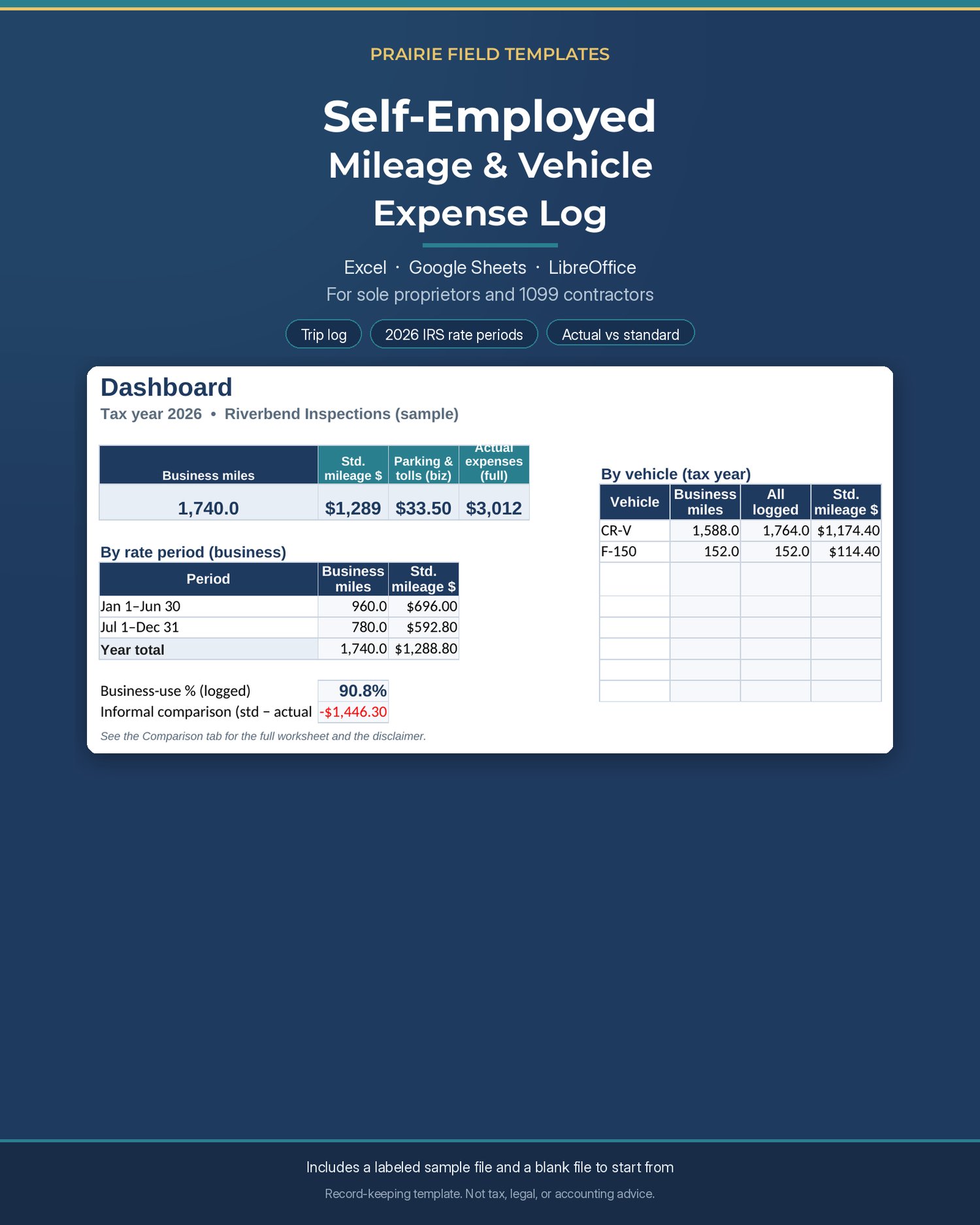
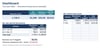

Self-Employed Mileage & Vehicle Expense Log
A mileage and vehicle-cost workbook for self-employed people who need a dated trip log and a clear standard-mileage worksheet, including years when the IRS publishes more than one business rate.
What's inside
• Setup for the tax year you choose, with an editable rate table. 2026 rates are prefilled from the IRS figures in IR-2025-128 (72.5¢/mile, Jan 1–Jun 30) and IR-2026-29 (76¢/mile, Jul 1–Dec 31), plus the published medical, charitable, and military moving rates. Confirm against IRS.gov and edit for a later year.
• Vehicles tab (up to 8), with optional year-start and year-end odometer readings as a check against the log
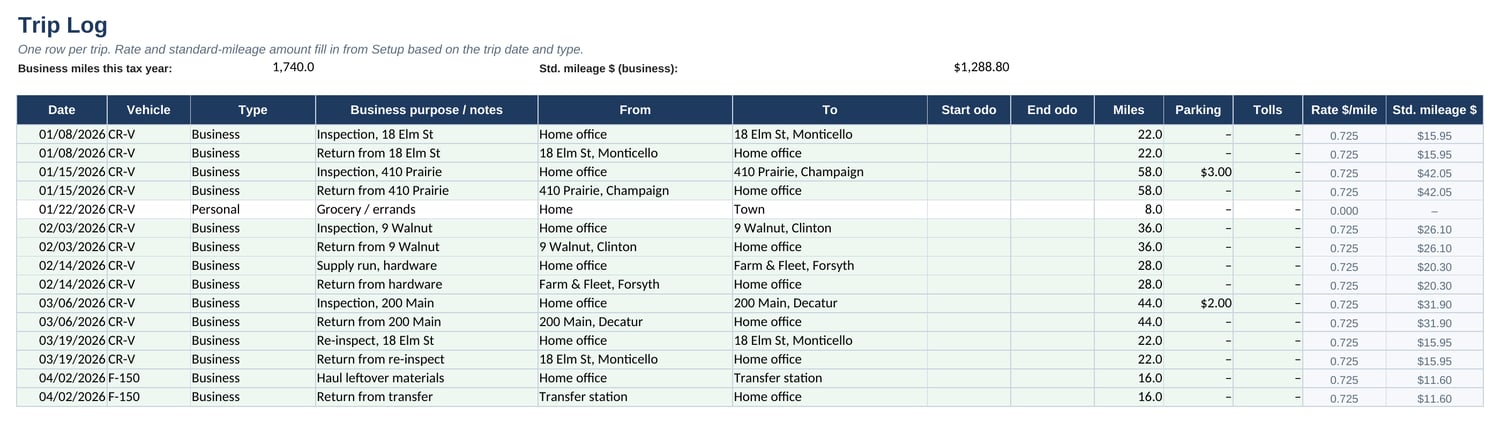
• Trip Log: 800 rows for date, vehicle, type (Business, Personal, Commute, Medical, Charity, Moving), purpose, from, to, miles, parking, and tolls. The rate and standard-mileage amount fill in from the trip date and type. Optional start/end odometer columns flag a mismatch.
• Actual Expenses: gas, insurance, repairs, and other vehicle costs, if you want the informal comparison
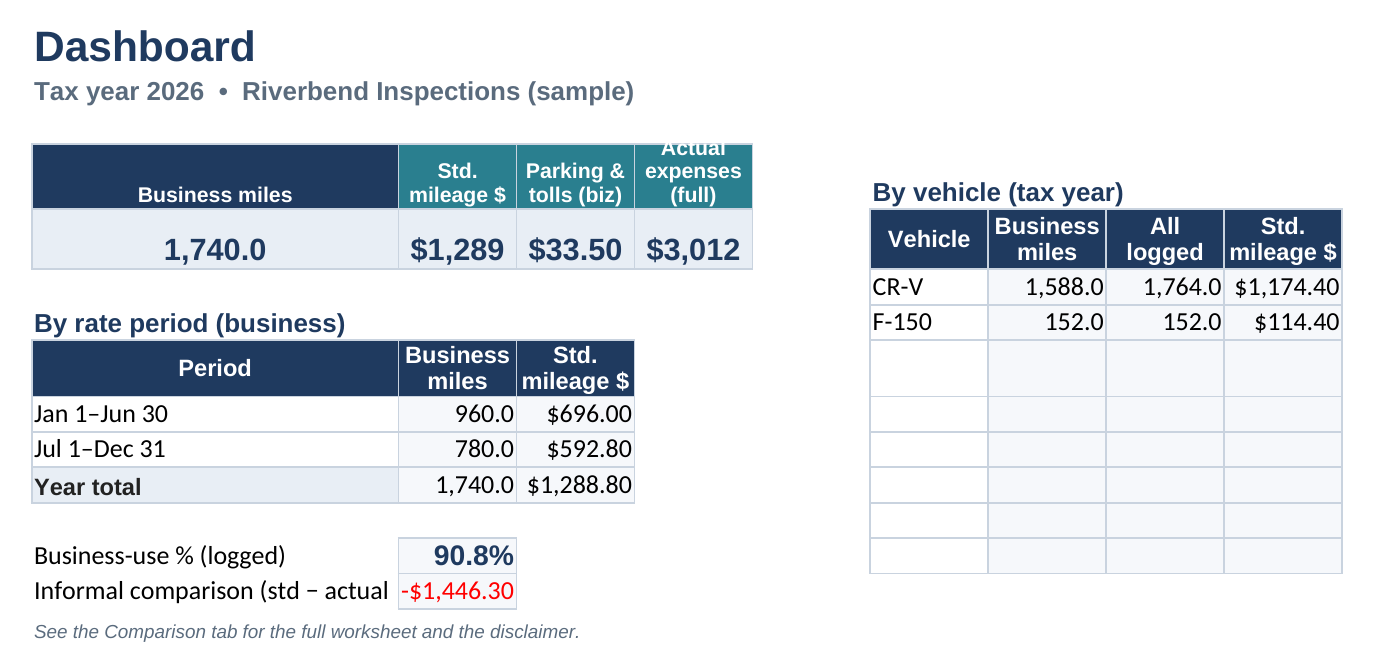
• Dashboard: business miles by rate period, standard-mileage amount,
• Comparison tab: standard mileage vs actual expenses × logged business-use %. Parking and tolls on business trips are added on both sides. This is a worksheet, not a recommendation of either method, and it does not apply first-year election, fleet, depreciation, lease, or recapture rules.
• Works in Excel 2010+ / Microsoft 365, Google Sheets, and LibreOffice. Formulas stay compatible with all three (no Excel Tables, no dynamic arrays).
You get two working copies: a blank file to start from, and a sample file already filled with fictional trips so you can see how the formulas behave. Sample rows are labeled SAMPLE. Start Here has step-by-step instructions, including how to clear the sample data.
This is a record-keeping spreadsheet. It is not tax, legal, or accounting advice. Confirm current standard mileage rates, which method you may use, and how to treat commuting, parking, tolls, and mixed-use vehicles with the current IRS instructions (including Publication 463) or a qualified tax professional.