
My Safety Plan: Feeling Unsafe Outside the Home
My Safety Plan: Feeling Unsafe Outside the Home
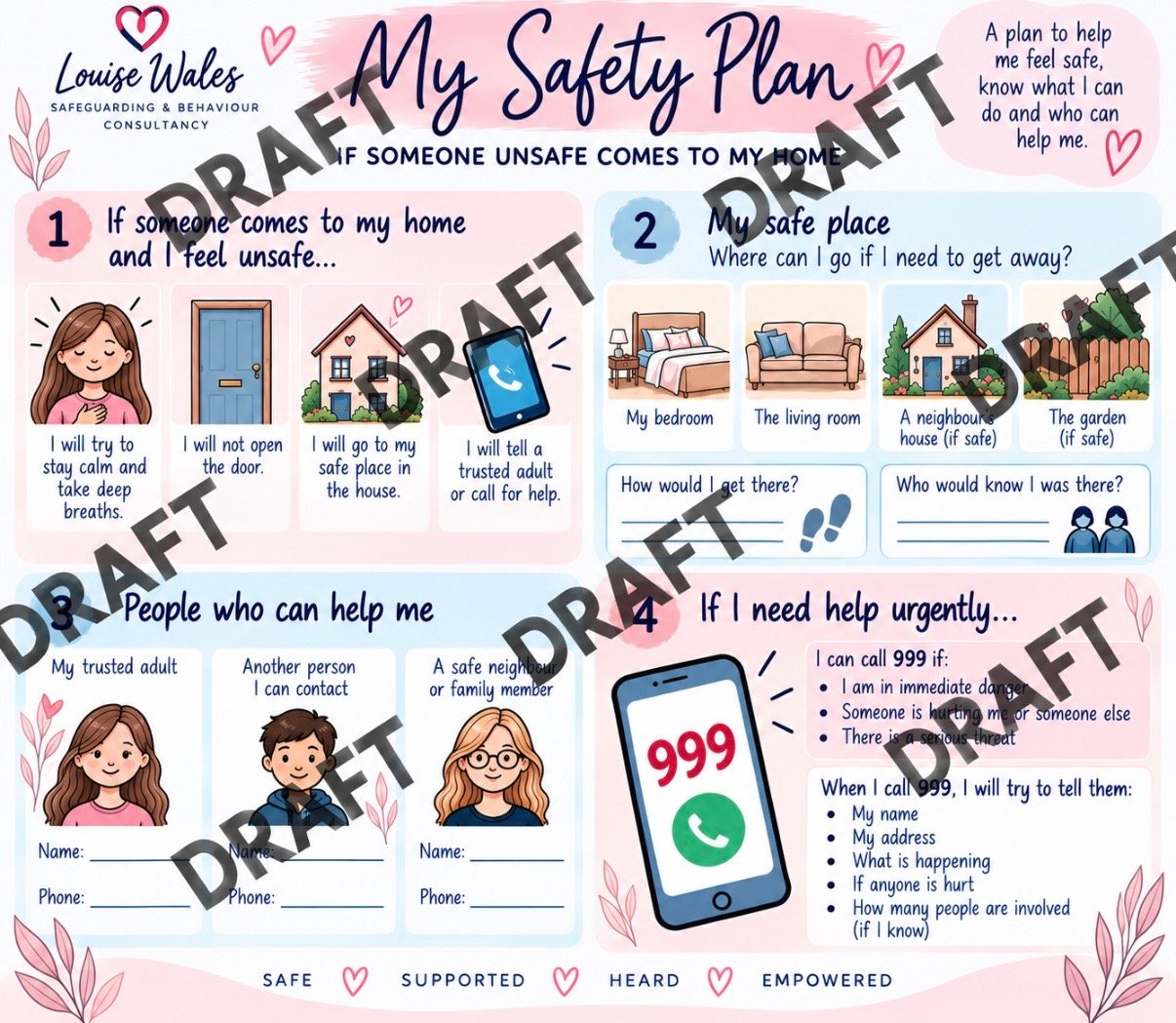
A child-friendly safety planning resource to help children recognise when they may feel unsafe outside the home and identify ways to seek help.
Children may experience situations when they feel worried, uncomfortable or unsafe while out and about. This printable resource provides a structured, child-centred way to explore these feelings, identify safe places and consider who they can turn to for support.
What’s included?
This safety plan supports children to explore:
- When might I feel unsafe? – recognising situations such as someone following them, unwanted conversations, feeling pressured or being somewhere that doesn’t feel safe.
- What can I do? – identifying practical ways to respond, move towards safety and seek help from a trusted adult.
- Safe places – thinking about places they could go if they need support, such as a shop, school, library or another appropriate safe location.
- People I can talk to – identifying trusted adults and recording their contact details.
- If I need help urgently – helping children understand when emergency assistance may be needed.
- Things to remember – reinforcing that children can trust their feelings, ask for help and speak up without being blamed.
Who is this resource for?
Ideal for:
- Designated Safeguarding Leads (DSLs) and Deputy DSLs
- Primary school pastoral and inclusion teams
- Early help and family support professionals
- Professionals working directly with children around safeguarding and safety planning
How can it be used?
Use this resource to support a conversation with a child about their individual safety needs. It can help professionals explore possible risks, identify appropriate safe places and trusted adults, and agree on practical steps tailored to the child’s circumstances.
The plan should be completed with an appropriate adult and adapted to the child’s age, understanding and individual situation.
Please note: This resource is a discussion aid and does not replace safeguarding procedures, an individual risk assessment or a tailored safety plan where specific risks have been identified. Adults remain responsible for safeguarding children and responding to concerns.
Louise Wales Safeguarding & Behaviour Consultancy
See the child. Hear their story. Change their future. 🤍