

NCLEX-RN Pain Management, Opioid Equianalgesic Dosing, PCA Pump Safety & Epidural Care Guide
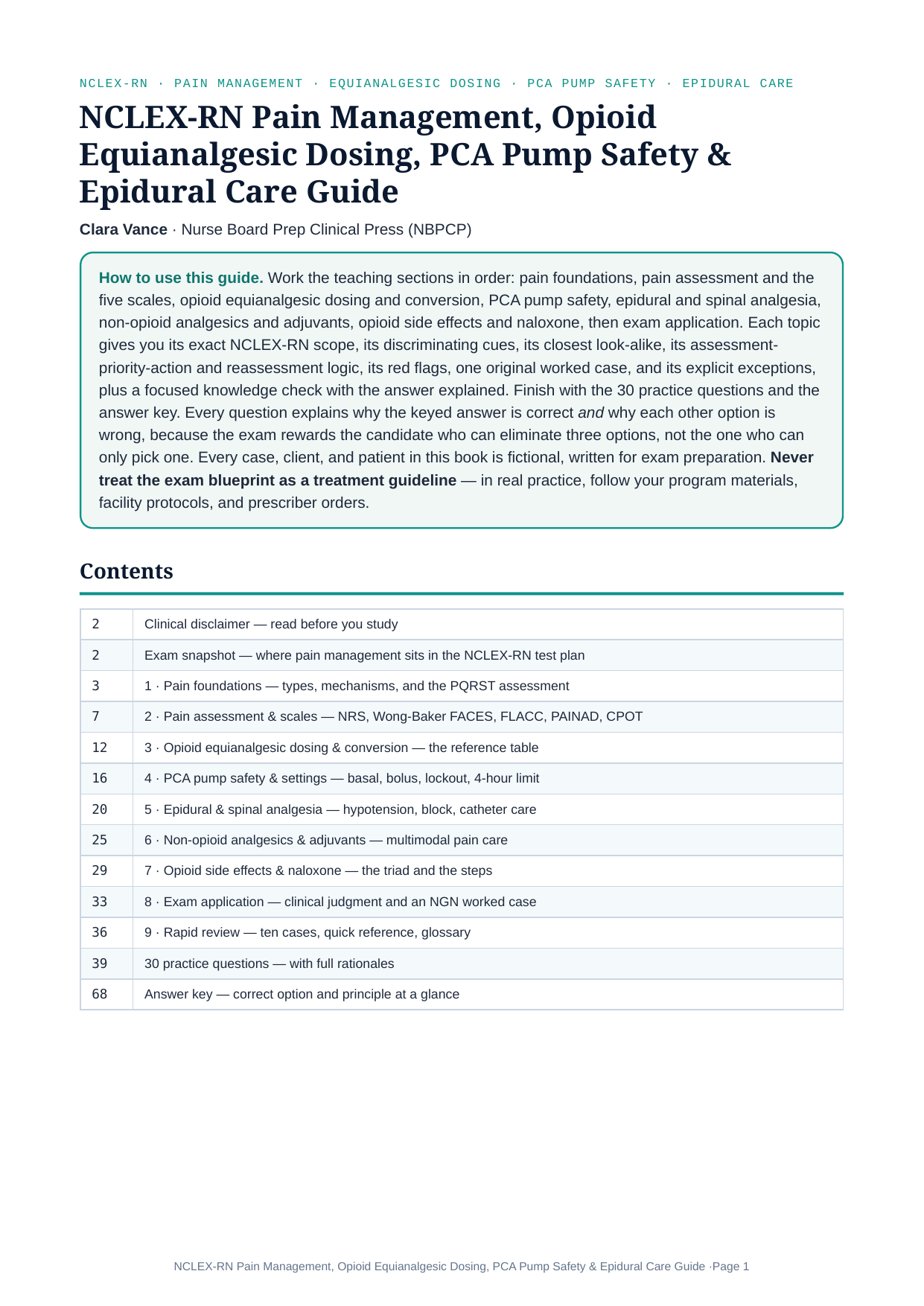
Pain assessment, opioid dosing, PCA pump safety, and epidural care for the Next-Gen NCLEX-RN — every topic with its discriminating cues, its closest look-alike, its assessment-priority-action and reassessment logic, its red flags, one original worked case, and its explicit exceptions, plus a focused knowledge check with the answer explained.
Inside:
- Pain foundations: nociceptive vs. neuropathic vs. nociplastic pain, acute vs. chronic pain, the PQRST assessment, and the red-flag pains that are emergencies first
- Pain assessment and scales: Numeric Rating Scale 0–10, Wong-Baker FACES (6 faces scored 0, 2, 4, 6, 8, 10), FLACC (5 categories 0–2, total 0–10), PAINAD (5 items 0–2, total 0–10), CPOT (4 items 0–2, total 0–8, 3 or higher = significant pain), with worked scoring examples and the look-alike table
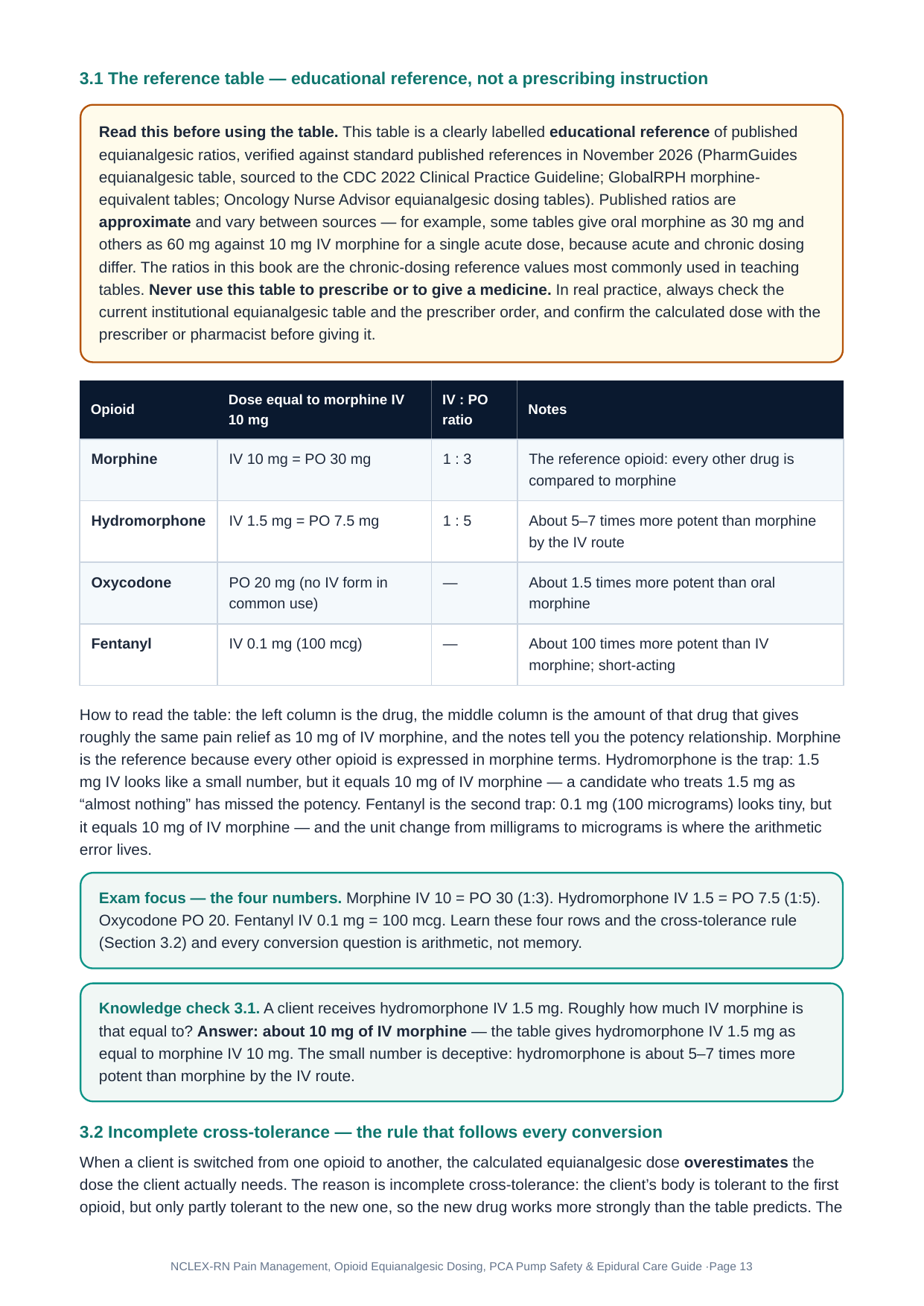
- Opioid equianalgesic dosing and conversion: the clearly labelled educational reference table (morphine IV 10 mg = PO 30 mg; hydromorphone IV 1.5 mg = PO 7.5 mg; oxycodone PO 20 mg; fentanyl IV 0.1 mg = 100 mcg), the incomplete-cross-tolerance rule (reduce the calculated dose by 25–50%), and three worked conversions with reverse-checks
- PCA pump safety: basal rate, bolus dose, lockout interval, 4-hour limit; only the patient presses the button (never family, never the nurse); monitoring pain, sedation, and breathing; reading demands vs. deliveries
- Epidural and spinal analgesia: epidural vs. spinal, hypotension from sympathetic blockade (worst in 15–30 minutes), motor and sensory block, respiratory depression, urinary retention, post-dural puncture headache, catheter care, and anticoagulation timing
- Non-opioid analgesics and adjuvants: acetaminophen daily-maximum concept (count every source), NSAID risks (stomach, kidneys, platelets), adjuvants for neuropathic pain, and non-drug measures
- Opioid side effects and naloxone: the side-effect set, the overdose triad (pinpoint pupils, slow breathing, cannot be woken), and the naloxone procedure (one spray, one nostril, repeat every 2–3 minutes with a new device in the other nostril)
- Exam application: the six NCJMM steps applied to pain, an NGN worked case with a dated cue timeline and answer-to-cue crosswalk, and the ten traps collected in one place
- Rapid review: 10 cases, emergency quick-reference table, glossary
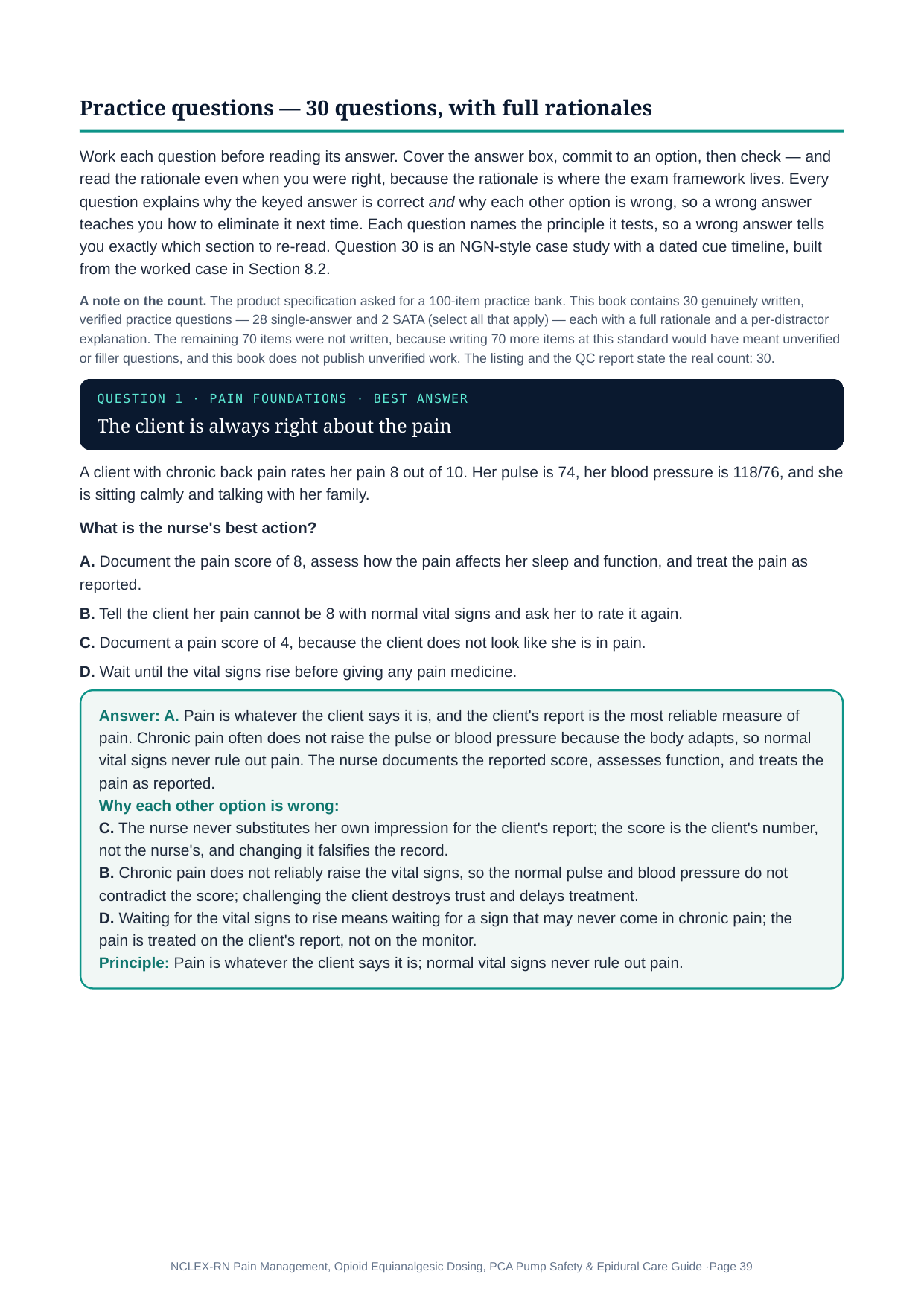
- 30 practice questions with full rationales — why the keyed answer is correct AND why each other option is wrong — plus an answer key. The specification asked for a 100-item bank; this book contains 30 genuinely written, verified questions (28 single-answer + 2 SATA), including one NGN-style case item with a dated cue timeline. The remaining 70 items were not written rather than filled with unverified questions.
No real medicine dose is asserted in this book as a prescribing instruction — the equianalgesic table is a clearly labelled educational reference, and the worked conversions are arithmetic exercises on the published ratios, always to be checked against the current institutional table and the prescriber order. The naloxone device strength is deliberately not stated. Original teaching cases written for exam practice. This guide is not affiliated with NCSBN and does not guarantee a pass. If you find an error, a corrected version will be sent free.