
The Emulsion Phase: Hot vs. Cold Process Emulsifiers
Understanding how emulsifiers work during the emulsion phase is one of the most important skills a cosmetic formulator can develop. While many people focus on the oils and actives in a formula, the reality is that the emulsifier and the way it is processed often determines whether a product is stable, elegant, and commercially viable.
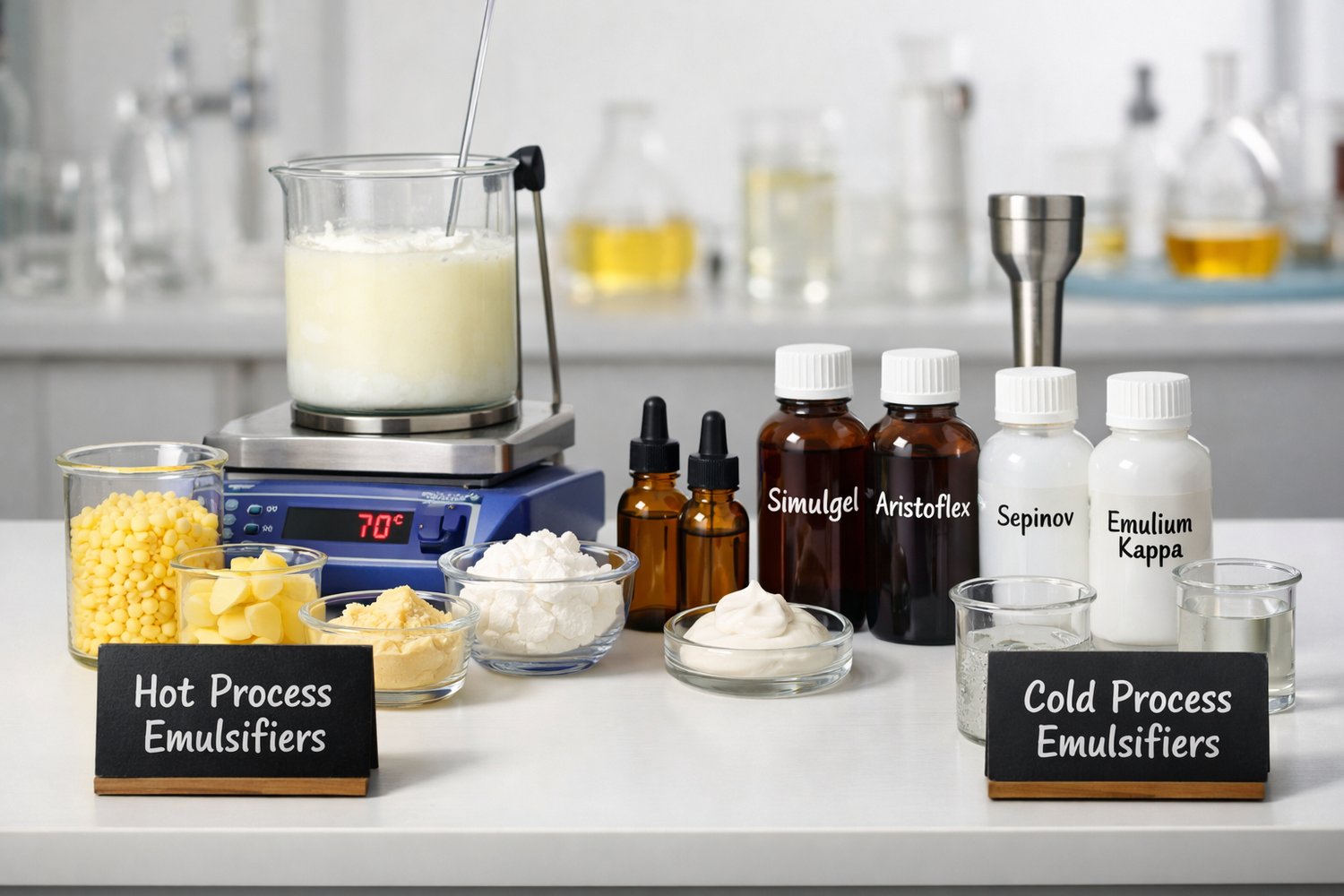
In this educational document, we take a closer look at the emulsion phase and the difference between hot and cold process emulsifiers. You will learn how each system works, why some emulsifiers require heat while others do not, and how these processing methods influence stability, texture, and formulation design.
This guide explains the science behind emulsification in clear, practical terms so you can better understand how to select the right emulsifier for your product. We also explore the advantages and limitations of each approach, common stability considerations, and how processing decisions can impact the final structure of your emulsion.
Whether you are formulating lotions, creams, gel creams, or lightweight emulsions, understanding the difference between hot and cold processing will help you design more stable and predictable formulas.
This document is ideal for beginner to intermediate formulators who want to strengthen their understanding of emulsion systems and improve the reliability of their formulations.