

The plastic weightlessness - album for bulgarian artist Atanas Patsev
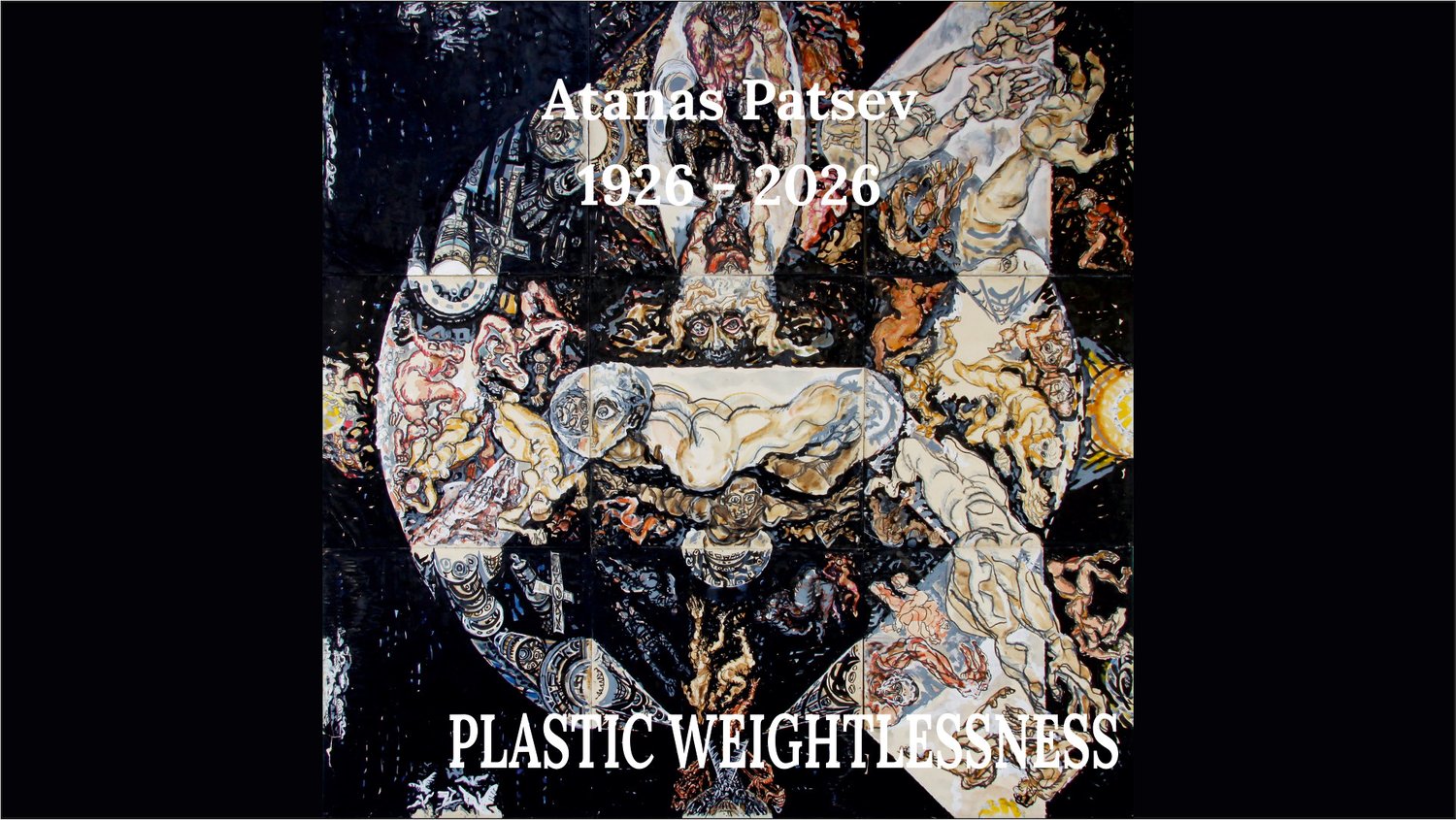
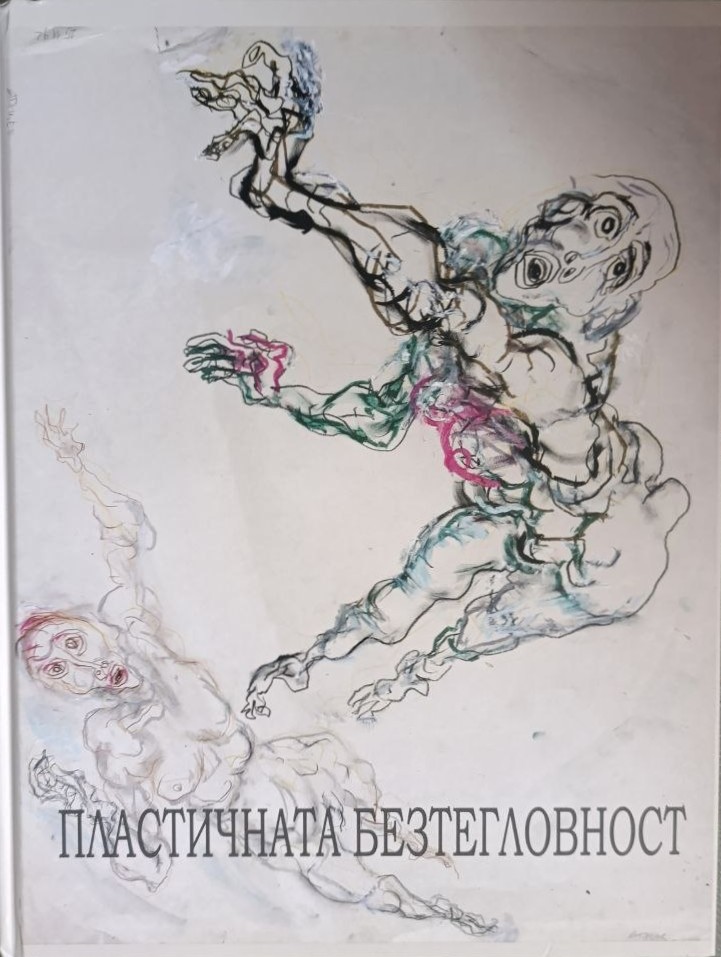
This bilingual book (english - bulgarian) is album for bulgarian artist Atanas Patsev. This is about his famous paintings "Weightlessness". In the history of art, gravity functions not only as a physical law but also as an implicit plastic principle that organizes form through mass, support (weight), and stability. From classical sculpture to modernism, artistic form is conceived within a “gravitational norm” that determines its perception as heavy, centered, and spatially stable. The present text proposes the introduction of the concept of “plastic weightlessness (in the art)” as a new analytical category in art studies. It designates a state of form in which gravitational conditioning is destabilized, and the form is perceived as suspended, relational, and processual. The idea of plastic weightlessness is somewhat foreign, unclear, and in a certain sense strange, primarily for art historians, but also for philosophers, psychologists, and artists. The vagueness stems mainly from the fact that it crosses different fields. The concept stands at the crossroads between physics (gravity, weightlessness), phenomenology (embodied perception), art history (plasticity, composition), and philosophy (ontology of body and matter). Each of these discourses uses a different language. Thus, for art historians it may sound “physicalist,” and for physicists— metaphorical. In art history there is no established term “plastic weightlessness.” It is neither a style nor a category. Philosophy traditionally thinks the body bound to gravity, localized, oriented (up/down). Even in Maurice Merleau-Ponty’s works the body schema presupposes terrestrial orientation. Plastic weightlessness raises the question: what is a body without “а base”? This is not a fully developed problem. In psychology, perception is deeply linked to gravity. Balance and orientation are fundamental. Weightlessness is an extreme condition that most people do not experience directly. Therefore, it remains difficult to articulate. Artists most often work intuitively and do not conceptualize experience in theoretical terms. They can create a sense of weightlessness without naming it as such. The concept of “plastic weightlessness” attempts to name something real yet difficult to grasp. It is a form without support, absence of a center of gravity, movement without falling. It is closer to experience and perception than to a category. It is conceived not as a physical but as a perceptual state, a bodily attunement, a plastic logic. The concept has no established terminological status; it crosses different fields and describes a plastic experience rather than an object.
His main system consists of 9 squares (3×3), organized as a modular configuration. Each square is an autonomous field in its own right, yet the connections between the individual elements (paintings) are established through their geometric and plastic environments. To these, connections along the diagonals can also be added. In this manner, the images themselves are also connections.
The mechanical connections between the squares do not function as an outer frame, but as an extension of the internal logic of the images. That is to say, the boundary between the squares is not a neutral intermediate field, but an active plastic space in which the connections between the environments of the elements continue, amplify, or transform the painted forms, movements, and tensions.
Each square can occupy any position within the grid and can be rotated at 0°, 90°, 180°, and 270° (4 orientations). All squares are structurally and plastically equivalent in terms of logic, yet distinct as individual elements (meaning the images and compositions within them are different). The connections between the environments guarantee that the logic remains valid under any configuration, which constitutes the conceptual constant of the polyptych.
With 9 squares (a 3×3 system) and the permutation of positions, 362,880 combinations are obtained, while the rotation of the squares yields $4^9 = 262,144$. The total number of combinations is $362,880 \times 262,144 = 95,126,814,720 \approx 95 \text{ billion combinations}$.
To be able to view a polyptych with 9 segments, 125,000,000 seconds or more than 35 years of non-stop viewing are required. To paint all of its variations, a million years would be needed, and the continuous ribbon of these variations would stretch 187,000 km. Since all these years and kilometers are gathered within a physical square of 141×141 cm, which is perceived in a conditional moment, are these not, then, tunnels through time and space within the medium of artistic expression of the objects depicted in the polyptych?