
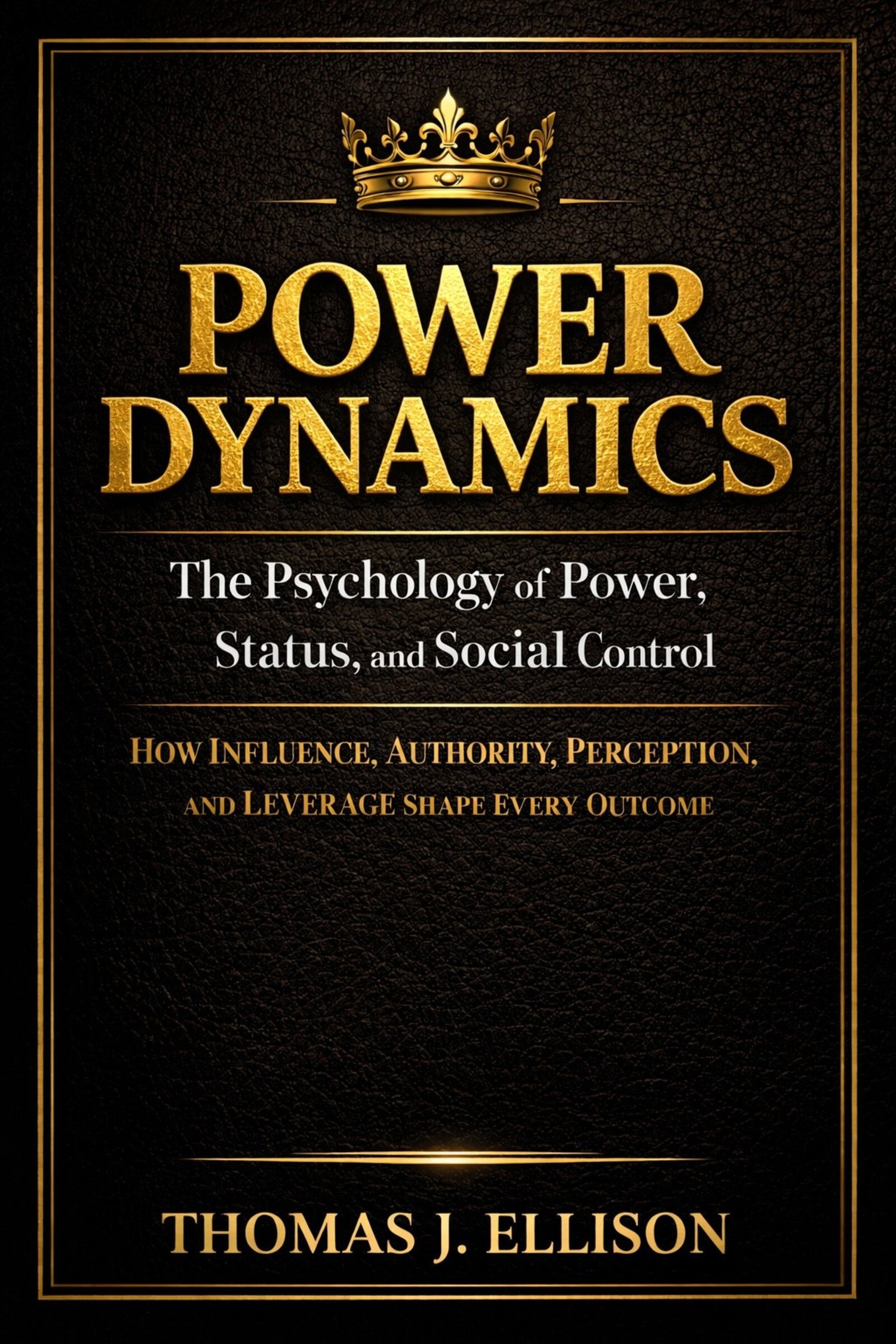
Power Dynamics. The Hidden Structures of Power, Status, and Influence
Who actually has the power?
The answer is often not the person with the highest title, the largest office, or the most obvious authority.
Power Dynamics: The Hidden Structures of Power, Status, and Influence examines the invisible arrangements through which power moves—and the reasons people often fail to recognize them until the consequences become impossible to ignore.
Thomas J. Ellison takes readers through remarkable stories from history: an illiterate eunuch who controlled access to the Chinese emperor, women who exercised enormous influence inside the Ottoman court, a Japanese widow who helped rule without holding formal military office, Robert Moses and his extraordinary control over New York's infrastructure, a scholar who spent decades failing an examination system, an admiral whose authority depended on the trust of one emperor, and many others.
But these stories are not presented simply as historical curiosities.
Each reveals a structure that still exists around us.
A person without a prestigious title may control the information everyone else needs. A manager may possess formal authority while another employee holds the team's actual loyalty. A person who seems indispensable may have accumulated influence through dependency rather than rank. A supposedly meritocratic system may be shaped by relationships, reputation, access, and assumptions that never appear in the official rules.
Power can live in a document nobody reads.
It can live in a relationship.
It can live in a reputation.
It can live in the person everyone looks at before answering a question.
And sometimes the most important form of power is simply controlling what gets seen, heard, remembered, or decided.
Power Dynamics is not a manual for manipulating people or a collection of rules for winning every social game. It is an examination of how power operates inside the systems people already inhabit: companies, families, governments, relationships, committees, institutions, and communities.
Its purpose is not to make the reader more cynical.
It is to make the reader more observant.
Once you learn to look beyond titles and official explanations, familiar situations begin to look different. You start noticing who influences decisions, whose approval matters, who absorbs the consequences, who receives the credit, and where real authority actually resides.
Because power is not always where it appears to be.
Sometimes you have to look at the arrangement around the person to see who is really in control.