
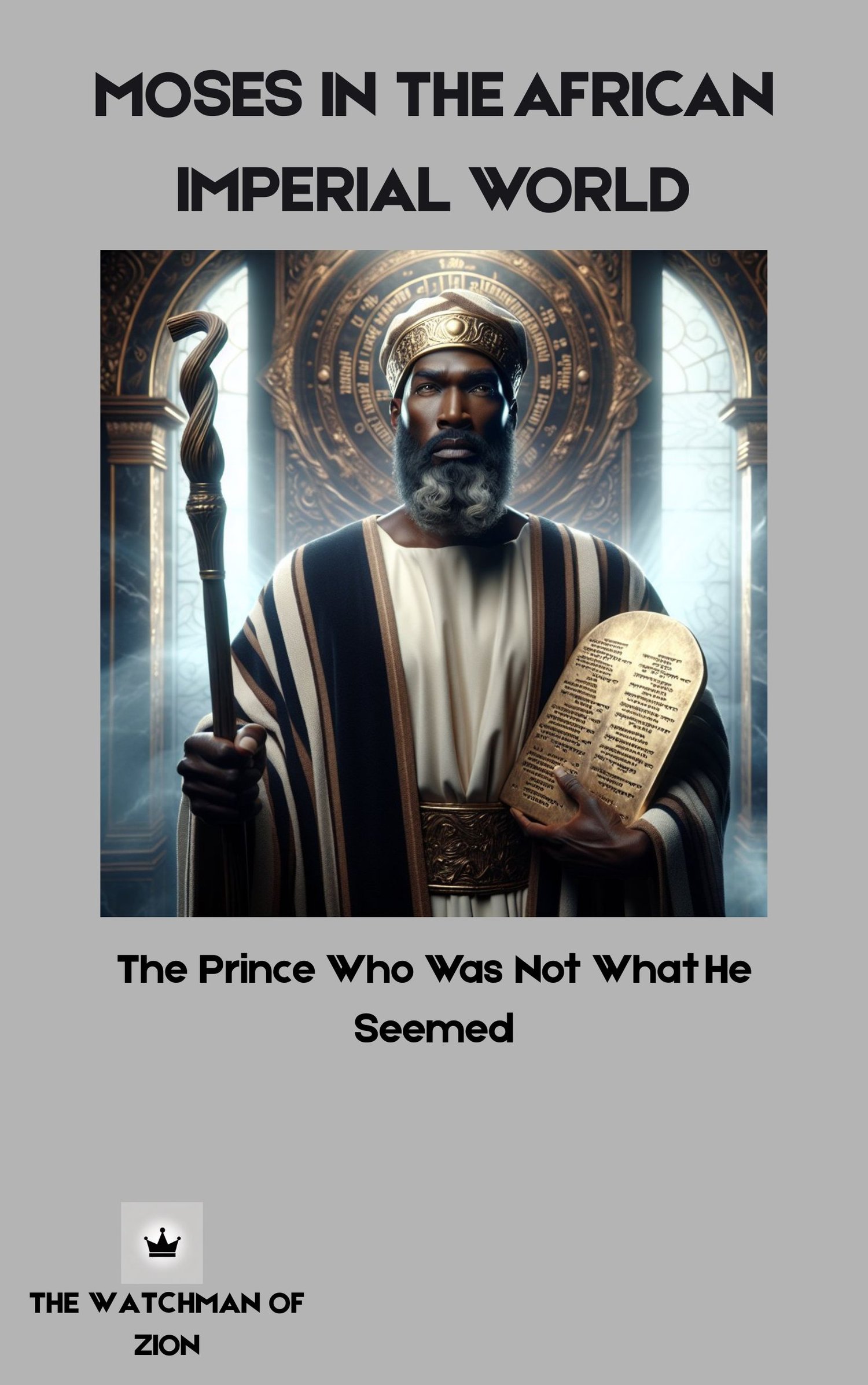
MOSES IN THE AFRICAN IMPERIAL WORLD
MOSES IN THE AFRICAN IMPERIAL WORLD
The Prince Who Was Not What He Seemed
This small commentary is a synopsis of moses life as a black man used by God to start the first great revolution in biblical history, excellent for preaching material.
Moses enters the story not as a wandering shepherd or a desert mystic, but as a child raised inside the beating heart of Africa’s greatest imperial machine. His cradle floated on the Nile, but his formation unfolded in the shadow of thrones, obelisks, and dynasties that ruled the ancient world with mathematical precision and spiritual force. He grew up beneath the gold‑crowned splendor of the New Kingdom, where African royalty shaped global power, commanded armies, and engineered monuments that defied time.
To the empire, he appeared to be one of their own—an adopted prince trained in diplomacy, warfare, astronomy, and the sacred sciences of Kemet. He walked the polished halls of palaces carved with the stories of gods and kings. He learned the language of command, the etiquette of courts, and the secrets of empire. Every tutor believed they were shaping another future ruler of Africa’s imperial house.
But Moses carried a hidden identity that no crown could erase. Beneath the linen robes and royal insignia lived a Hebrew child marked by a different covenant, a different destiny, a different fire. He was the prince who did not belong, the royal son who could not be claimed, the imperial heir whose true allegiance lay with an enslaved people crying out from the brickyards.
This chapter unveils the tension of a man raised in the palace yet called to the wilderness, shaped by Africa’s imperial brilliance yet destined to confront it. It is the story of a prince who was not what he seemed—an African‑trained liberator forged in the very system he would one day challenge, carrying within him the paradox that would change the world.