
Living with Bipolar Disorder in South Africa: A Practical Tools and Support Guide
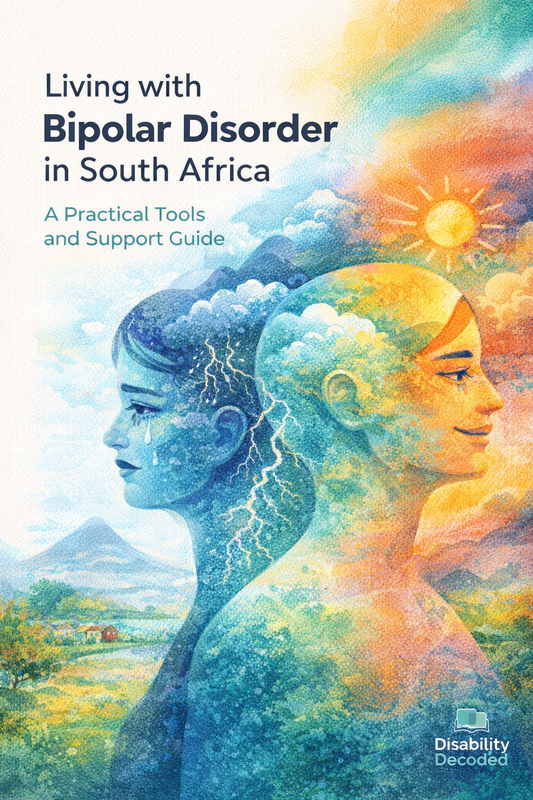
Living with Bipolar Disorder in South Africa: A Practical Tools and Support Guide
Empowerment, dignity, and resilience—tailored for the South African context.
This comprehensive guide is designed for individuals, families, educators, and advocates navigating the realities of bipolar disorder in South Africa. Unlike generic international resources, it blends evidence-based strategies with local relevance, ensuring practical support that resonates with South African communities.
Inside, you’ll find:
- Clear explanations of bipolar disorder, its types, symptoms, and causes.
- Diagnosis and treatment insights, including medication, psychotherapy, and lifestyle strategies.
- South African realities: rural vs. urban disparities, cultural influences, stigma, and healthcare access.
- Practical support toolbox: gentle movement, nutrition, hydration, sleep routines, grounding techniques, and crisis planning.
- Legal rights in South Africa: workplace, education, healthcare, and social security protections.
- Community resources: NGOs, public and private psychiatric services, online support, and culturally sensitive practices.
- Mood tracking journal: daily prompts and reflection tools to build self-awareness and agency.
Written with clarity and compassion, this guide reframes bipolar disorder not as a limitation but as a condition that can be managed with the right tools, support, and understanding. It is both a personal resource and a community advocacy tool, bridging medical knowledge with cultural and social realities.
✨ Why this book matters:
South Africa faces unique challenges—limited mental health resources, entrenched stigma, and intersections with HIV, substance use, and socioeconomic stressors. This guide addresses those blind spots, offering accessible, affordable, and culturally relevant strategies for resilience.
📖 Perfect for:
- Individuals living with bipolar disorder
- Families seeking practical ways to support loved ones
- Educators and employers building inclusive environments
- Advocates and NGOs working in mental health