
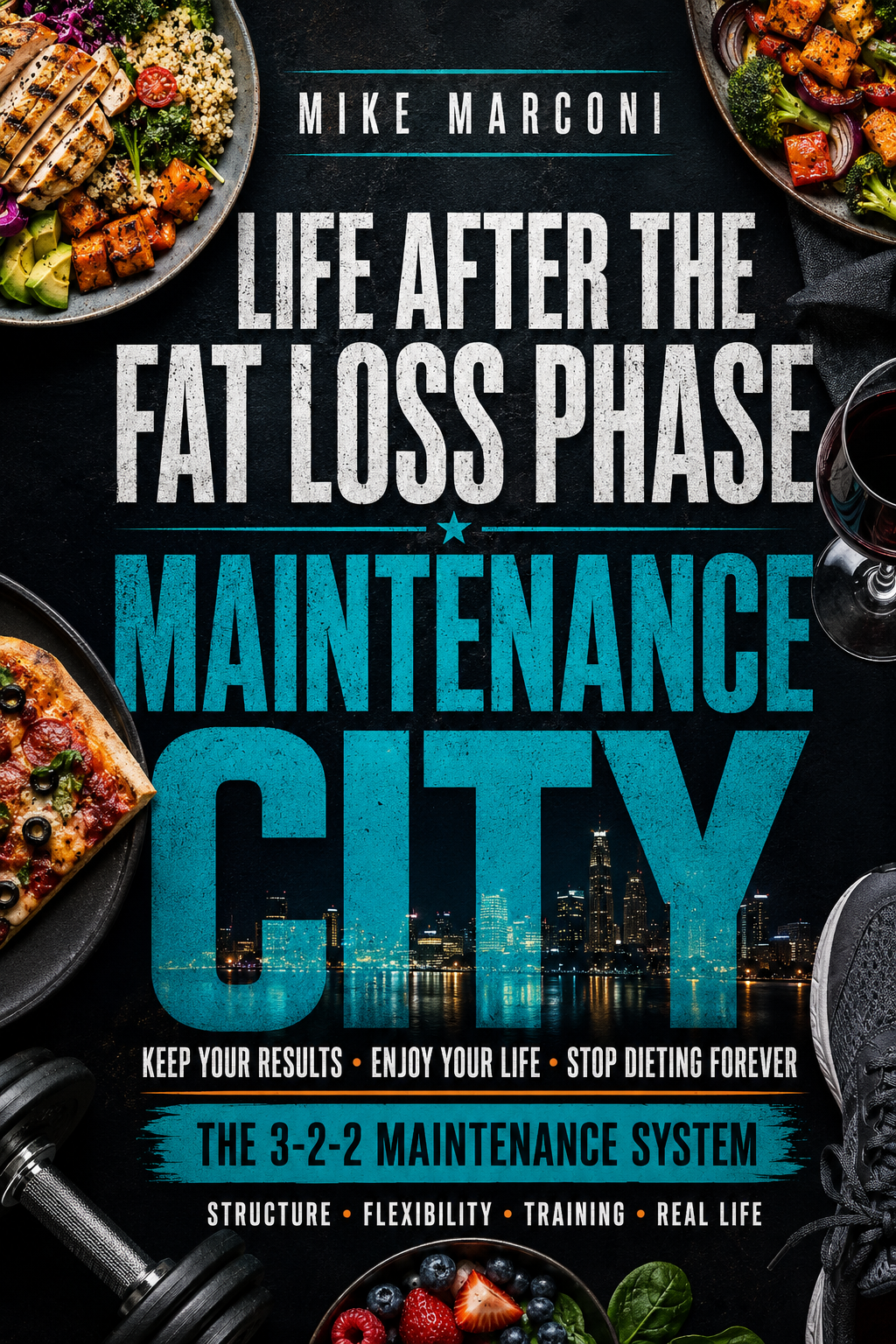
Life After the Fat Loss Phase: Maintenance City – The 3-2-2 Maintenance System
Losing the weight is only one part of the process. Learning how to live at your new weight without feeling like you have to diet seven days a week is where the real challenge begins.
Life After the Fat Loss Phase: Maintenance City is a practical guide for people who have already completed a successful fat-loss phase and understand the basics of tracking calories, macronutrients, protein and exercise. If you are completely new to structured nutrition, start with The Rapid Fat Loss Blueprint first. This guide is the next step.
Inside, I walk you through the same flexible maintenance system I have used personally and with my clients to keep results while bringing more food, freedom and normal life back into the picture.
The guide introduces my 3-2-2 Maintenance System:
• Three structured days with accurate, consistent and repeatable meals
• Two flexible days with more food and freedom while maintaining awareness
• Two looser days for restaurants, celebrations, family time and real life
This is not an excuse to go crazy every weekend. The system works because the entire week works together. Lower, more controlled days create room for higher days, and consistently returning to the structure keeps everything from drifting too far.
You will learn:
• How to transition out of a fat-loss phase without immediately losing control
• How to establish a realistic maintenance weight range instead of chasing one exact number
• Why scale weight often rises when carbohydrates, sodium, glycogen, water and normal food volume return
• How to tell the difference between temporary scale fluctuations and a genuine upward trend
• How to set and adjust your structured days based on your body, activity and rate of weight gain
• How to use repeated meals so your lower days become simple and nearly automatic
• How to handle flexible and looser days without turning them into unlimited days
• How to stay protein-focused throughout the entire week
• How strength training, progressive overload and training close to failure help preserve and potentially build muscle
• Why daily steps, recreational sports and enjoyable activity are important for long-term maintenance
• How sleep, hydration, fiber, fruits, vegetables and nutritious foods continue supporting the system
• How to navigate restaurants, holidays, vacations, stressful periods, illness and disrupted routines
• How to respond when life temporarily reduces your training or activity
• How to use the Green Light, Yellow Light and Red Light system to recognize when things are stable, beginning to drift or need immediate attention
• How to make small corrections before a few loose days become months of weight regain
• When a short 7-, 14- or 21-day Rapid Reboot or mini-cut may be appropriate
• How to return to maintenance after a short cleanup phase without treating it as punishment
• How to adjust the system if your goal eventually shifts toward gaining muscle
Maintenance does not mean holding the exact same scale weight forever. Your body may look fuller and stronger after fat loss as glycogen and water return to the muscles. Visual changes, gym performance, measurements, clothing fit and your overall weight trend all help tell the complete story.
The guide also includes easy-to-follow planning tools and printable charts to help you establish your maintenance range, build your weekly structure, monitor trends and decide when an adjustment is actually needed.
Most people do not regain weight because they had one big meal or one difficult weekend. They regain it because they gradually lose the habits and structure that helped them succeed.
As long as you keep returning to the system, you have a path forward.
Maintenance is not about being perfect forever. It is about building a rhythm you can live with, enjoying more freedom and learning how to keep the results you worked so hard to achieve.