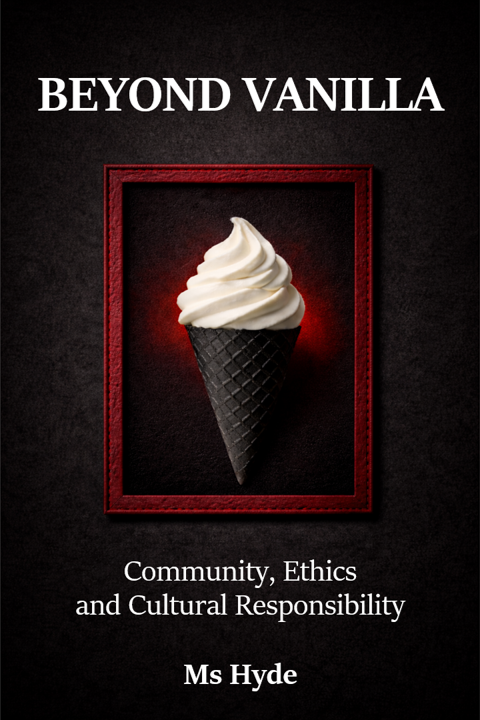
Beyond Vanilla: Community, Ethics, and Cultural Responsibility
Beyond Vanilla: Community, Ethics, and Cultural Responsibility
Kink does not exist in isolation.
The relationships we build, the spaces we enter, the people we learn from and the communities we help shape all influence how BDSM is experienced. Community can offer connection, education, friendship, belonging and support, while also bringing responsibilities that extend beyond the consent negotiated between two people.
As we become part of kink communities, we encounter people with different forms of power and influence. Organisers decide who enters their spaces, educators shape how people understand BDSM, experienced members may become trusted sources of advice, and reputations can affect who is welcomed, believed, avoided or excluded. When concerns arise, the questions become more difficult. We may need to decide what information we can rely on, how much weight to give a warning, when confidentiality is appropriate, what fairness requires and how to respond when certainty simply is not available.
Beyond Vanilla: Community, Ethics, and Cultural Responsibility explores this wider landscape of BDSM. It examines leadership, authority, expertise, money, conflicts of interest, community safety, reputation, reporting, investigation, procedural fairness, accountability, public conflict and retaliation, while recognising that each of these subjects becomes more complicated when real people, incomplete information and competing responsibilities are involved.
Rather than offering a universal set of rules for situations that rarely fit neatly into them, this book provides ways to think through difficult community decisions with greater care. It asks readers to consider what they actually know, who holds power, what they are contributing to, whether their communities are safe places for disagreement and what they themselves can live with when an easy answer does not exist.
Whether you are entering kink community for the first time, have participated for years, organise events, teach, volunteer, moderate spaces or simply want to understand the environments you choose to be part of, this book widens the conversation beyond individual dynamics. Community culture develops through the choices of everyone involved: what we encourage, what we tolerate, what we challenge, how we respond when harm or conflict occurs, and what we are willing to take responsibility for ourselves.
The community we inherit is shaped by other people's choices.
The community we leave behind will be shaped, in part, by ours.