
Diplomacy in the Nuclear Age An Educational Guide to the Cold War, the Cuban Missile Crisis, and the SALT I Agreements
Product Description
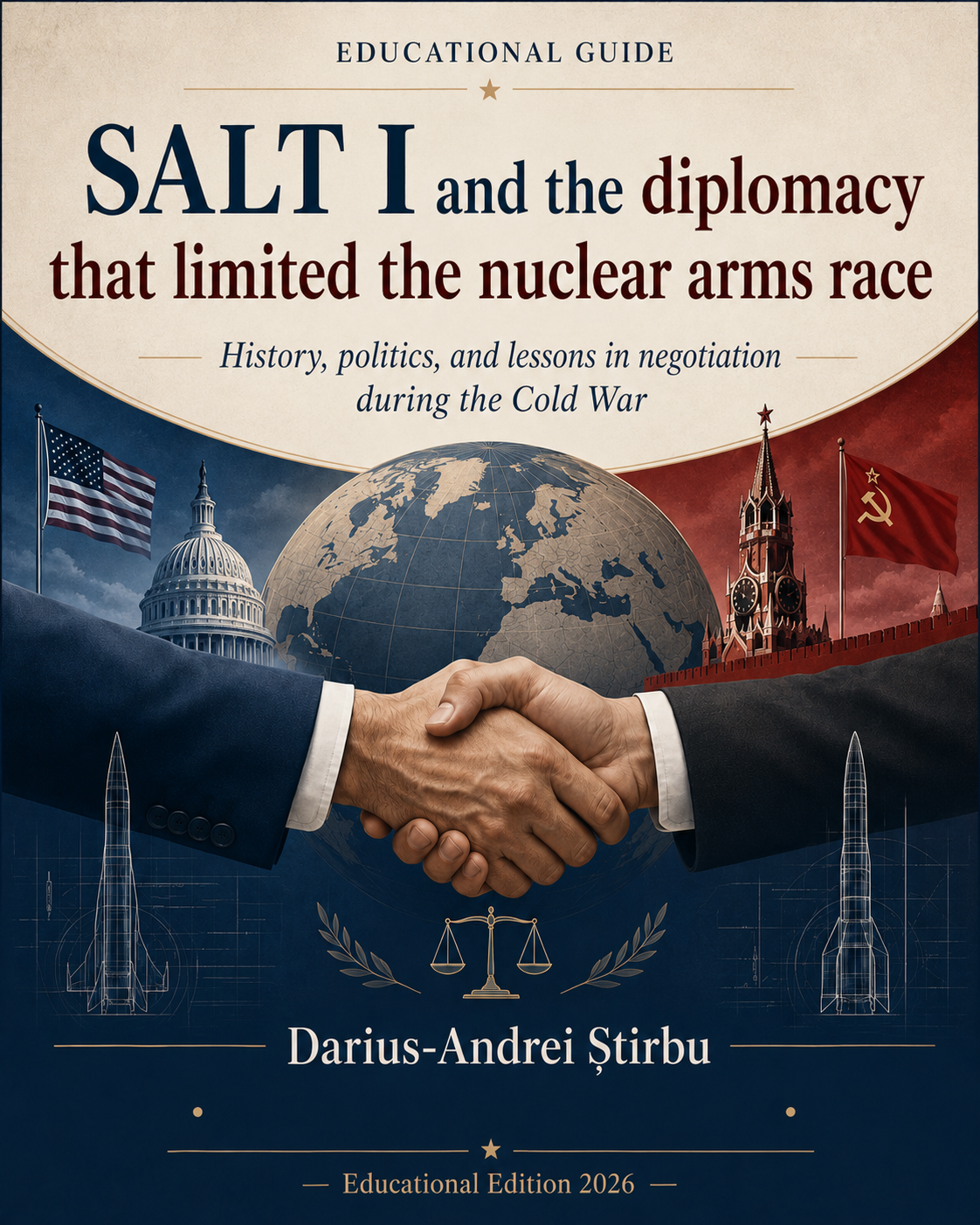
SALT I and the Diplomacy That Limited the Nuclear Arms Race is an accessible educational guide exploring one of the most important diplomatic achievements of the Cold War.
Designed for students, teachers, history enthusiasts, and anyone interested in politics or international relations, this guide explains how the United States and the Soviet Union moved from an intense nuclear arms race toward negotiation, strategic limits, and greater predictability.
Inside, readers will discover:
- The origins of the Cold War and the nuclear age
- The logic of nuclear deterrence and Mutual Assured Destruction
- The Cuban Missile Crisis and its diplomatic lessons
- The reasons behind the SALT negotiations
- The roles of Richard Nixon, Henry Kissinger, Leonid Brezhnev, and Anatoly Dobrynin
- The main provisions and limitations of the SALT I agreements
- Key concepts such as ABM, ICBM, SLBM, MIRV, strategic parity, and verification
- The long-term impact of SALT I on later arms-control agreements
The guide also includes a historical timeline, glossary, discussion questions, worksheets, a diplomatic simulation, debate activities, a final assessment, suggested answers, and a creative final project.
Who is this guide for?
This resource is suitable for:
- High school and university students
- History, politics, and international relations teachers
- Homeschooling and independent study
- Debate clubs and educational workshops
- Readers interested in Cold War diplomacy and nuclear arms control
Written in a clear and structured format, the guide transforms a complex historical topic into an engaging learning experience.
Format: Digital PDF
Language: English/Romanian
Author: Darius-Andrei Știrbu
Educational Edition: 2026
Please note: This is a digital product. No physical item will be shipped.