
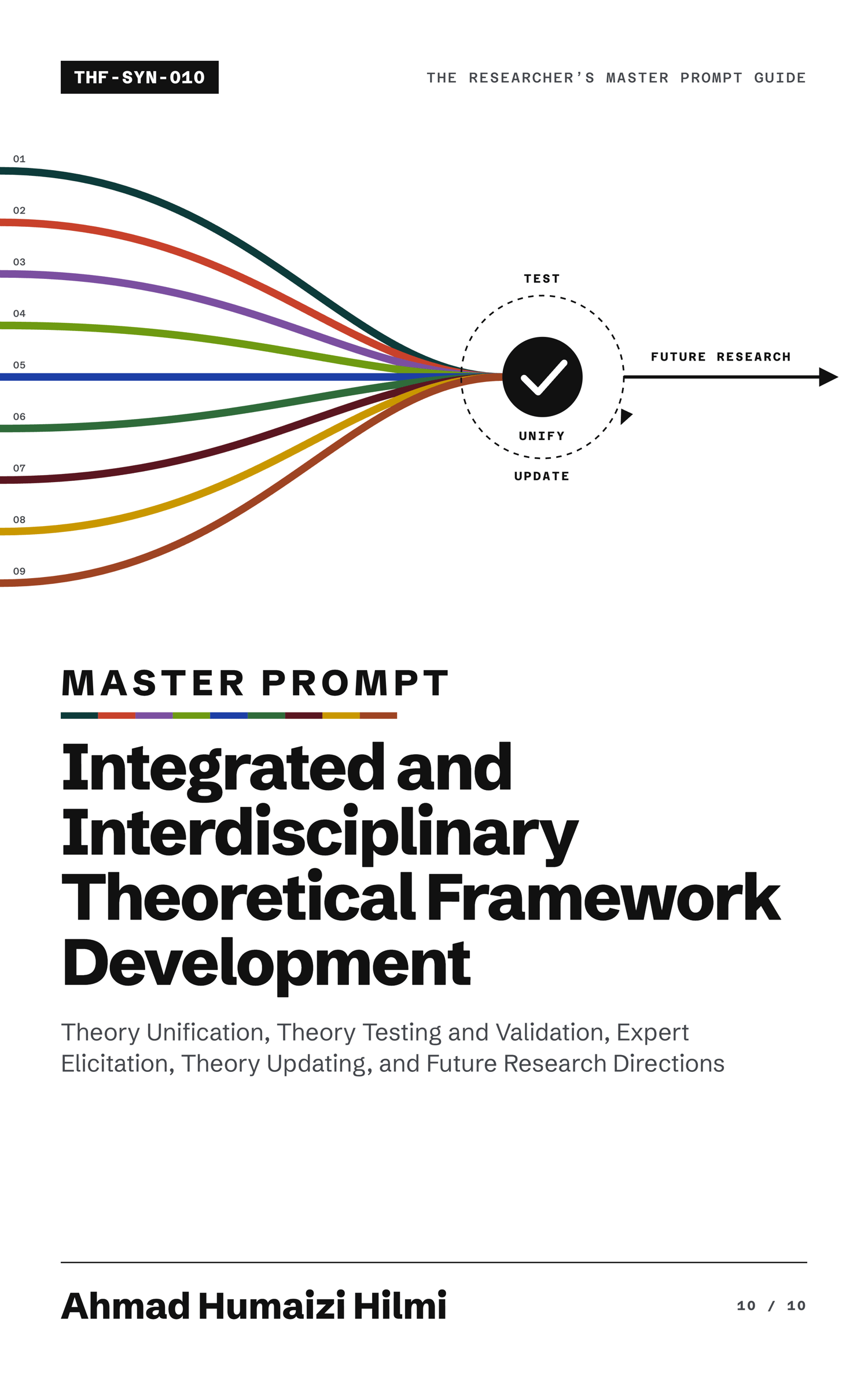
THF-SYN-010 — Integrated and Interdisciplinary Theoretical Framework Development, Theory Unification, Theory Testing and Validation, Expert Elicitation, Theory Updating, and Future Research Directions
Description
This Master Prompt theme integrates the preceding nine themes into an advanced framework for interdisciplinary theorizing, theory unification, rigorous theory testing, validation across contexts, and the cumulative updating and advancement of theoretical knowledge. It examines the philosophy of theory change, including falsification, research programmes, paradigm shifts, Bayesian updating, consilience, unification, and integrative pluralism. It covers the design of interdisciplinary integration through common ground, conceptual translation, and boundary objects, as well as cross-disciplinary unification and the bridging of competing frameworks through conceptual and formal mapping. It covers cross-domain synthesis of theoretical components and structured expert elicitation and verification. It also covers the design of severe theory tests, including competing predictions and crucial tests, together with multi-method empirical testing of novel frameworks, replication, transportability, and generalizability across contexts, and the assessment of robustness, sensitivity, and uncertainty. Further topics are meta-analytic and Bayesian theory updating, living evidence synthesis, the documentation and versioning of theory revisions, research integrity, open science, and the responsible use of artificial intelligence in theory development, and the formulation of evidence-based research agendas. The theme addresses how integrated frameworks are evaluated, refined, extended, restricted, or rejected, and how theoretical contributions are positioned for cumulative research. Particular attention is given to distinguishing interdisciplinary breadth from coherent integration, genuine unification from relabelling, and internal consistency from independent validation. It also distinguishes expert agreement from empirical evidence, confirmation in one context from generalizability, and progressive theoretical development from ad hoc protection of a theory against disconfirming evidence. Researchers will be guided in designing integration protocols, bridging analyses, elicitation procedures, theory-testing strategies, validation programmes, robustness analyses, theory revision logs, and prioritized research roadmaps.