
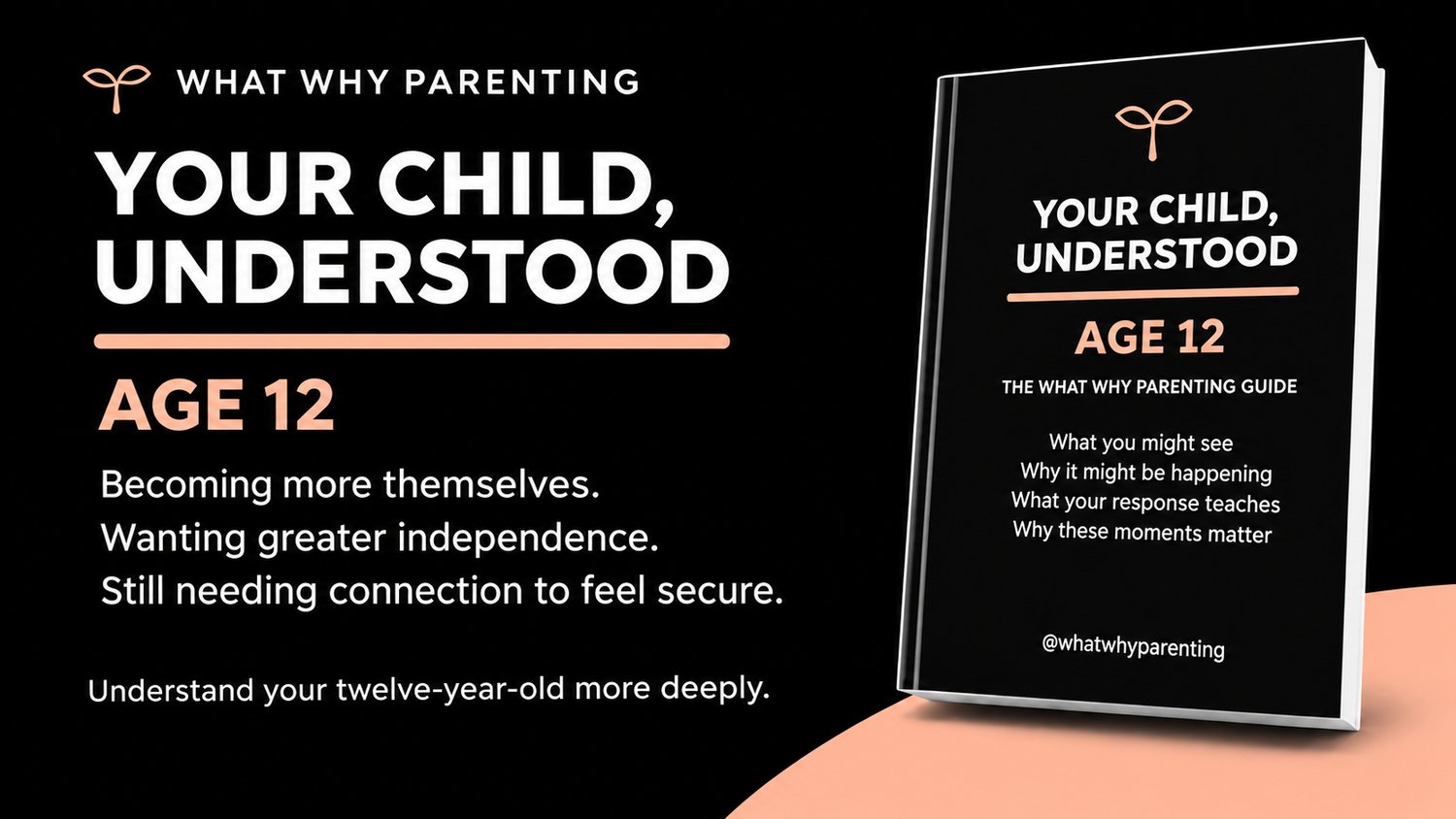
Your Child, Understood — Age 12
Understand your 12-year-old's everyday behaviour - and what your responses are helping them learn.
Twelve is an age of growing independence, a more personal sense of identity and an increasing desire to make decisions for themselves.
Your child is developing stronger opinions, becoming more aware of their individuality and beginning to seek greater control over their choices, relationships and privacy. While they may share less of their inner world with you, feeling understood, respected and emotionally secure remains important.
Your Child, Understood — Age 12 helps you understand what's happening beneath these everyday experiences, why they may be happening and how your responses matter.
What's included?
✅ One downloadable 52-page PDF guide
✅ 36 everyday childhood moments explained
✅ Insights into identity, independence, privacy, relationships and emotional security
✅ Gentle parent-reflection prompts to help you consider your own responses
✅ Research-informed, accessible explanations
See what's inside your guide
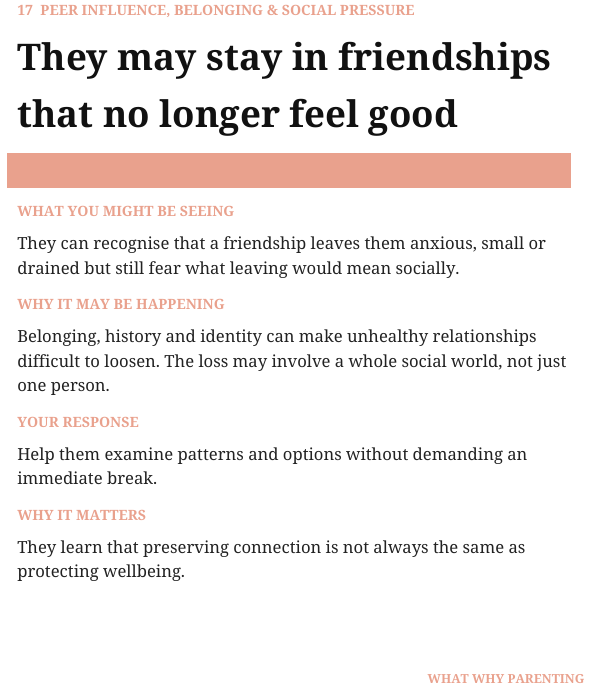
Each guide explores 36 everyday childhood moments through four questions:
WHAT are you seeing?
WHY it might be happening?
WHAT does your response help them learn?
WHY does that learning matter?
Here's a real example from the Age 12 guide:
Research-informed. Parent-readable.
Grounded in established child-development and developmental psychology research, this guide translates complex ideas into clear explanations of everyday family life.
What parents are saying 🤍
“I did find the language very useful and easy to read. It is very easy on the eye to manage in small chunks, and a very good reference booklet.”
“I especially love reflection. I'm a big believer in self reflection in a gentle manner.”
“It will help so many parents navigate parenthood and bring them some ease.”
— Parent of a four-year-old, advance reader (complimentary copy)
Understand your child. Not just their behaviour 🤍
Because as your child becomes more independent, your repeated responses can help shape whether they learn to trust their own judgement, feel accepted for who they're becoming and know they can still turn to you when they need support.