

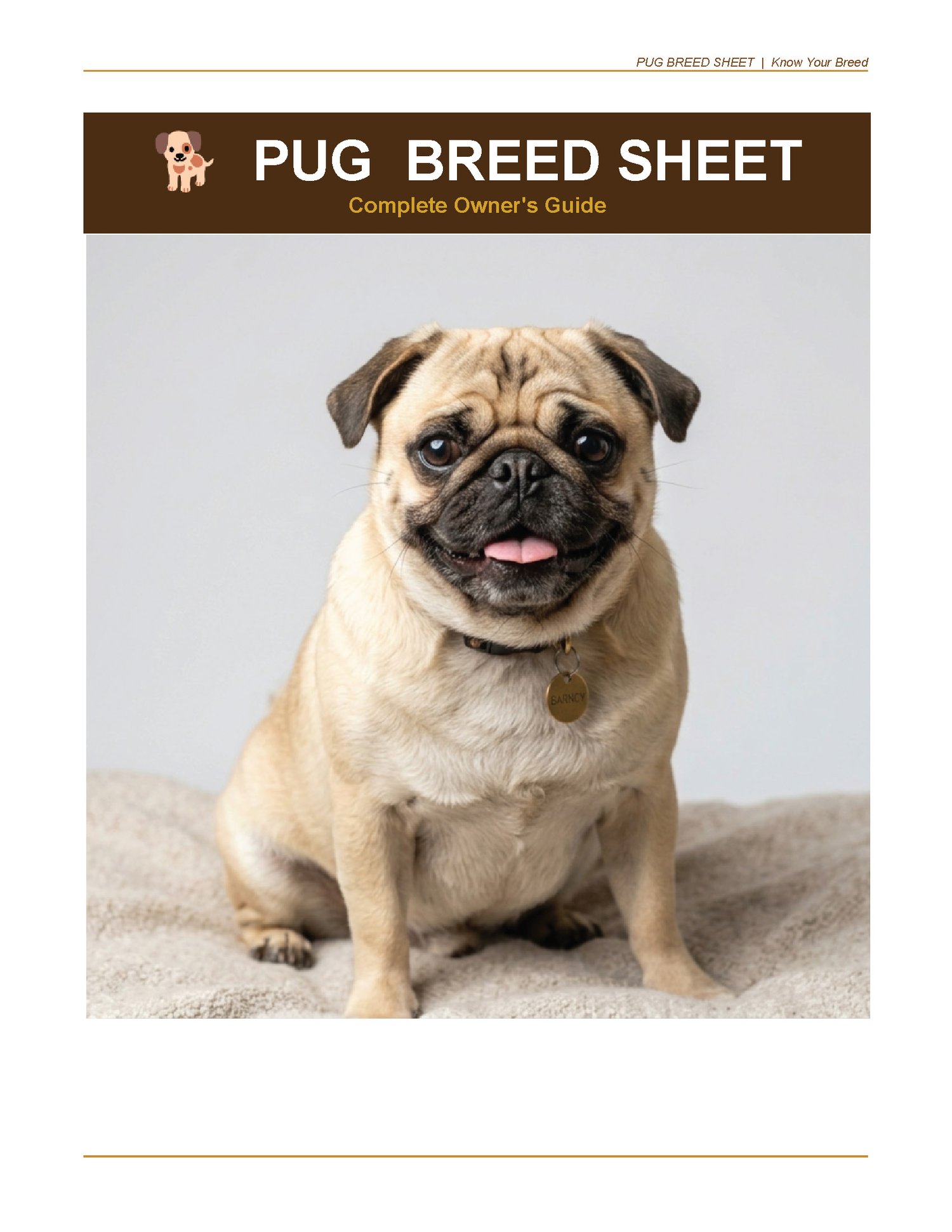



🐶 Pug Breed Sheet — Complete Owner's Guide
Format: PDF Digital Download | Pages: 11 | Instant Access
The Ultimate Resource for Pug Owners & Enthusiasts
Known for its official motto “Multum in parvo” — much in little — the Pug packs a giant personality into a compact, wrinkled, irresistible package. This comprehensive breed sheet gives you everything you need to understand, care for, and enjoy this beloved Toy breed.
Whether you’re thinking about bringing a Pug home, already share your life with one, or simply love the breed, this guide delivers accurate, practical, and breed-specific information in a clean, easy-to-read format.
📋 What’s Inside
✅ Breed Overview & History
- AKC Toy Group, Rank #28 (2023)
- Country of origin: China — later developed in the Netherlands & England
- Original purpose: royal companion dog
✅ Physical Profile
- Height, weight, life expectancy, and accepted colors (fawn, black, apricot-fawn, silver-fawn)
- Coat type, shedding, and characteristic rolling gait
- Distinguishing features: flat face, deep wrinkles, curled tail, compact body
✅ Behavioral Radar
- Affectionate: 5/5
- Energy Level: 2/5
- Intelligence: 3/5
- Dog-friendly, stranger-friendly, barking tendency, trainability, and apartment suitability — all scored and explained
✅ Daily Requirements
- Exercise: 20–30 minutes/day maximum
- Grooming: wrinkle care, brushing, nail trims, ear and eye checks
- Living space: ideal for apartments and small homes
- Average monthly cost: $195–$355
✅ Estimated Monthly Cost Breakdown
- Food, vet care, grooming, insurance, toys, and training
- Annual totals: $1,840–$3,260
✅ Training & Behavior
- Positive reinforcement methods that work for Pugs
- Main training challenges: stubborn streak, housebreaking, breathing limits, short attention span, separation anxiety
- Clicker training and short session tips
✅ Optimal Nutrition
- Daily feeding amounts and ideal food types
- Beneficial supplements (Omega-3s, glucosamine, probiotics, Vitamin E)
- Complete list of foods to absolutely avoid
✅ Family Compatibility
- Best for apartment dwellers, seniors, families with older children, and first-time owners
- Safety warnings for highly active owners, hot/humid climates, and toddlers
✅ Common Health Issues
- BOAS (Brachycephalic Obstructive Airway Syndrome)
- Pug Dog Encephalitis (PDE)
- Hip dysplasia, eye problems, skin fold dermatitis, and obesity
- Risk levels and prevention/management strategies
✅ Essential Veterinary Care
- Core and non-core vaccine schedules
- Recommended health screenings
- Preventive care routine: parasite control, dental hygiene, weight monitoring, wrinkle care
✅ Adoption Readiness Checklist
- 10-point self-assessment to confirm you’re prepared
- Budget, air conditioning, exercise, vet care, and breed-specific needs
🎯 Who This Guide Is For
- Prospective Pug owners researching the breed before committing
- Current Pug owners wanting to optimize care, training, and health
- Apartment dwellers & urban families looking for the right companion
- Seniors & retirees seeking a gentle, low-energy lap dog
- First-time dog owners ready to meet the Pug’s unique needs
- Veterinarians & vet techs seeking breed-specific health information
📥 What You’ll Receive
- 1 PDF file (11 pages) — instantly downloadable after purchase
- High-resolution Pug photograph
- Professionally formatted tables, charts, and checklists
- Personal use license
💡 Why Buy This Guide?
- Comprehensive — covers history, care, training, nutrition, health, and costs in one document
- Accurate — based on AKC standards and breed-specific veterinary knowledge
- Practical — includes cost breakdowns, safety warnings, and a readiness checklist
- Breed-specific expertise — essential for brachycephalic (flat-faced) dogs
- Instant access — download immediately, no waiting
🛒 Ready to Get Started?
Click “Add to Cart” to download your copy instantly and begin your journey with the Pug — a breed that proves good things really do come in small packages.
This sheet is an educational guide. It does not replace advice from a veterinarian or professional dog trainer. Information may contain approximations.
© Know Your Breed — Personal use only.