
Can you identify an eating disorder?
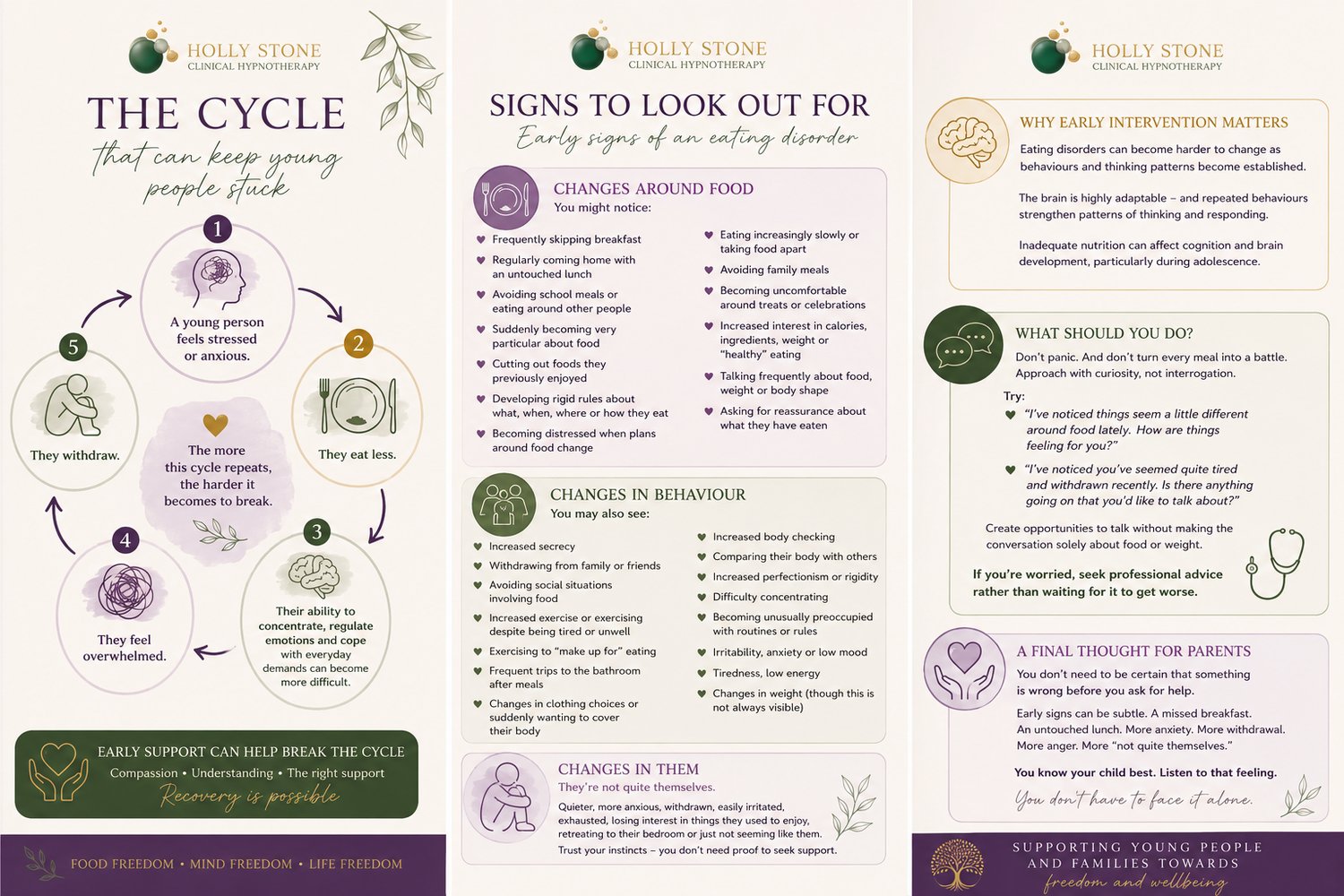
This infographic highlights something that can be very easy to miss when a young person is struggling with food or developing an eating disorder: the signs aren't always visible.
An eating disorder isn't defined by someone's weight, shape or appearance. A young person can be seriously struggling while appearing to be a healthy weight, or even while their weight appears to have increased.
The image focuses on the changes parents may notice around food and behaviour, including skipping meals, avoiding foods they previously enjoyed, becoming increasingly rigid around eating, exercising to compensate for food, withdrawing from family and friends, or becoming increasingly anxious and preoccupied with food, weight or body shape.
But perhaps most importantly, it draws attention to the changes in the young person themselves.
You may notice that your child simply doesn't seem like themselves anymore.
They might become quieter, more withdrawn or unusually irritable. They may lose interest in things they previously enjoyed, struggle to concentrate, become increasingly anxious or perfectionistic, or retreat from family and friends.
Sometimes the first clue isn't what they are eating.
It's that something about them has changed.
Why does this matter?
When a young person isn't eating enough, their brain and body don't have the fuel they need to function optimally. Hunger and inadequate nutrition can affect concentration, mood, emotional regulation, energy and the ability to cope with everyday demands.
This can create a difficult cycle:
Stress or anxiety → eating less → reduced energy and emotional capacity → feeling overwhelmed → withdrawing → increased anxiety and distress.
At the same time, restrictive behaviours and rigid food rules can become increasingly established. What may have started as skipping breakfast because they were rushing for school, or avoiding lunch because the dining hall felt uncomfortable, can gradually become something much more entrenched.
This is why early recognition matters.
And importantly, you don't have to wait for significant weight loss before becoming concerned.
A message for parents
If you've noticed changes in your child's eating, mood, behaviour or personality, don't dismiss your concerns simply because they look well.
You don't need to diagnose an eating disorder.
You don't need to have all the answers.
And you don't need to wait until things become serious.
Notice. Listen. Ask. And seek appropriate support when you need it.
Early support can make a real difference.
As someone who specialises in eating disorder coaching, disordered eating, anxiety and the relationship between our thoughts, emotions and behaviours, this is an area I care deeply about. My role is not to replace specialist medical or eating-disorder services where they are required, but to provide appropriate therapeutic and coaching support alongside the right professional care.
Because recovery isn't just about changing what someone eats. It's about helping them feel safe enough to live their life again.