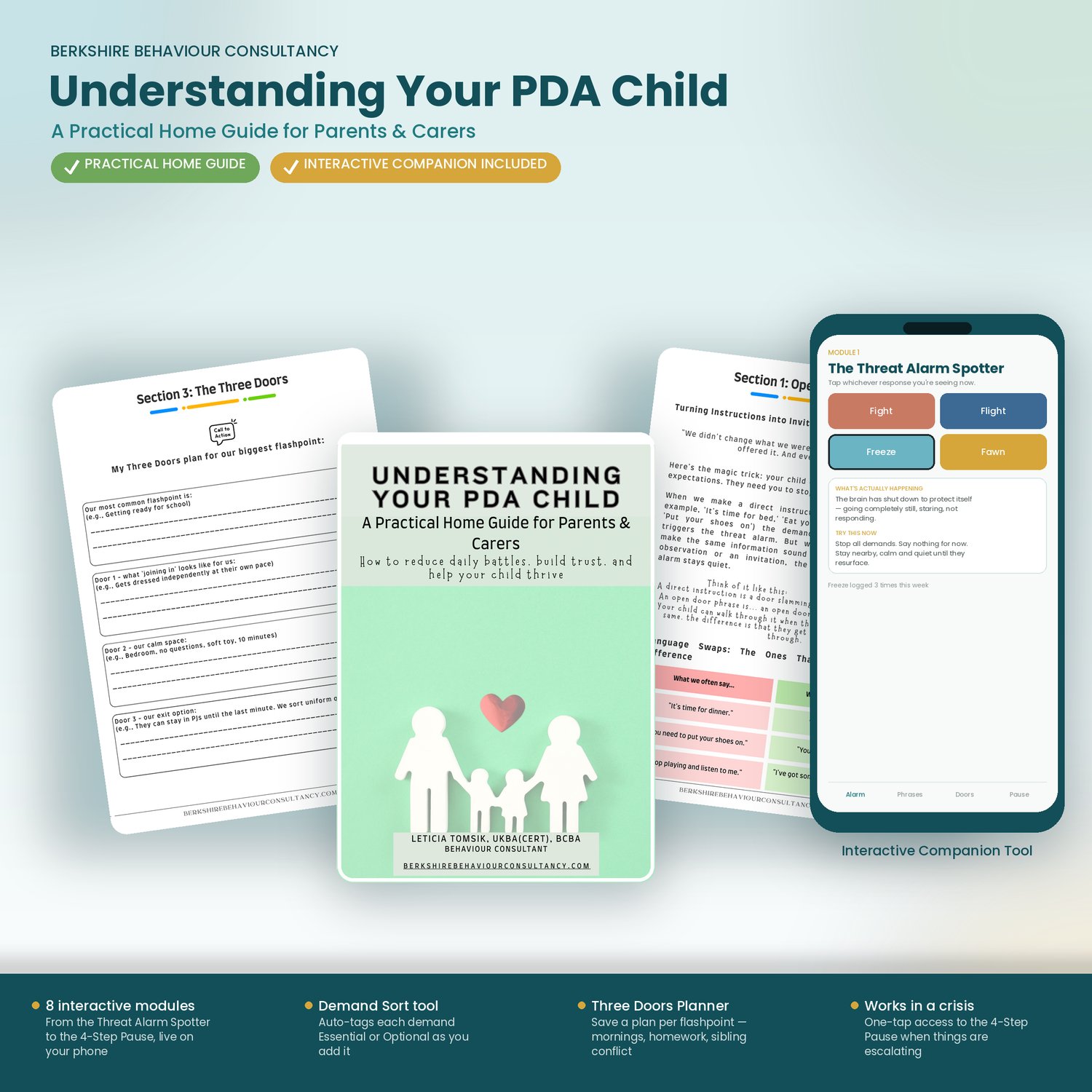
Understanding Your PDA Child: A Practical Home Guide for Parents & Carers (+ Free Interactive Companion Tool)
How to reduce daily battles, build trust, and help your child thrive
You've read the books. Adjusted the routines. Tried the reward charts. Spoken calmly when you wanted to scream. And your child still struggles — not because of anything you've done wrong, but because the standard parenting playbook was never written for a PDA brain.
Children with a PDA (Pathological Demand Avoidance) profile experience everyday requests — even tiny, gentle ones — as a genuine threat to their nervous system. It's not a choice. It's not attention-seeking. It's not bad parenting.
Understanding Your PDA Child is a practical, no-jargon home guide that shows you what's actually happening in your child's body when they refuse or react — and exactly what to do instead. It comes with a free interactive tool so the strategies don't stay stuck on paper.
WHAT'S INSIDE THE GUIDE
Why Does My Child React Like This? — Understand the threat alarm: why demands can register in a PDA brain the same way danger does, and what fight, flight, freeze, and fawn actually look like at home.
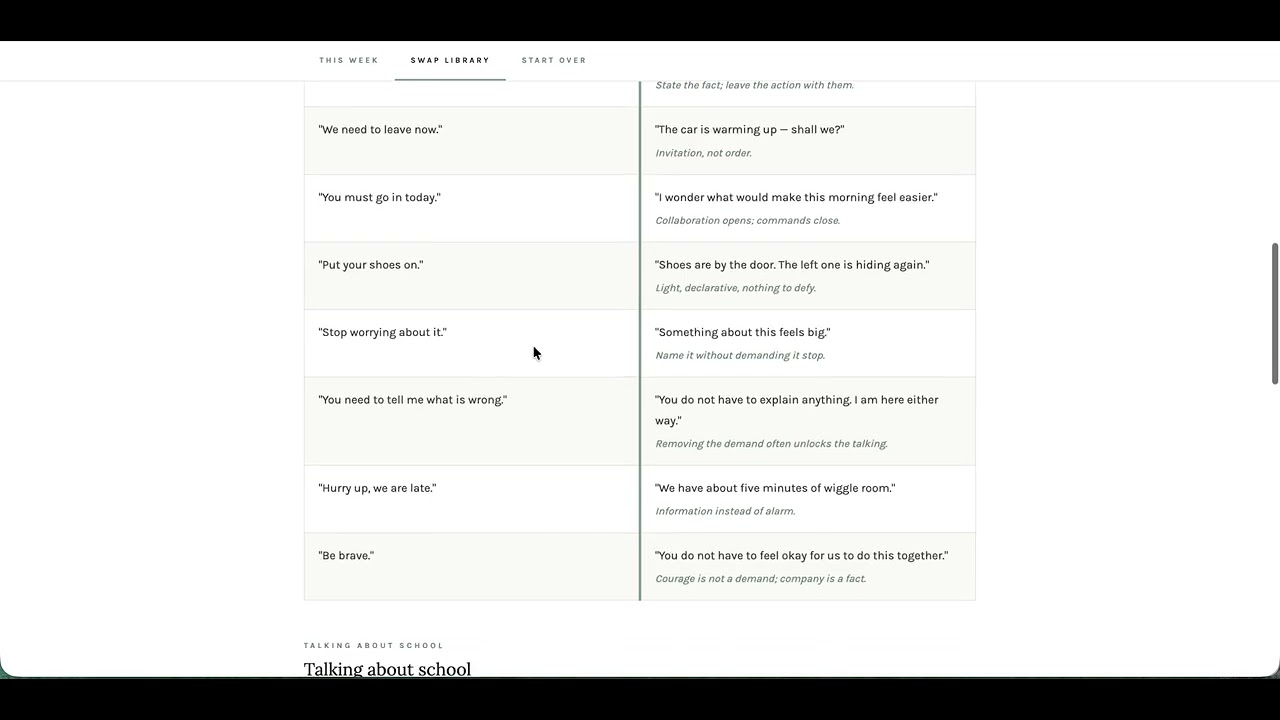
Section 1: Open Door Phrases — Turn instructions into invitations. A direct instruction is a door slamming shut; an open door phrase lets your child walk through when they're ready. Includes the 3 rules and a full table of language swaps that make the biggest difference.
Section 2: Which Hills Are Worth Climbing? — Sort every demand into essential and optional using three honest questions, so you stop spending your child's limited nervous-system energy on battles that don't matter.
Section 3: The Three Doors — A kinder way to handle refusals. Offer your child three genuinely available options — join in, take a break, or step away — mapped out for the flashpoints that come up again and again: mornings, homework, mealtimes, going out, sibling conflict.
Section 4: Reading Your Child Early — Spot the warning signs before the storm, including the surprising "people-pleasing to feel safe" pattern many parents miss until there's a later explosion.
Section 5: Turning Down the Heat at Home — Build a low-demand home environment with a full checklist: decompression time, safe spaces, low-pressure mealtimes, and why after-school silence matters more than questions.
Section 6: Helping Your Child Grow On Their Terms — The longer game. Move from "what I want them to do" to "what they want to build," and help your child start understanding their own nervous system.
Quick Reference — The 4-Step Pause (Pause → Reduce → Offer the Doors → Wait) for the moments things are already escalating, plus a note on looking after yourself.
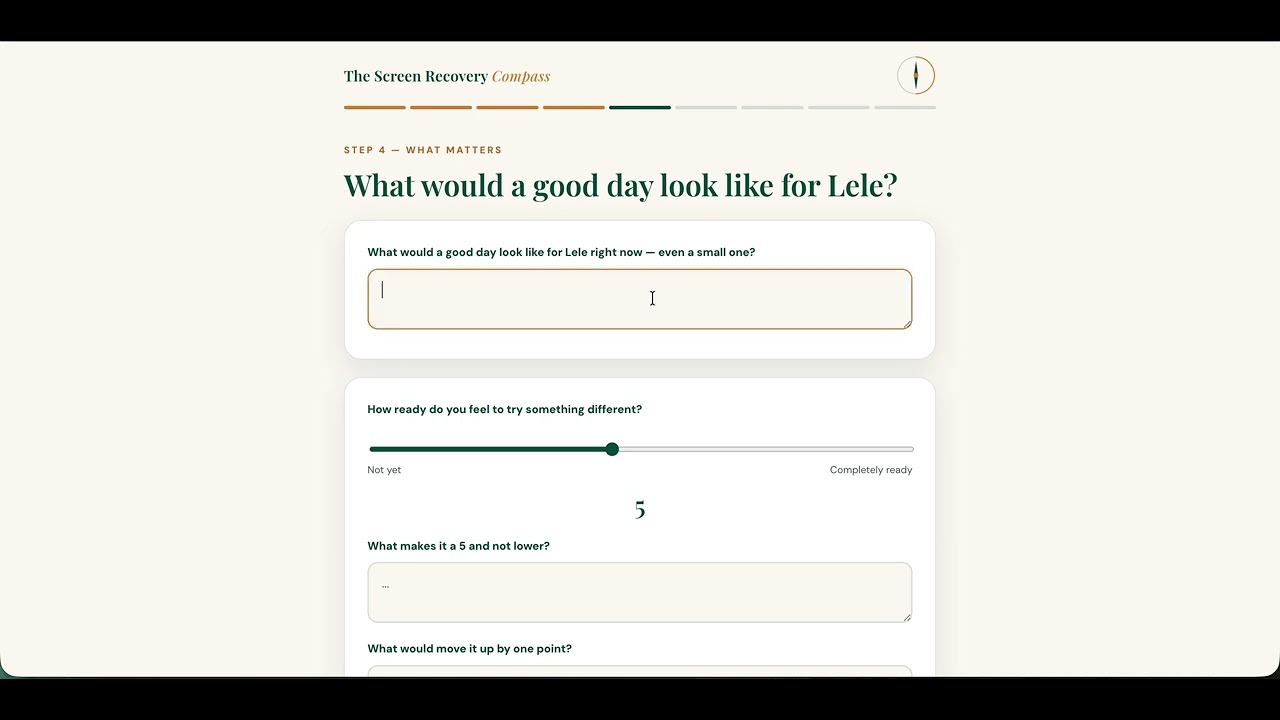
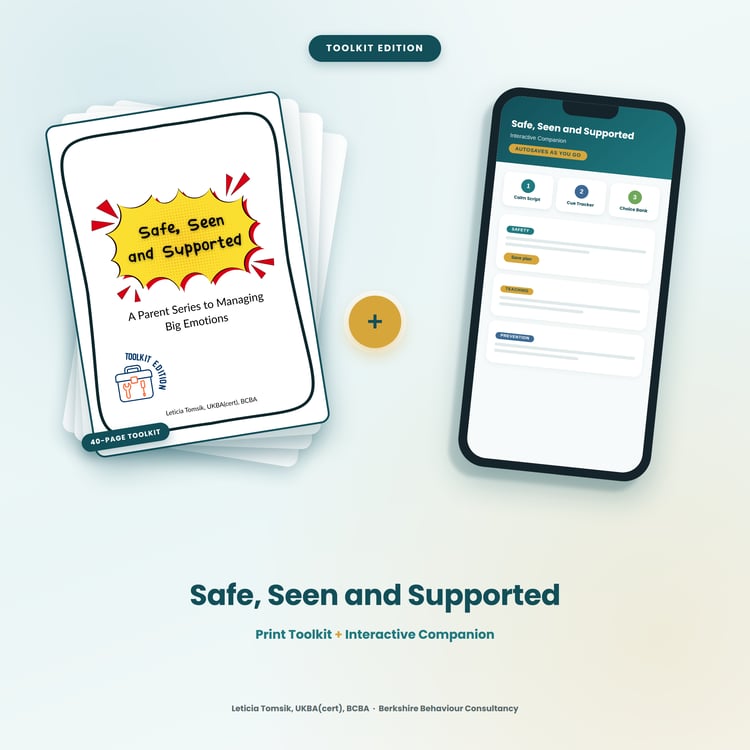
PLUS: THE FREE INTERACTIVE COMPANION
The guide gives you the why. This browser-based tool is where you put it into practice:
- The Threat Alarm Spotter — tap the response you're seeing right now for instant guidance
- Open Door Phrase Builder — save your own language swaps to a personal phrase bank
- The Demand Sort — auto-tags each demand Essential or Optional as you add it
- Three Doors Planner — build and save a plan for every recurring flashpoint
- Traffic Light Signal Tracker — map your child's own early signals, plus a live state check
- Home Environment Checklist — a visual progress tracker with next-step prompts
- The 4-Step Pause — one tap away for the moments you need it most
- My Child at Their Best — a private, autosaving reflection log
No app download, no login. Works on your phone, tablet, or laptop; saves automatically; and includes simple steps to add it to your home screen so it opens like an app.
WHO THIS IS FOR
Parents and carers of children with a PDA profile who want to understand why connection has to come before compliance — and who are ready for something that works with their child's nervous system instead of against it.
No scoring, no diagnosing, no star charts. Just a clear, practical path back to calmer days.
You don't have to implement everything at once. Pick one thing. Try it for a week. You've got this — and you're not alone.