
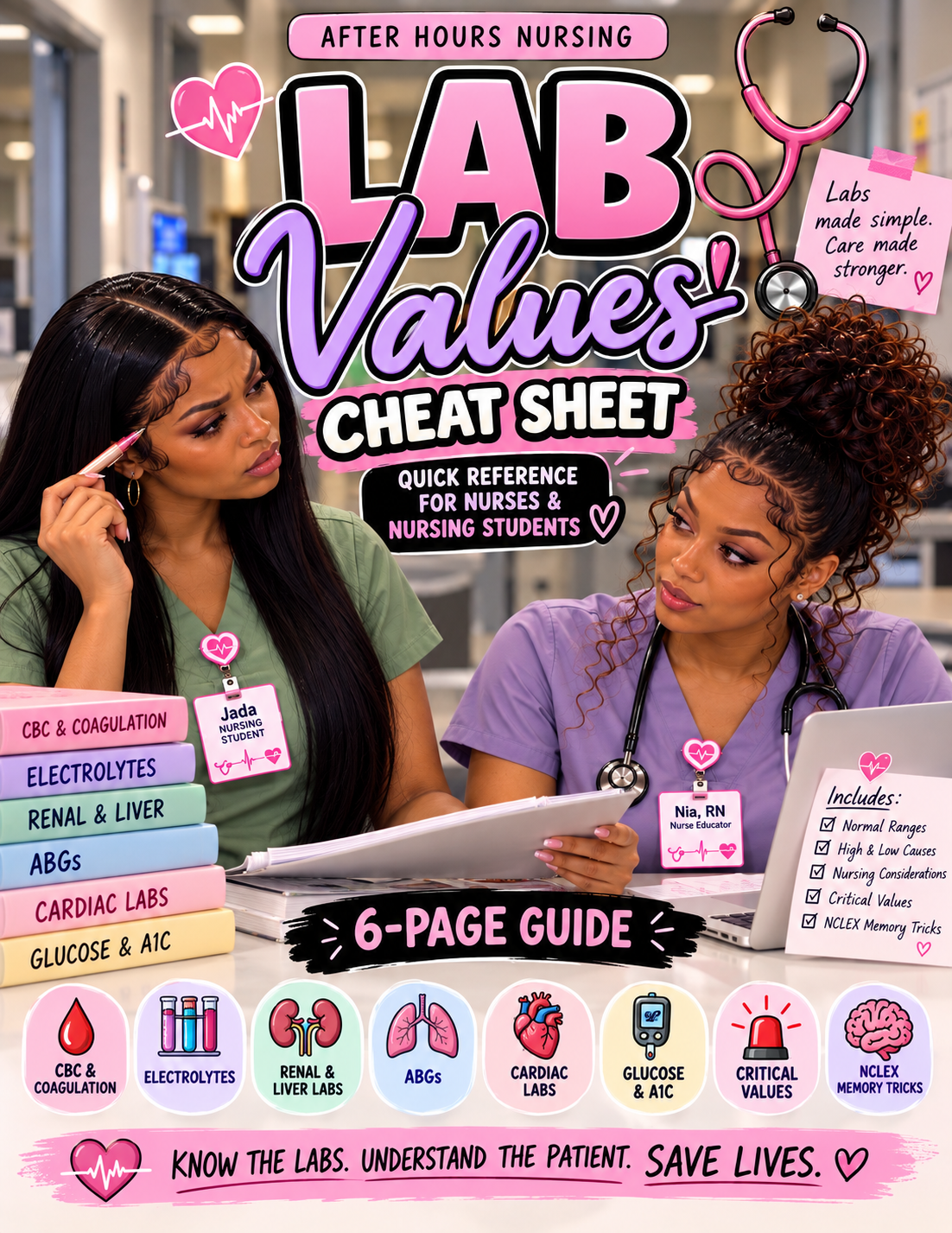
Lab Values Cheat Sheet | Quick Reference for Nurses & Nursing Students
Know the labs. Understand the patient. 💗🩺
The Lab Values Cheat Sheet was created to make reviewing common nursing labs faster and easier. Instead of giving you only a list of numbers to memorize, this guide helps you connect lab values with possible causes, nursing considerations, clinical priorities, and test-taking memory tricks.
Your download includes 6 full content pages covering:
- CBC & Coagulation: WBC, RBC, hemoglobin, hematocrit, platelets, PT, INR, aPTT, fibrinogen & D-dimer
- Electrolytes: sodium, potassium, chloride, calcium, magnesium & phosphorus
- Kidney & Liver Labs: BUN, creatinine, eGFR, uric acid, urinalysis, specific gravity, AST, ALT, ALP, bilirubin, albumin & total protein
- ABGs: normal values, respiratory/metabolic acidosis and alkalosis, a 3-step interpretation method, oxygenation guide & expected compensation
- Cardiac Labs: troponin I, CK-MB, myoglobin, BNP & CK total
- Glucose & A1C: fasting, postprandial and random glucose, A1C reference chart & hypoglycemia guidance
- Critical Values & Priorities: example critical thresholds, what to assess first, when to report and patient-priority reminders
- NCLEX Memory Tricks: potassium, calcium, acid-base balance, hypoglycemia and more
The guide also includes high/low causes, nursing considerations, memory tips, important notes, and test-taking reminders throughout.
After_Hours_Digital_Co_Lab_Values_Cheat_Sheet_FINAL_7_Pages.pdf
Perfect For
Nursing students • LPN/LVN students • RN students • NCLEX review • Clinical prep • Med-Surg • Pharmacology • Quick nursing reference
📥 What You’ll Receive
1 digital PDF containing:
- 1 cover page
- 6 full-color quick-reference study pages
- Instant digital access
- Easy viewing on your phone, tablet, or computer
No physical product will be shipped.
⚠️ Educational Disclaimer
This resource is for educational and study purposes only and is not a substitute for clinical judgment, professional medical advice, facility policies, or your nursing program’s required materials.
Reference ranges and critical values may vary by laboratory, facility, patient population, and testing method. Always follow the reference ranges and policies applicable to your clinical setting.