
Matching and Impact Assessment Toolkit
Make admission decisions you can defend: the right child, the right home, and no harm to the children already living there.
Matching sits under the care planning standard. You should only admit a child whose needs fall within your statement of purpose, and only when you have considered the impact on the children already living in the home. This toolkit gives you a clear record of every referral, assessment, decision and post-admission review.
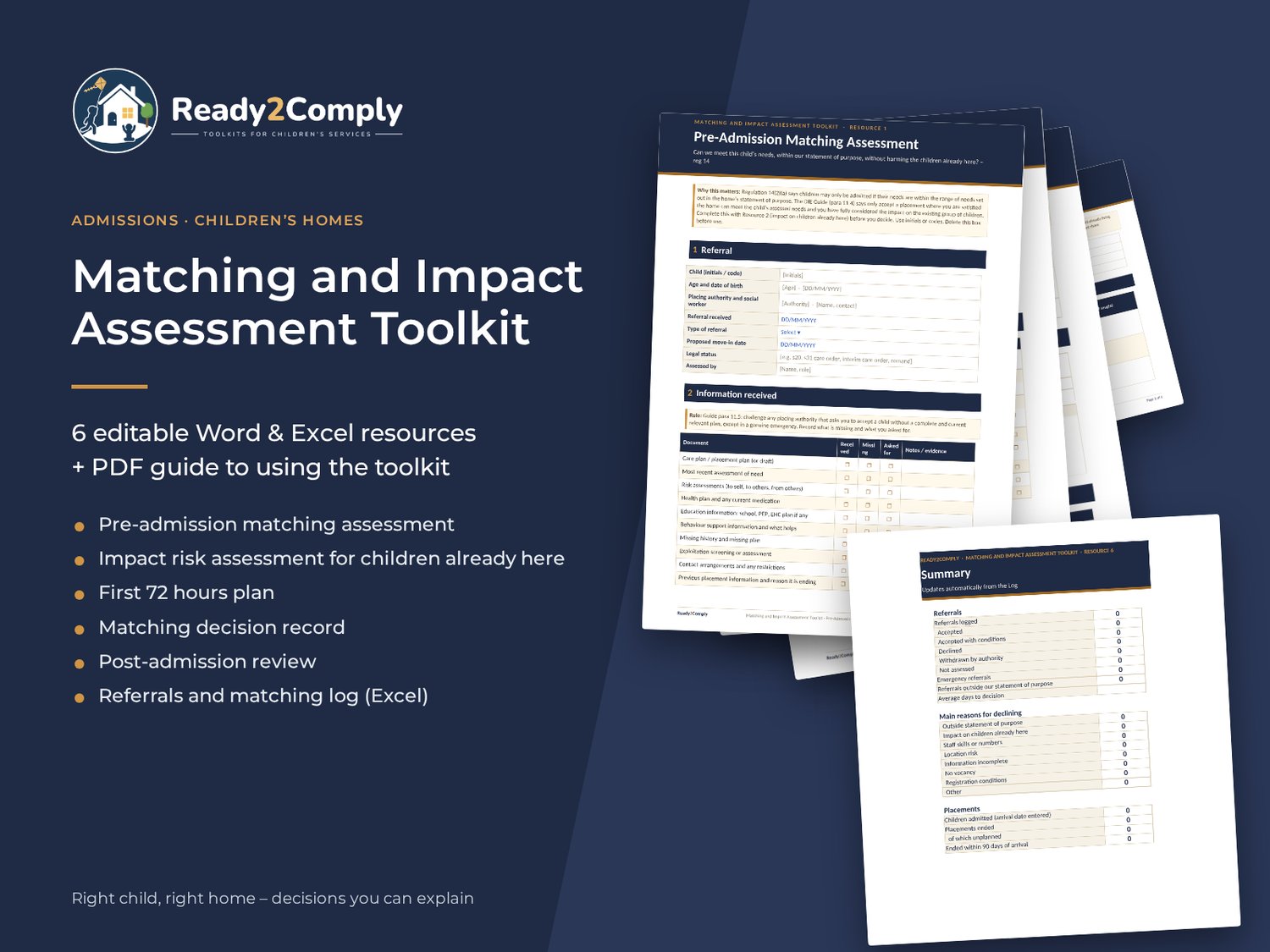
What's included (editable Word and Excel files, plus a PDF guide):
• Pre-admission matching assessment – check the referral against your statement of purpose, staff skills, building and location.
• Impact risk assessment – assess the impact of the admission on each child already living here, and on the whole group.
• First 72 hours plan – plan a warm, safe arrival: before arrival, arrival day, day 2 and day 3.
• Matching decision record – record the decision, the reasons, any conditions and emergency admission details, including declines.
• Post-admission review – review how the child is settling and whether the impact plan worked.
• Referrals and matching log (Excel) – log every referral and outcome, with a summary for your Regulation 45 review.
• How to use this toolkit – a short guide (PDF and Word).
Written around regulation 14 of the Children's Homes (England) Regulations 2015, the Guide to the Quality Standards and Ofsted's SCCIF. Add your own logo and adapt the wording to your statement of purpose and procedures.
Who it's for: registered managers, deputies and responsible individuals in children's homes in England.
These templates support good practice. They don't replace professional judgement, legal advice or the need to check current legislation and guidance, and they don't guarantee any inspection outcome. Ready2Comply is independent and not affiliated with, or endorsed by, Ofsted or the Department for Education. Your statutory rights under UK consumer law are not affected.