
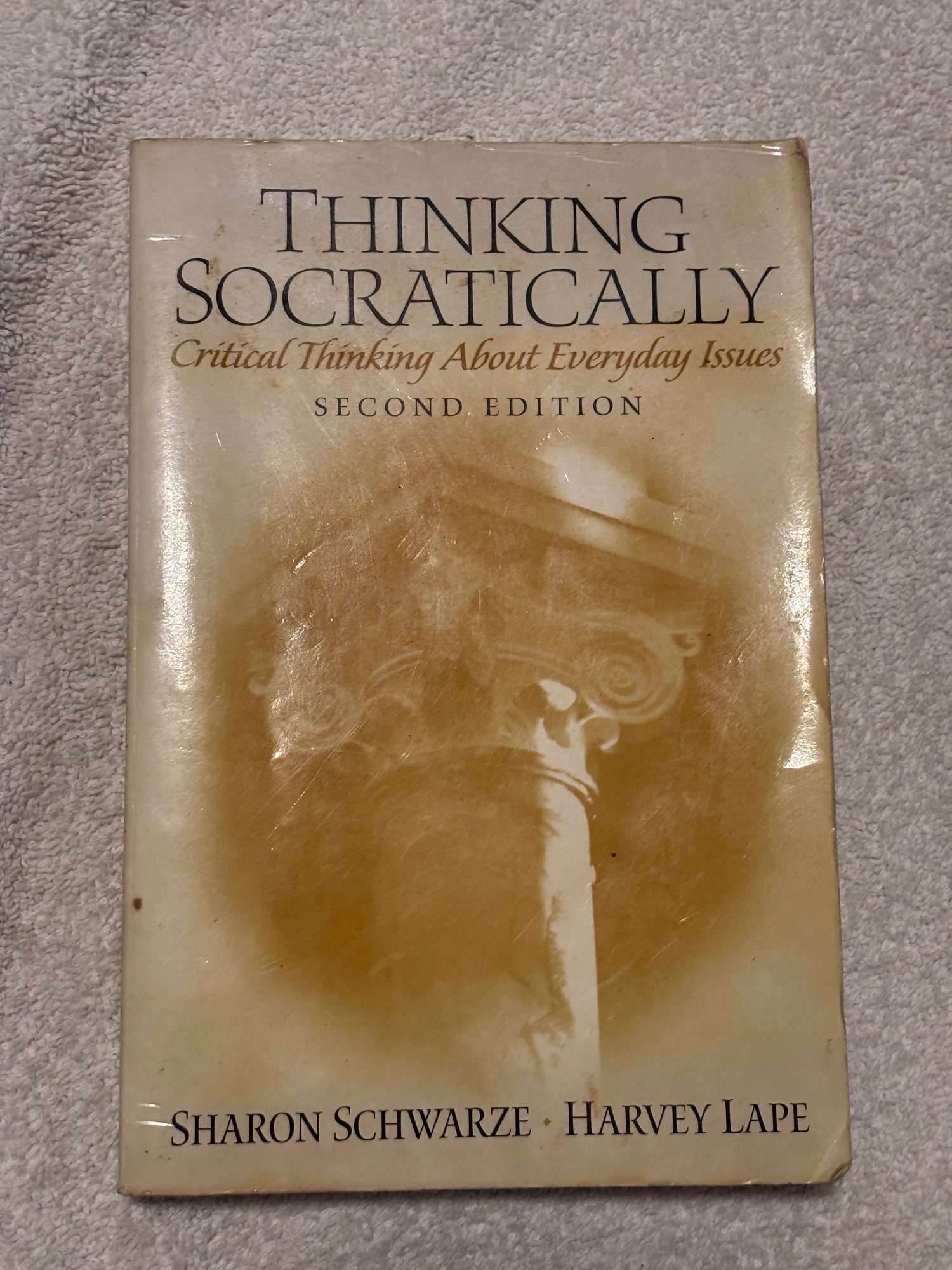
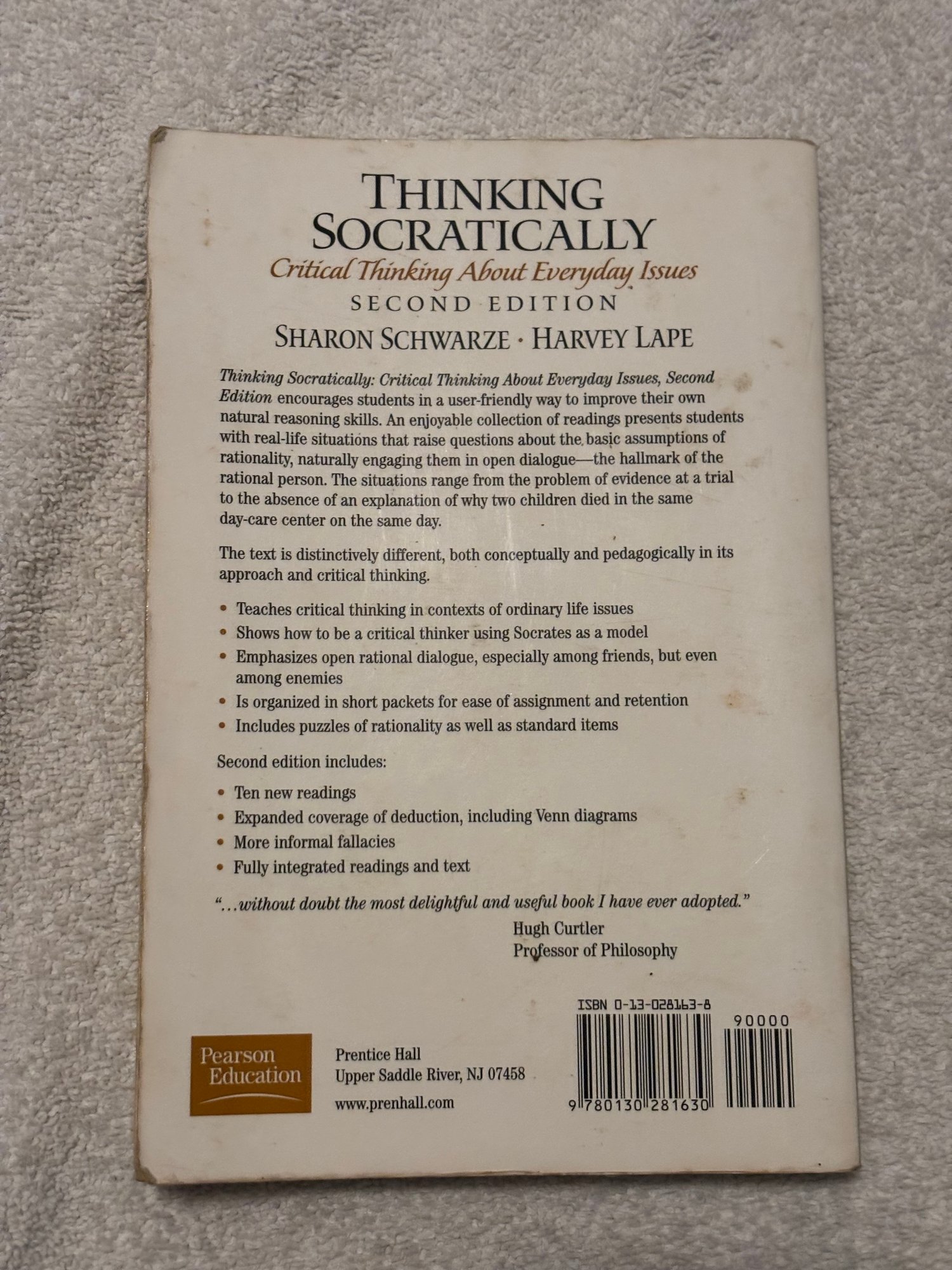
Thinking Socratically: Critical Thinking About Everyday Issues
On Sale
$5.00
$5.00
Thinking Socratically: Critical Thinking About Everyday Issues is a book that encourages readers to develop their natural reasoning skills by applying the Socratic method of persistent, open-ended questioning and rational dialogue to real-life situations. It moves beyond informal logic exercises to emphasize a philosophical reflection on everyday issues, using a variety of real-world readings from sources like newspapers, literature, and magazines.
Key Principles
- Questioning Assumptions: The core of the approach is the willingness to question all underlying assumptions, whether one's own or those presented by others, rather than blindly accepting authority or mere opinions.
- Open Rational Dialogue: The book stresses that critical thinking is best developed through open discussion and dialogue, where differing perspectives are explored respectfully to distinguish warranted from unwarranted statements.
- Contextual Learning: It places critical thinking within the context of ordinary life, science, and morality, demonstrating that thinking skills are not abstract academic exercises but a practical way of engaging with the world.
- Beyond Certainty: The text acknowledges the limits of evidence and the "web of belief," showing that decisions often must be made with imperfect knowledge and emphasizing the pragmatic nature of human reasoning.
- Socrates as a Model: Readers are encouraged to follow Socrates as a model for how to be a critical thinker, learning by example how to analyze concepts, explore implications, and seek deeper understanding through disciplined inquiry.
Ultimately, the book aims to make "thinking Socratically" a habitual, integrated approach to navigating life's comp